
Causes, Prevention & Remedies for Globe Valve Leakage
Globe valves are among the most widely used control valves in industrial piping systems, responsible for regulating flow, controlling pressure, and providing complete shutoff when required. Due to prolonged exposure to high pressure, high temperature, and corrosive media, leakage is a relatively common issue during globe valve operation. Once a valve leaks, it not only leads to wastage of the medium and environmental pollution but can also pose safety risks and affect the stable operation of the entire production system. This article systematically analyzes the main causes of globe valve leakage, outlines methods for addressing both external and internal leaks, and provides practical preventive measures to help engineers quickly identify problems and implement repairs, ultimately reducing leakage risk at the source.
Before delving into the causes of leakage, it is important to understand the basic structure of a globe valve and the ways in which leaks are classified. The valve body of a globe valve is typically spherical, containing a movable disc and a fixed seat. Depending on the location of the leak, globe valve leaks can be categorized as external or internal, each with distinct causes and treatment methods.
Globe valves are common control valves in industrial piping systems. Their spherical valve bodies house a movable disc and a fixed seat. The valve adjusts flow, controls pressure, or fully shuts off fluid movement through mechanical or manual operation. As a core control component in piping systems, the sealing performance of a globe valve directly affects production safety and economic efficiency.
Leaks in globe valves can be classified into two types: external leaks and internal leaks. External leaks occur mainly at the packing-to-body connection, the body-to-bonnet connection, or through the valve body itself, allowing the medium to escape directly into the environment. Internal leaks, on the other hand, are caused by sealing failure between the disc and seat, allowing the medium to flow from upstream to downstream even when the valve is closed. Because their causes differ, external and internal leaks require different approaches to resolution.
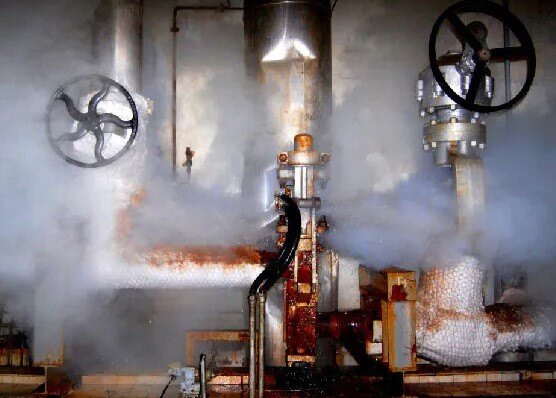
The causes of globe valve leakage are multifaceted, including seal surface wear, installation quality, packing system aging, fluctuations in operating parameters, and actuator malfunctions. Accurate identification of the root cause is essential to apply targeted solutions. The following sections analyze five key factors: disc and seat damage, improper installation, stem and packing issues, pressure and temperature fluctuations, and actuator failure.
The disc and seat are the core sealing components of a globe valve, responsible for opening, closing, and regulating flow. Over time, they are prone to erosion, corrosion, and cavitation damage.
When the medium contains solid particles, these act as abrasives, gradually wearing grooves and pitting into the sealing surface, preventing complete contact. This phenomenon is particularly common in mining, wastewater treatment, or other applications with high solid content. Even small particles can cumulatively reduce sealing performance over extended periods.
Corrosive media, such as acidic or alkaline fluids, gradually erode the metal sealing surfaces. Different materials exhibit varying resistance to corrosion. Carbon steel, for example, corrodes quickly in acidic environments, while stainless steel globe valves provide better corrosion resistance but may still degrade under extreme conditions. Material selection must align with the actual operating environment.
Cavitation also damages the disc and seat. When local fluid pressure drops below the vapor pressure, vapor bubbles form and collapse in high-pressure zones, generating shock waves that cause micro-damage to the sealing surface. Repeated cavitation gradually roughens the surface, ultimately impairing sealing performance.
The installation quality of a globe valve directly affects its initial sealing and long-term operation.
Misalignment between the valve and pipeline introduces uneven stress, preventing the disc and seat from mating properly, which can lead to leakage. Pipeline stress accelerates wear on the sealing surfaces, shortening valve life.
Bolt tightness is also critical. Under-tightening creates small gaps through which the medium can escape, while over-tightening may deform the body or sealing components, compromising the seal. Each valve specification has recommended bolt torque values that must be followed precisely.
Gasket selection and installation are equally crucial. Using inappropriate materials, damaging the gasket during installation, misalignment, or incorrect sizing can all lead to seal failure. Uneven gasket compression is another common issue.
The valve stem moves continuously during opening and closing. Over time, surface wear, scratches, or uneven wear can form pathways for leakage along the stem.
Packing prevents external leakage along the stem. In high-temperature, high-pressure, or frequent operation conditions, packing may age, crack, or lose elasticity. Insufficient lubrication accelerates stem-packing wear. Proper installation of packing is essential; uneven compression or incomplete packing leads to early leakage during initial operation.
Globe valves are designed for specific pressure and temperature ranges. Operating beyond these limits significantly increases the likelihood of leakage.
Excessive pressure may force the medium through the sealing surface, even if it is in good condition, causing micro-leaks. High pressure can also deform the valve body, misaligning the sealing surfaces. Temperature fluctuations cause thermal expansion and contraction, and materials with different coefficients expand differently, creating gaps that compromise the seal. Frequent temperature cycling accelerates seal material fatigue.
If the actuator fails to drive the valve to a fully open or fully closed position, the disc and seat cannot form a proper seal, resulting in continuous leakage. Causes include miscalibration of the control system, mechanical wear or jamming in electric or pneumatic actuators, motor failures, cylinder seizure, or wear in the transmission mechanism. In all cases, incomplete closure prevents effective sealing.
Once the cause of the leak is identified, targeted corrective measures can be taken. External and internal leaks differ in treatment: external leaks focus on packing, connections, and the valve body, while internal leaks target the sealing surfaces, disc, and seat.
- Packing Leakage: Packing leaks are often caused by wear, aging, or loose gland bolts. Solutions include tightening the gland nuts to increase packing compression or replacing the packing if it has failed. During replacement, clean the packing chamber thoroughly to remove residual old packing and debris. Install new packing layer by layer, staggering the cut ends. Ensure the packing quantity meets standard filling requirements.
- Body and Bonnet Connection Leakage: Caused mainly by loose bolts, damaged gaskets, or uneven sealing surfaces. The treatment involves evenly tightening bolts to distribute pressure, replacing damaged gaskets with ones suitable for the operating conditions, and repairing damaged mating surfaces by grinding or machining if necessary.
- Valve Body Leakage: Leakage through the body is often due to casting defects such as sand holes or cracks. Minor leaks can be repaired with specialized sealants. For larger leaks, welding may be used after assessing material compatibility and welding feasibility. If the body is severely defective and unrecoverable, it must be replaced entirely.
- Sealing Surface Damage: Sealing surface damage from wear, corrosion, or debris can sometimes be repaired by grinding to restore smoothness and flatness. After grinding, conduct a sealing test to ensure leakage is within acceptable limits. Severe damage requires replacement of the sealing components. Inspect and clean the interior to remove any debris that could compromise the seal.
- Disc or Seat Damage: Disc or seat damage from corrosion or prolonged erosion can be repaired or replaced depending on severity. After repair, adjust the valve stroke to ensure the disc and seat align tightly when closed. Improper stroke adjustment can result in leakage even when the valve appears closed.
Preventive measures are far more effective than post-failure repair in reducing leakage. Prevention includes establishing routine maintenance schedules, ensuring proper installation, selecting valves appropriate for operating conditions, and continuously monitoring operational parameters. These measures can significantly extend valve life and reduce unexpected failures.
Establish regular maintenance schedules to inspect the wear of discs, seats, gaskets, and packing. Replace components showing signs of wear or aging promptly to prevent minor issues from escalating into serious leaks. Maintain detailed records to track valve degradation trends.
Ensure proper alignment between the valve and pipeline to avoid additional stress. Use a torque wrench to tighten bolts to manufacturer-specified values. Install seals and gaskets correctly to prevent misalignment or damage, and ensure uniform packing compression.
For corrosive media, use materials with higher corrosion resistance or consider bellows-sealed globe valves for improved reliability. For media containing solid particles, choose sealing structures and materials with high erosion resistance. Valve selection should account for the medium’s temperature, pressure, corrosiveness, and solid content.
Install pressure and temperature monitoring devices to ensure operations remain within design limits. Avoid overpressure and extreme temperature fluctuations. For critical valves, consider installing leakage monitoring devices for early warning.
Safety is paramount when addressing globe valve leaks. Strict adherence to operating procedures is required to protect personnel and equipment.
Before handling a leaking valve, isolate it by closing upstream and downstream valves to cut off the medium. For toxic, hazardous, high-temperature, or high-pressure media, perform pre-treatment such as depressurization, purging, or cooling.
Personnel should wear appropriate protective gear, including gloves and safety goggles. Complex or difficult-to-treat leaks should be repaired by professionally trained staff to ensure the valve is restored to reliable sealing and production safety is maintained.
Globe valve leakage involves multiple factors, including wear of the disc and seat, installation quality, packing system aging, operating parameter violations, and actuator faults. External and internal leaks have different causes and require different remedial measures, which must be tailored to the specific situation. In practice, preventive measures are far more important than corrective repairs. Regular maintenance, standardized installation, proper valve selection, and continuous monitoring can significantly reduce the likelihood of leakage. Enterprises should integrate valve management into routine maintenance, train personnel to recognize early signs of leakage, and ensure valves remain in optimal operating condition, thereby safeguarding the safety, stability, and efficiency of piping systems.
