
DBB Plug Valve Explained: Structure, Principle & Application
In industrial sectors such as oil and gas, chemical processing, power generation, and petrochemicals, the safe isolation and reliable shutoff of pipeline systems are critical for ensuring production safety, stable equipment operation, and personnel protection. When equipment requires maintenance, repair, or emergency shutdown, a key concern for engineers and operators is how to completely isolate the fluid in pipelines and safely release any residual pressure.
Traditional single-block valves can provide basic flow control functions, but under high-pressure, high-temperature, or highly corrosive conditions, their single sealing structure often carries leakage risks. This limitation makes it difficult to meet modern industrial requirements for high-safety-level fluid isolation systems.
Against this backdrop, Double Block and Bleed (DBB) plug valves have emerged. These valves employ two independent sealing mechanisms for double blocking, complemented by a bleed port to release residual pressure, thereby offering a higher level of safety isolation for pipeline systems.
Compared to conventional multi-valve arrangements, DBB plug valves are more compact, easier to operate, and offer higher sealing reliability. As a result, they are widely adopted in oil and gas, chemical, power generation, metallurgy, and water treatment industries, becoming a critical component in industrial pipeline safety control.
This article provides a systematic overview of DBB plug valves, covering their basic structure, operating principle, core advantages, applications, selection criteria, installation and maintenance, and manufacturing features, enabling a comprehensive understanding of this essential industrial isolation valve solution.
Before exploring the operating principles and applications of DBB plug valves, it is essential to define them and outline their core structural components. The main distinction between a DBB plug valve and a conventional plug valve lies in its double-block (Double Block) and bleed (Bleed) design.
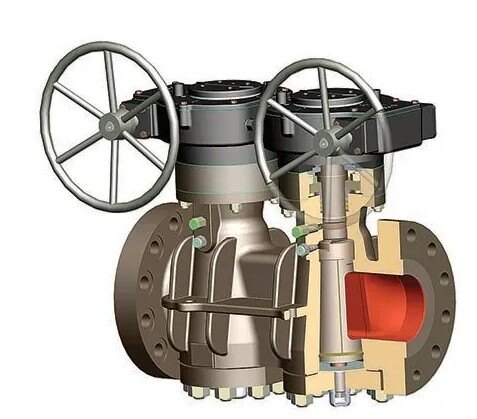
A Double Block and Bleed (DBB) plug valve is a high-safety-level isolation valve used in industrial pipeline systems. Its defining feature is the use of two independent sealing mechanisms for double blocking, with a bleed port positioned between the two seals. This port allows for the release of residual pressure or trapped fluid, ensuring safe isolation and maintenance operation safety.
The core component of a DBB plug valve is the plug, typically cylindrical or tapered, with internal through-holes or channels. The plug is mounted inside the valve body, and its rotational motion controls the opening and closing of fluid flow.
The valve body serves as the pressure-bearing structure, providing the necessary fluid passage and sealing surfaces. The stem connects the plug to the external actuator, enabling rotational control. Actuation can be manual, pneumatic, hydraulic, or electric, accommodating various operational automation requirements.
A typical DBB plug valve comprises five key parts:
- Valve Body (Body): The main structural component, usually made of carbon steel, stainless steel, or alloy steel, designed to withstand system pressure and house internal components.
- Plug: The core flow control component, generally cylindrical or tapered, controlling fluid flow through rotation. Sealing can be soft or metal-to-metal.
- Seats: Work in conjunction with the plug to create a reliable seal when closed, preventing medium flow.
- Actuator: Includes manual, pneumatic, electric, or hydraulic actuation to drive the plug for opening and closing.
- Bleed Port: A defining feature of DBB design, allowing the release of residual pressure or medium between the two seals to ensure safe isolation and maintenance.
Additionally, multiple seals are usually installed between the plug and body, and between the stem and body, to prevent external leakage. DBB plug valves are commonly available in two types: expanding plug valves, which use mechanical expansion to enhance sealing, and dual-seal plug valves, which rely on two independent sealing surfaces to improve overall safety.
The core function of a DBB plug valve—double block and bleed—is realized through its unique operational logic. Depending on the system state, the valve can operate in three modes: open, closed, and maintenance.
In the open state, the internal plug passage aligns completely with the valve body flow path, allowing fluid to pass smoothly through the system. The bleed port remains closed, and the system operates under normal flow conditions with minimal pressure drop and low resistance.
When the plug is rotated approximately 90° or to a specified angle, its solid portion fully blocks the flow path, achieving upstream and downstream double isolation (Double Block). At this stage, the bleed port can be opened as needed to release residual pressure or trapped fluid between the two seals, preventing pressure buildup and ensuring system safety.
During maintenance mode, the DBB plug valve enables controlled release through the bleed port. While maintaining complete upstream and downstream isolation, the bleed port allows the gradual release of intermediate pressure. This feature allows personnel to perform maintenance or repairs under safe conditions.
This design is particularly advantageous for industrial systems requiring online maintenance or non-shutdown service, significantly enhancing operational safety and maintainability.
DBB plug valves are widely used in industrial applications due to their comprehensive advantages in safety, structural design, applicability, and ease of maintenance.
The double-block sealing structure provides redundancy, significantly reducing leakage risk. Even under high-pressure, high-temperature, or highly corrosive conditions, stable sealing performance is maintained.
The bleed port efficiently releases residual pressure, preventing hazardous accumulation, making DBB plug valves particularly important in systems handling dangerous media.
Compared to conventional "two valves + bleed system" arrangements, DBB plug valves are more compact, occupying less space—ideal for offshore platforms, modular units, and space-constrained pipeline systems.
Their compact design also reduces installation costs and pipeline complexity, improving system integration efficiency.
DBB plug valves can handle liquids, gases, and certain slurries, with widespread use in oil, gas, petrochemical, chemical, power, and water treatment industries. They accommodate a wide pressure range and exhibit strong temperature resistance, suitable for conditions ranging from low-temperature processes to high-pressure, high-temperature steam systems.
DBB plug valves are robust and reliable, supporting both manual and automated actuation. Seal replacement and internal inspections are relatively straightforward, and modular designs enhance maintenance convenience, reducing downtime and improving operational efficiency.
DBB plug valves are employed across multiple industrial sectors, each with specific performance requirements.
- Oil and Gas Industry: Used in drilling platforms, production facilities, and gas processing systems for wellhead isolation, pipeline maintenance isolation, and emergency shutoff, ensuring safe operations in high-risk environments.
- Petrochemical and Chemical Industry: Applied in reactor systems, process pipelines, and storage and transport systems to prevent cross-contamination of media and ensure the safe handling and isolation of hazardous chemicals.
- Power Generation Industry: Utilized in boiler systems, steam networks, and cooling water systems, offering high-temperature and high-pressure resistance. Suitable for critical isolation points in thermal and nuclear power systems.
- Water Treatment Industry: Employed in filtration systems, chemical dosing units, and water distribution networks to achieve reliable isolation between process units, enhancing operational efficiency and maintenance convenience.
Proper selection is essential to ensure the long-term safe operation of DBB plug valves, requiring consideration of multiple factors.
- Fluid Characteristics: Valve materials must match the chemical properties of the medium. Highly corrosive fluids require stainless steel or special alloys. Consider abrasive content and particulate matter to prevent excessive wear.
- Pressure and Temperature Matching: Valves must withstand the system’s maximum pressure and temperature, including transient conditions, ensuring sufficient safety margins.
- Actuation Method: Select manual, pneumatic, electric, or hydraulic actuators according to operational conditions, ensuring sufficient torque and response speed.
- Flow Velocity Considerations: Flow velocity significantly affects valve performance. Low flow may lead to insufficient sealing pressure, sediment buildup, and accelerated corrosion. High flow may cause erosion, vibration, or cavitation damage. Proper valve sizing and the use of wear- and corrosion-resistant materials are critical for long service life.
- Installation Guidelines: Ensure proper pipeline alignment to avoid stress on the valve body. Vertical upward stem installation is recommended. Clean pipelines thoroughly before installation to prevent debris from entering the valve.
- Routine Maintenance: Includes periodic inspection of the valve body, stem, and actuator; checking seal wear; lubricating operational components; and preventing plug sticking.
- Troubleshooting: Common issues include difficulty in opening/closing, leakage, vibration, noise, or abnormal position indication. Troubleshooting should proceed systematically through the mechanical structure, sealing system, and actuator.
- Preventive Maintenance: Regular lubrication, cleaning, recording maintenance data, and operator training effectively extend valve life, reduce failure rates, and improve system reliability.
Double Block and Bleed (DBB) plug valves, with their unique dual sealing and bleed design, occupy a vital position in industrial fluid control. Their high safety, compact structure, broad applicability, and ease of maintenance make them indispensable in modern pipeline systems.
In practice, correct selection, proper installation, and regular maintenance are essential to ensure long-term stable operation. As industrial safety standards continue to rise, DBB plug valves will play an increasingly critical role in high-risk and demanding applications, serving as a key safety barrier in industrial fluid control systems.
