
Resilient Seated vs. Metal Seated Gate Valves
In water supply systems, industrial pipelines, and various fluid control fields, gate valves are among the most common basic valve types. Their main function is to control the opening and closing of media in pipelines. They are widely used in municipal water supply, fire protection systems, chemical process industries, mining transportation, and other applications.
However, in actual procurement and selection processes, a frequent question arises: Should we choose a metal seated gate valve or a resilient seated gate valve?
Although both types of valves are used to achieve fluid shut-off functions, they have significant differences in structural design, sealing methods, performance characteristics, application scenarios, and maintenance costs. Understanding these differences is very important for correct selection and ensuring long-term stable system operation. This article provides a systematic explanation of these two types of gate valves from the aspects of basic concepts, structural characteristics, performance comparison, and selection recommendations.
A gate valve is a type of valve that opens and closes by lifting a gate plate perpendicular to the flow direction along the centerline of the passage. Its working principle determines that it is only suitable for fully open or fully closed conditions, and it cannot be used for flow regulation or throttling.
When the gate is lifted, the pipeline is fully open and the medium can flow smoothly. When the gate is lowered and tightly contacts the valve seat, the pipeline is completely closed and the flow is stopped.
According to different sealing structures, gate valves are mainly divided into two categories: resilient seated gate valves and metal seated gate valves. Although their sealing methods are different, their basic working principles are the same, both used for media shut-off. In some working conditions, the two sealing types can complement each other or be used independently depending on requirements.
A resilient seated gate valve, also known as a soft sealing gate valve, is a commonly used manual valve in water conservancy and industrial pipelines for opening and closing media. Its core feature is that rubber or elastic materials are embedded on the gate surface or valve seat, and sealing is achieved through elastic deformation.
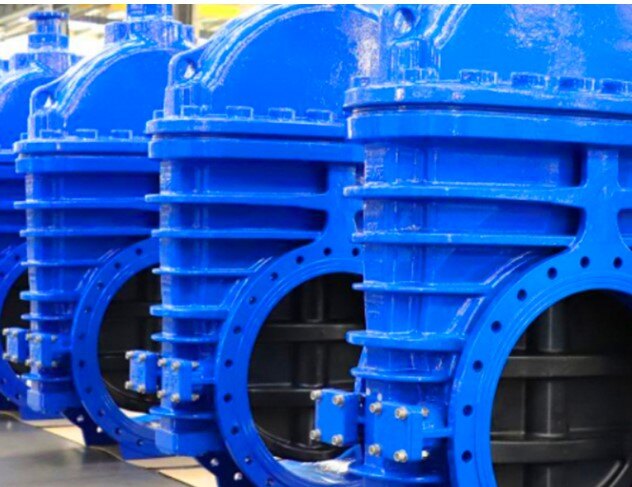
The structure of a resilient seated gate valve usually includes a valve body, valve cover, gate, gland, stem, handwheel, sealing gasket, and fastening bolts. The valve body is generally made of ductile iron. The gate and sealing rings are usually made of EPDM or NBR rubber materials. The sealing depends on the elastic deformation of rubber during closure, so it has good sealing performance and can usually achieve zero leakage.
The gate of a resilient seated gate valve is generally designed as a wedge structure, which helps reduce wear on the sealing surface and improves service life. The gate sealing structure mainly includes two types: parallel type and wedge type.
The parallel type is mostly used for large-diameter valves above DN250. During closing, the rubber does not undergo significant deformation and only forms sealing at the final stage. Therefore, it has a lower operating torque but requires higher manufacturing precision.
The wedge type is mostly used for small-diameter valves below DN200. During closing, the rubber on both sides continuously participates in sealing, resulting in higher torque, but the casting precision requirements are relatively lower. In practical applications, the difference between these two structures is not very significant.
This type of valve usually adopts a bottom structure without cavities, allowing fine particles in the medium to pass through with the flow and not easily accumulate or cause blockage. At the same time, the valve seat diameter is consistent with the pipeline inner diameter, resulting in lower flow resistance, making it suitable for systems with high flow requirements.
In terms of coating, resilient seated gate valves usually adopt epoxy resin powder electrostatic spraying technology. After high-temperature curing, a dense protective film is formed on both internal flow channels and external surfaces. This coating is insoluble in water and does not affect water quality.
It has excellent adhesion and uniformity, and can be directly sprayed on metal surfaces without primer. It also has strong resistance to water, acid, alkali, and salt spray. In water supply systems, blue high-gloss coatings are commonly used, while fire protection systems often use red coatings for identification.
Resilient seated gate valves usually adopt a three O-ring sealing structure, where the third ring is used for pressure relief and anti-leakage protection. Compared with traditional packing structures, this design significantly reduces operating torque.
A dust-proof ring is installed at the top to prevent impurities from entering. In addition, O-rings can be replaced online under pressure conditions, greatly improving maintenance convenience.
Metal seated gate valves adopt a metal-to-metal sealing structure, meaning the gate and valve seat achieve sealing through direct contact of precisely machined metal surfaces.
The sealing materials are usually stainless steel, hard alloy, or copper alloy. High-precision machining ensures sealing surface accuracy.
Due to their rigid contact structure, metal seated gate valves have strong resistance to high temperature, high pressure, erosion, and corrosion. Therefore, they are commonly used in harsh working conditions such as steam pipelines, oil and gas transmission systems, mining slurry transportation, and high-temperature industrial media pipelines.
The sealing surface is made of metal materials. Once wear occurs, both the valve body and gate often need to be repaired, resulting in higher maintenance complexity. In terms of connection structure, metal seated gate valves usually use external hex bolt designs. Traditional products often use paint coating, which may slightly affect water quality, while modern products have gradually adopted epoxy coatings.
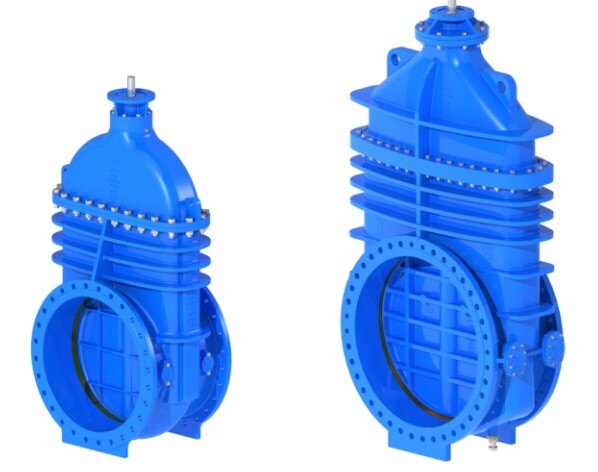
Resilient seated gate valves and metal seated gate valves show clear differences in several aspects. The following provides a comparison from several key dimensions.
Metal sealing is rigid contact sealing, which may allow slight leakage under certain conditions but can withstand extreme working environments. Resilient sealing relies on rubber or elastic material compression to achieve full contact, so it can achieve stricter sealing performance, usually reaching zero leakage, making it suitable for systems with high leakage control requirements.
Metal seated gate valves have stronger resistance to erosion and wear, especially suitable for media containing particles or high-temperature high-speed flow. Resilient seated gate valves perform well in clean media, but in high-temperature or solid-particle media, rubber materials may age, wear, or fail.
Metal seated gate valves are generally suitable for high-pressure and high-temperature conditions such as steam or industrial process media. Resilient seated gate valves are usually suitable for low or medium pressure environments, and rubber materials may lose elasticity under high temperatures, affecting sealing performance.
Resilient seated gate valves have a relatively simple structure and are easy to maintain. Usually, only replacement of the gate or sealing components is required to restore performance. Metal seated gate valves, due to metal sealing surfaces, often require simultaneous repair or replacement of both seat and gate, resulting in higher maintenance complexity and cost.
Resilient sealing structures have no bottom cavities, making them less likely to accumulate impurities. Metal sealing structures, due to double sealing surfaces, are more prone to sediment accumulation at the bottom, which may lead to blockage or sealing failure over long-term operation.
Resilient seated gate valves usually use internal hex bolts and anti-corrosion sealing wax treatment, making maintenance easier. They generally adopt epoxy coatings suitable for drinking water systems and have better environmental performance. Metal seated gate valves usually use external hex bolts, and traditional products adopt paint coatings, although modern designs increasingly use epoxy coatings.
Metal seated gate valves require higher machining precision and higher-grade materials, resulting in higher initial investment. However, they offer better long-term economic performance under heavy-duty conditions. Resilient seated gate valves have lower initial cost and are suitable for municipal and general fluid transportation projects, but they may require more frequent replacement in harsh conditions due to shorter service life.
Resilient seated gate valves are suitable for low-temperature, normal-temperature, and clean media environments. Due to the limited temperature resistance of rubber sealing materials, they are not suitable for high-temperature conditions and have limited wear resistance in particle-containing media.
They are widely used in municipal water supply systems, drinking water transportation, wastewater treatment, farmland irrigation, and fire protection systems. Their advantages include reliable sealing, easy operation, and low cost.
Metal seated gate valves, on the other hand, use stainless steel or hard alloy sealing surfaces, making them suitable for high-temperature and high-pressure conditions. They have strong wear resistance and erosion resistance and are suitable for media containing solids or strong corrosive environments. Their service life is usually longer.
They are widely used in power plant steam systems, oil and gas pipelines, mining slurry transportation, and high-temperature high-pressure industrial processes, ensuring stable operation under extreme conditions.
In the selection process, key factors such as media type, pressure level, temperature conditions, sealing requirements, and lifecycle cost should be considered.
If the medium is clean water or low-corrosive liquid and zero leakage is required, resilient seated gate valves are usually the better choice. They are widely used in municipal water supply systems, drinking water networks, and fire protection systems, offering reliable sealing, easy maintenance, and controllable cost.
If the working condition involves high temperature, high pressure, or solid-particle media, metal seated gate valves are more reliable. They perform well in chemical, metallurgical, mining, and steam systems. Although the initial investment is higher, they provide longer service life and better economic efficiency under severe conditions.
Reasonable selection can effectively improve system reliability, extend equipment life, and reduce overall operation and maintenance costs.
Resilient seated gate valves and metal seated gate valves each have their own applicable technical fields. Resilient seated gate valves achieve sealing through elastic deformation of rubber, offering zero leakage, simple structure, convenient maintenance, and low cost, making them suitable for clean media and low-pressure conditions. Metal seated gate valves achieve sealing through rigid metal-to-metal contact, offering high temperature resistance, high pressure resistance, wear resistance, and long service life, making them suitable for harsh working environments.
Understanding the differences in sealing principles, structural characteristics, performance behavior, and application scenarios between these two types of gate valves is the foundation of proper valve selection. Only by selecting according to actual operating conditions can long-term safe, stable, and economical operation of pipeline systems be ensured.
Comprehensive guide comparing resilient and metal seated gate valves, covering structure, sealing, performance, applications, and selection recommendations.
