
An Introduction to Gate Valve Sealing Performance
In petroleum, chemical, power generation, water treatment, and many other industrial sectors, the stable operation of fluid control systems is directly linked to production efficiency and safety levels. As a core device for on-off control in pipeline systems, the gate valve sealing performance not only affects precise regulation of media flow, but also determines the overall safety, economy, and reliability of the system.
This article provides a detailed explanation of gate valve sealing performance from multiple perspectives, including its importance, common sealing types, system structure, material selection, design optimization, standard testing methods, and operation and maintenance practices, helping readers fully understand the technical key points of gate valve sealing.
Preventing leakage and ensuring operational safety: The core function of a gate valve is to ensure smooth flow when fully open and reliable shutoff when fully closed. The primary role of the sealing structure is to prevent leakage when the valve is in the closed position. In chemical and petrochemical industries, the transported media are often corrosive, flammable, explosive, or toxic. Even minor leakage may cause severe economic losses and may even lead to fire, explosion, or environmental pollution accidents. Therefore, excellent sealing performance serves as the first line of defense for safe industrial operation.
Maintaining system stability and continuous operation: Sealing performance directly affects flow control accuracy. If a gate valve does not seal properly, leakage may occur in the closed or regulating state, preventing complete isolation of the medium. This compromises process stability, making it difficult to maintain ideal operating parameters and ultimately affecting product quality. In industries such as power generation and energy production that require continuous operation, the failure of a single valve seal may trigger a chain reaction, leading to system shutdown and significant production losses. Reliable sealing ensures long-term stable operation and system continuity.
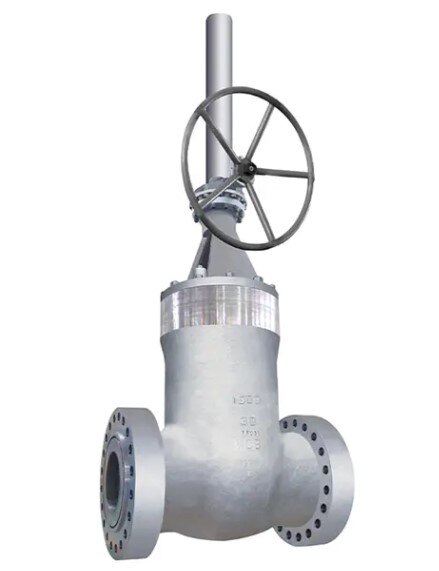
The sealing type of a gate valve determines its applicable working conditions and sealing effectiveness. Different sealing structures vary significantly in design principles, material characteristics, and operating environments. The main types include metal-to-metal sealing, soft sealing, and parallel gate sealing.
Metal-to-metal sealing is a robust and stable sealing method. In this design, the gate and valve body sealing surfaces are in direct contact, forming a tight seal through precision machining.
This type of sealing offers excellent resistance to high temperature and high pressure and is suitable for extreme conditions such as high-pressure steam systems and high-temperature oil and gas pipelines. Although durable, it requires high machining precision and strict installation quality.
Soft sealing uses rubber or other elastic materials as sealing media, relying on elastic deformation to achieve sealing performance. It provides excellent sealing performance under low to medium pressure conditions and achieves very low leakage rates.
However, in high temperature or high pressure environments, soft sealing materials have limitations. Rubber-based materials may age, deform, or lose elasticity, making them unsuitable for severe operating conditions.
In parallel gate sealing structures, the gate moves parallel to the flow direction and is often combined with metal sealing designs. This structure maintains good sealing performance and anti-leakage capability even under high pressure conditions.
It also provides relatively uniform wear during operation, making it suitable for systems requiring frequent operation or high differential pressure conditions.
The sealing system of a gate valve consists of multiple key interfaces, each facing different operational challenges. Structurally, leakage can be classified into static leakage and dynamic leakage.
Static sealing refers to sealing at relatively fixed connection points, mainly including the following three areas:
- Body-to-bonnet connection: This is a critical pressure-bearing sealing area. Most manufacturers use compressed graphite or PTFE gaskets at this location. These materials can withstand high pressure, with working limits reaching approximately 2500 psi under certain conditions. Proper installation is essential to ensure uniform gasket compression. Uneven bolt tightening may lead to deformation and sealing failure.
- Stem packing area: The stem packing area is a key interface combining dynamic and static sealing. Packing materials typically include braided graphite, PTFE, or rubber compounds, which form a seal around the moving stem through compression. Field data shows that approximately 90% of stem leakage issues result from improper installation or incorrect packing compression. Therefore, correct torque and compression control are essential during installation and maintenance.
- Flange connection area: Flange connections between valve and piping systems are also critical leakage points. Full-face gaskets are used, and bolts must be tightened according to specified torque values to ensure uniform sealing. For volatile organic compounds or hazardous media, flange sealing must comply with environmental standards such as EPA Method 21. In sour gas environments containing hydrogen sulfide, nickel-based alloy gaskets are often required to prevent long-term corrosion-related failure.
Dynamic sealing refers to sealing areas where relative motion occurs during valve operation, primarily the contact between gate and seat.
- Friction and wear between gate and seat: The gate and seat form the only moving sealing interface in a gate valve. During opening and closing cycles, metal surfaces come into contact and experience friction. Over time, sealing surfaces gradually wear. In high-pressure steam systems, this wear is particularly significant. Studies indicate that after approximately 500 operating cycles, system efficiency may decrease by about 15%. When system pressure exceeds 150 psi, even minor sealing defects can lead to significantly increased leakage.
- Self-tightening mechanism of wedge gate design: Wedge gate designs utilize media pressure to enhance sealing performance. When the valve is closed, fluid pressure acts on the gate, forcing tighter contact between gate and seat, achieving a self-tightening effect. Under severe conditions, engineers often apply Stellite alloy hard-facing coatings to improve wear resistance. This material can extend service life to more than three times that of conventional materials, especially in abrasive or particle-laden media environments.
The performance of sealing materials directly determines the adaptability of gate valves under different working conditions. Common materials include graphite, PTFE, and metal sealing materials.
Graphite packing offers excellent high-temperature resistance and can operate stably at temperatures up to approximately 600°C. It is widely used in high-temperature steam and hydrocarbon media applications.
Graphite also provides good self-lubrication, reducing friction on the stem. However, in oxygen-rich environments, long-term use may lead to oxidation and performance degradation, requiring anti-oxidation measures.
PTFE is suitable for conditions below approximately 230°C and offers a very low friction coefficient and excellent chemical resistance. It is widely used in clean water systems and chemical media applications.
However, under high temperature or long-term pressure, PTFE may experience cold flow deformation, gradually losing its original shape and reducing sealing effectiveness.
Metal seals are typically made of stainless steel or alloy materials and are suitable for high-pressure, abrasive, or particle-containing media. Although superior in temperature and pressure resistance, they require high machining precision, with surface roughness typically controlled at 16 Ra or better.
In particulate media, metal sealing surfaces are susceptible to erosion and often require hardened coatings for protection.
Sealing performance depends not only on materials but also on structural design. Wedge angle, seat angle, and surface treatment quality all significantly influence sealing effectiveness.
Wedge angles typically range between 5° and 10°. Proper design allows self-compensation for minor wear, maintaining tight sealing.
When combined with a seat angle of about 30°, a dual-sealing structure is formed. Compared to traditional flat gate valves, this design can reduce leakage paths by approximately 70%, significantly improving sealing reliability.
When sealing surface roughness is below 3.2 μm Ra, micro-leakage can be effectively reduced. In high-velocity or particle-laden flows, erosion is a concern.
Stellite or tungsten carbide coatings significantly improve erosion resistance and extend service life. Modern manufacturing relies on CNC machining and robotic polishing to ensure consistent precision and prevent localized leakage.
To ensure sealing reliability under real operating conditions, several industrial standards are used, including API 598 and MSS SP-61.
API 598 is widely used in refinery and oil & gas industries. It requires valve body and seat testing at 1.1 times the maximum working pressure.
Leakage is checked at body-to-bonnet joints, stem packing, and gate-seat interfaces. It is one of the most widely adopted sealing test standards in the industry.
MSS SP-61 is primarily used for steel valves in the power industry, especially nuclear and high-temperature steam systems. It imposes stricter requirements than API 598.
Soft-seated valves must achieve zero visible leakage and withstand multiple thermal cycles, ensuring reliability under extreme operating conditions.
Allowable leakage varies by valve size and standard. For small metal-seated gate valves under API 598, leakage may be around 24 drops per minute, while larger sizes may allow approximately 0.3 mL/min.
Interpretation of results is critical:
Persistent leakage during thermal cycles indicates material fatigue or thermal damage
Localized leakage suggests misalignment or machining defects
Pressure drop exceeding 5% within one minute indicates insufficient sealing force or improper wedge engagement
Proper design and manufacturing provide the foundation for sealing performance, but operation and maintenance determine long-term reliability.
Valve operation should avoid rapid or forceful actions. Sudden opening or closing causes impact between gate and seat, accelerating wear and deformation.
Operators should ensure smooth operation, especially under high differential pressure, to prevent water hammer or pressure shock damage.
Regular inspection helps identify early signs of seal failure. Key areas include corrosion, scratches on sealing surfaces, packing extrusion, aging, and flange leakage.
Industry practice shows that proper maintenance can extend sealing system life by 40% to 60%.
Stem and moving parts should be lubricated every three months as recommended by manufacturers. Lubrication reduces friction and forms a protective film to slow wear.
Critical systems should undergo periodic pressure testing according to API 598 standards, with leakage trends recorded for predictive maintenance. After maintenance, flange bolts must be retightened to specified torque to prevent gasket deformation and premature failure.
Gate valve sealing performance is a key indicator of quality and applicability. From structural design and material selection to manufacturing precision, standard testing, and operational maintenance, every stage plays a critical role in final sealing effectiveness.
In industrial fluid control systems, only by fully understanding gate valve sealing principles and strictly following standards throughout selection, installation, operation, and maintenance can long-term reliable sealing performance be ensured, thereby providing strong support for safe, stable, and efficient industrial production.
