
Comparison Between Top Entry and Side Entry Ball Valves
In industrial valve systems, ball valves are essential devices for ensuring precise flow control, reliable shutoff, and stable performance under various operating conditions. Featuring robust structural designs and a simple quarter-turn operating mechanism, ball valves have become one of the most widely used valve types in modern process industries. They are extensively applied in sectors such as oil and gas, petrochemical refining, power generation, and water treatment. In these industries, valve reliability directly affects production safety and economic efficiency. Therefore, selecting the appropriate valve type is critical for maintaining stable and efficient industrial operations. Among the many valve configurations available, top entry ball valves and side entry ball valves are two of the most common designs. Each has its own characteristics in terms of maintenance convenience, installation methods, and manufacturing complexity. Understanding the differences between these two types helps engineers and operators select the most suitable valve for specific applications.
After understanding the overall role of ball valves in industrial systems, we can examine the first major type, top entry ball valves. This design is named after its distinctive top-access structure and is currently one of the most preferred ball valve types for high-pressure and critical service applications.
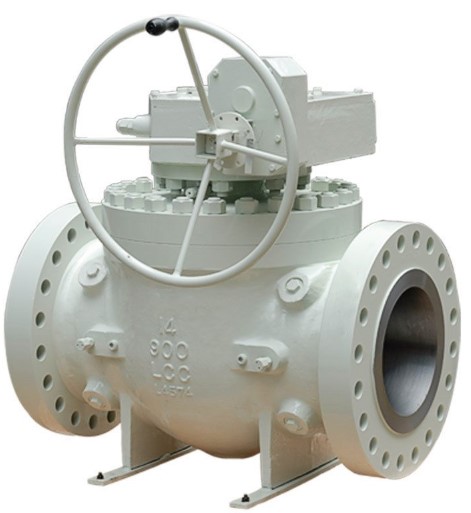
Top entry ball valves feature a one-piece body design that provides excellent structural integrity. The main internal components include the ball, seats, and stem, all of which can be accessed through the valve bonnet located at the top of the valve body.
This design allows technicians to inspect, maintain, or replace internal components without removing the valve from the pipeline system. By simply opening the top cover, maintenance can be performed in-line, significantly reducing system downtime and minimizing operational interruptions.
- In-line Maintenance Capability: The greatest advantage of top entry ball valves is their ability to support in-line maintenance. By removing the bonnet, technicians can directly access critical components such as the ball, seats, seals, and stem. This greatly improves maintenance efficiency and minimizes system shutdown time.
- Superior Structural Integrity: With a one-piece valve body construction, the number of body joints is minimized. Compared with split-body designs, top entry ball valves have fewer potential leakage points, resulting in a more reliable and simplified structure.
- High-Pressure Performance: Top entry ball valves are typically manufactured from high-strength materials such as stainless steel or carbon steel, providing excellent corrosion resistance. Their robust structure allows them to withstand high pressure and extreme temperature conditions, ensuring stable performance in demanding environments.
- Automation Compatibility: These valves are well suited for integration with pneumatic or electric actuators, enabling automated control. Automation improves system efficiency and reduces the risk of human operational errors, especially in industrial systems that require continuous monitoring or remote operation.
Top entry ball valves are widely used in critical process systems that require continuous operation and high safety standards. Typical applications include:
- Petrochemical processing plants
- Power generation facilities
- Offshore and subsea systems
- Oil refineries
- Long-distance pipeline operations
In these demanding industrial environments, valve reliability is essential to ensure safe system operation. Due to their high reliability and convenient maintenance features, top entry ball valves are often the preferred choice.
After examining the design of top entry ball valves, we can now look at another common configuration—side entry ball valves. This design assembles internal components from the side of the valve body and offers advantages in manufacturing cost and installation flexibility. It is widely used in low- to medium-pressure industrial systems.
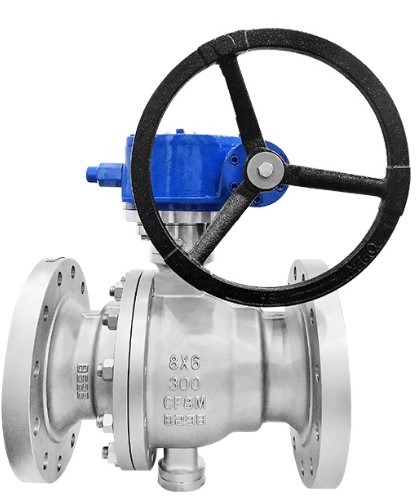
Side entry ball valves, also known as split-body ball valves, are designed so that internal components are installed from the side of the valve body. The ball, seats, and stem are assembled through the side openings of the valve body. The body itself is typically constructed in two-piece or three-piece sections, which are connected and secured using bolts or studs.
This structural approach simplifies manufacturing and assembly processes, providing advantages in cost control. The ball is connected to a stem positioned on the side of the valve body. By rotating a handle or actuator, the ball performs a quarter-turn rotation to open or close the flow passage.
- Cost Advantage: Because the manufacturing and assembly processes are relatively simple, side entry ball valves generally have lower initial costs. For projects with limited budgets, they provide a more economical solution.
- Ease of Installation: The structure of side entry ball valves is relatively straightforward, making installation easier. In environments where installation space is limited, this type of valve may be more suitable.
- Maintenance Considerations: For maintenance, side entry ball valves usually need to be removed from the pipeline. Although their structure allows maintenance personnel to access internal trim components relatively easily, the maintenance process may result in longer system downtime.
Side entry ball valves provide reliable shutoff performance and are particularly suitable for low- to medium-pressure systems. In these systems, compact design, economic cost, and ease of installation are often key considerations.
Typical applications include:
- Standard production lines
- General industrial applications
- Systems with low maintenance frequency
- Installations where scheduled shutdowns are possible
After examining the structural characteristics of both valve types, we can now directly compare them from four perspectives: structural design, maintenance, performance, and cost. This comparison helps determine which type is better suited for specific applications.
Top entry ball valves adopt a one-piece body with access from the top, whereas side entry ball valves use a split-body design with side assembly. This fundamental structural difference leads to distinct performance and application characteristics.
The integral body structure of top entry valves provides superior structural integrity, while the split-body design of side entry valves offers greater flexibility in manufacturing and installation.
Maintenance convenience is a critical factor in industrial valve selection. Top entry ball valves support in-line maintenance, allowing repairs without removing the valve from the pipeline, which significantly reduces system downtime.
Side entry ball valves typically require removal from the pipeline for maintenance, resulting in longer service interruptions.
For systems requiring frequent maintenance or in-line servicing, top entry ball valves offer higher operational efficiency. If maintenance frequency is low or can be scheduled during planned shutdowns, side entry ball valves remain a practical option.
Top entry ball valves generally provide better performance under high-pressure conditions. With fewer potential leakage paths, they offer greater stability and longer service life in high-pressure and high-temperature environments. Their robust design enables them to meet stringent industry standards such as API specifications.
Side entry ball valves, due to their bolted body construction, typically have more potential leakage paths and are more commonly used in standard pressure and temperature conditions. Under extreme conditions, they may require more frequent maintenance.
In terms of initial cost, side entry ball valves usually have an advantage. Their simpler structure and easier manufacturing process help reduce production costs.
Although top entry ball valves have a higher initial cost, their longer service life, lower maintenance requirements, and reduced downtime may result in a better total cost of ownership in critical applications.
Selecting the appropriate valve design requires careful consideration of multiple factors. The following are key aspects to evaluate during valve selection.
If a system requires frequent maintenance or in-line servicing, top entry ball valves provide greater operational efficiency. Their ability to be serviced without removing them from the pipeline significantly reduces downtime, which is particularly important for systems requiring continuous operation.
If maintenance frequency is low or can be performed during scheduled shutdowns, side entry ball valves may provide a more cost-effective solution.
Installation space is another important consideration. In confined installation environments, side entry ball valves may be more suitable. Although top entry valves are compact, their top-access design requires sufficient overhead space for maintenance.
For high-pressure or hazardous service conditions, top entry ball valves generally offer superior reliability. Their integral body structure and reduced leakage paths make them more suitable for harsh industrial environments. Side entry valves are typically better suited for low- to medium-pressure applications.
From a budget perspective, side entry ball valves usually offer lower initial costs. However, for critical flow control systems, it is important to evaluate the total cost of ownership, including maintenance expenses, downtime costs, and replacement costs. While top entry ball valves require higher upfront investment, their long-term operational costs may be lower.
In critical process systems, valve reliability directly impacts production safety and economic performance. In such cases, top entry ball valves are generally considered a safer and more reliable solution. For non-critical systems, side entry ball valves provide an economical and practical alternative.
Both top entry ball valves and side entry ball valves have their own suitable application scenarios. Top entry ball valves are preferred in critical industrial systems due to their in-line maintenance capability, excellent sealing performance, and strong adaptability to high-pressure conditions. Side entry ball valves, on the other hand, offer cost advantages and easier installation, making them widely used in standard industrial applications.
In systems where reliability and maintenance efficiency are critical, top entry ball valves are often the ideal choice. Their one-piece body structure, fewer leakage paths, and in-line maintenance capabilities make them well suited for demanding environments such as petrochemical plants, power generation facilities, and offshore platforms.
Side entry ball valves provide a more economical and practical solution for less demanding systems. They are suitable for low- to medium-pressure applications, systems with low maintenance frequency, and projects with limited budgets.
Ultimately, the final selection should be based on a comprehensive evaluation of the specific application requirements, including maintenance frequency, operating conditions, installation environment, budget constraints, and system importance. A well-informed valve selection ensures that industrial valve systems operate safely, efficiently, and economically.
