
Forged Steel Ball Valve: Quality Valve for Harsh Conditions
In industrial operations, valves are critical devices for controlling fluid flow. Among them, forged steel ball valves have become a preferred choice in high-pressure, high-temperature, and corrosive environments due to their exceptional strength and reliability. Compared to conventional cast valves, forged steel ball valves are manufactured using forging processes, resulting in denser metal structures capable of withstanding harsher operating conditions. These valves find extensive applications across industries such as oil and gas, chemical processing, power generation, and water treatment.
This article provides a comprehensive overview of forged steel ball valves, covering their fundamental concepts, common material types, key performance advantages, primary application areas, performance under specific conditions, selection guidelines, and maintenance practices. By reading this article, readers can gain a thorough understanding of the technical characteristics of forged steel ball valves and use this knowledge to guide practical selection and operation.
A forged steel ball valve is a steel ball valve manufactured using forging technology. While it falls under the general category of steel ball valves, its unique structural design and ball support method distinguish it as a separate category. These valves are renowned for their high strength and reliability, making them particularly suitable for high-pressure and extreme-temperature industrial environments. The design of forged steel ball valves strictly adheres to the highest industry standards, ensuring stable performance under severe operating conditions.
Forging involves heating steel to high temperatures and then shaping it under immense pressure. This process refines the metal’s grain structure, making the valve body stronger and less porous than cast valves. The forged metal exhibits a more uniform grain arrangement, improving resistance to fatigue and stress. Consequently, forged steel ball valves offer significantly superior impact resistance and fatigue durability compared to ordinary cast valves. This strength advantage is precisely why forged steel ball valves are widely employed in critical industrial applications.
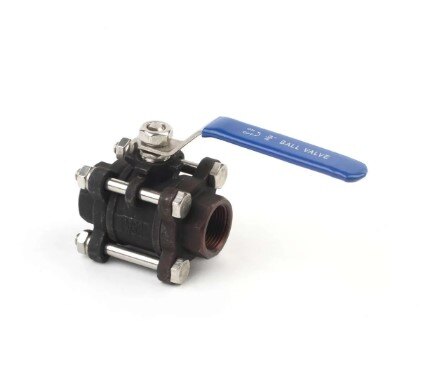
The performance of forged steel ball valves primarily depends on the materials used in their construction. Different steel grades vary in corrosion resistance, strength, and suitability for specific environments. Additionally, valve body design affects ease of installation and maintenance.
Forged steel ball valves can be classified based on steel grades. Common stainless steel materials include 304, 304L, and 316L.
- 304 Stainless Steel: Standard stainless steel with good corrosion resistance and durability, suitable for general industrial applications.
- 304L Stainless Steel: A low-carbon variant of 304, which prevents intergranular corrosion after welding and enhances overall corrosion resistance.
- 316L Stainless Steel: Contains molybdenum, offering superior corrosion resistance, especially in highly corrosive, saline, or marine environments.
In addition to stainless steel, forged steel ball valves are available in a variety of other materials, including A105N, LF2, F11, F22, F5, F91, F304, F304L, F304H, F316, F316L, F316H, F321, F347H, F347, F51, F53, and F55. These materials cover a wide range, from carbon steels to various alloy steels, enabling adaptation to different media and corrosive environments.
Structurally, forged steel ball valves are typically categorized into full bore and reduced bore designs.
- Full Bore: The internal passage matches the pipeline diameter, minimizing flow restriction and ideal for high-flow applications.
- Reduced Bore: Suitable for installations with limited space.
In terms of assembly, three-piece valve bodies facilitate maintenance and disassembly, ideal for environments requiring frequent servicing. Two-piece valve bodies offer higher rigidity but less flexibility.
The material and structural benefits translate into superior performance in real-world applications. Forged steel ball valves stand out in three key areas: high strength and durability, versatility and reliability, and ease of operation with low maintenance requirements.
Forging provides exceptional strength and durability. The forged metal grain structure resists fatigue and stress, extending service life while reducing maintenance needs. The solid construction minimizes defect risks, ensuring stable mechanical performance under high pressure and temperature. This durability is critical for reducing long-term maintenance costs and minimizing downtime.
Forged steel ball valves are suitable for diverse applications, including high-pressure systems, corrosive environments, and extreme temperature conditions. Their robust design ensures stable performance and operational efficiency, making them ideal for the oil, chemical, and power industries. Whether controlling corrosive chemicals or high-temperature steam, forged steel ball valves provide reliable sealing and flow control.
Forged steel ball valves feature a spherical ball design that allows for rapid quarter-turn operation. This simplifies usage and reduces long-term wear. With a sturdy structure and superior sealing, maintenance needs are minimal, lowering costs and downtime. Users can ensure long-term reliable operation by following standard operating and maintenance procedures.
Thanks to their core advantages, forged steel ball valves are widely used in several key industries, each with specific performance requirements.
The oil and gas sector is a primary user of forged steel ball valves, spanning upstream exploration and production, midstream pipeline transport, and downstream refining. Valves in these sectors must withstand crude oil, natural gas, refined products, and chemicals under extreme conditions. The tight sealing of forged steel ball valves is crucial for safety and leak prevention.
In petrochemical and chemical plants, forged steel ball valves control corrosive chemicals and acidic or alkaline liquids. Resistance to corrosion and high-temperature capability is essential for safe, efficient operation. By selecting appropriate alloy materials, these valves can withstand corrosive media, extend service life, and ensure operational safety.
In power generation, including thermal and nuclear plants, forged steel ball valves manage steam, water, and fuel pipelines. Reliable valve performance is vital in high-pressure, high-temperature steam systems to ensure efficiency and safety. Forged steel retains stability at elevated temperatures, maintaining structural integrity and sealing reliability.
In large-scale water treatment and distribution systems, forged steel ball valves play a key role, especially under high-pressure or specialized chemical treatment conditions. In marine applications, these valves control corrosive fluids like seawater, and their corrosion resistance and durability make them ideal for the harsh ocean environment.
In mining, forged steel ball valves are used for slurry transport, water management, and process fluid control. The abrasive nature of mining environments requires wear-resistant valves, making forged steel ball valves particularly suitable for handling solid particles and high-velocity fluids.
Beyond industry applications, forged steel ball valves demonstrate unique benefits under specific operational conditions, including high pressure, high temperature, corrosive media, and emergency shutoff systems.
In high-pressure systems, the exceptional strength of forged steel ball valves ensures safe operation. Their robust structure withstands extreme internal pressure, suitable for hydraulic systems, gas pipelines, and high-pressure chemical processes. It is essential to match the valve’s pressure rating with system requirements to prevent overpressure failures.
Forged steel maintains stability under high temperatures, preserving structural integrity and sealing performance. This is particularly important in steam and hot oil systems. Material selection should align with the operating temperature range.
For corrosive fluids, selecting the appropriate alloy material allows forged steel ball valves to resist various chemicals. For example, 316L stainless steel is suitable for general corrosive environments, while specialized alloys like Hastelloy can handle highly aggressive media. Correct material selection prolongs valve life and ensures system safety.
The quarter-turn operation and reliable closure make forged steel ball valves ideal for emergency isolation or safety shutdowns. In emergency systems, valves must fully cut off flow quickly, and forged steel ball valves meet this requirement effectively.
Understanding performance and applications is essential, but practical procurement requires a systematic selection approach. Five key aspects must be considered: material selection, pressure rating and size compatibility, valve body design and connection type, sealing material, and manufacturer qualifications.
Material choice directly affects performance and lifespan. High-quality steel offers durability and corrosion resistance, while poor-quality materials risk early failure, especially under high pressure. Users should select steel grades based on fluid type, temperature, pressure, and corrosion levels. Weldability is also crucial, as low-quality steel may result in weak joints, causing leaks or serious failure.
Proper valve size and pressure rating are essential. Undersized valves restrict flow, reducing system efficiency, while oversized valves may cause leakage or inefficiency. Match valve size to pipeline layout, measure flow and pressure requirements, and verify manufacturer specifications for maximum pressure. Consult professionals if needed to avoid exceeding pressure limits.
Select body design based on maintenance requirements. Three-piece bodies are easy to service, suitable for frequent maintenance, while two-piece bodies offer rigidity for less frequently serviced systems. Connection options include flanged, threaded, and welded; compatibility with existing pipelines is crucial. Flanges allow easy disassembly, threaded connections suit small diameters, and welded connections provide maximum sealing and strength.
Sealing material affects temperature tolerance and wear resistance. PTFE seals are wear-resistant but limited in high temperatures, suitable for general industrial use. Graphite seals handle higher temperatures but wear faster, suitable for high-temperature applications. Choose seals according to operational conditions.
Evaluating manufacturer reputation and certifications helps ensure valve quality. Low-cost options may be attractive but risk failures and high maintenance costs. High-quality forged steel ball valves offer reliability and peace of mind. Consider brand reputation, certifications, and after-sales support for informed decisions.
Proper selection ensures long-term operation, but regular maintenance is key to extending service life. Core elements include routine inspections, lubrication and cleaning, and correct operation combined with scheduled maintenance.
Regularly check for leaks or signs of corrosion. Inspect the valve body, connections, and packing areas, addressing issues promptly. Also, ensure packing bolts are properly tightened to maintain sealing integrity.
Lubricate stems and seats with suitable lubricants to maintain smooth operation and reduce wear. Keep external surfaces clean to prevent debris accumulation and corrosion. Internal passages should be cleaned periodically, according to the medium’s characteristics.
Operate valves fully open or fully closed to avoid damaging sealing surfaces and fluid erosion. Replace seals or O-rings as necessary to maintain sealing performance. Follow the manufacturer’s maintenance manual and adhere to routine inspection schedules.
Forged steel ball valves are indispensable components in industrial production, offering high strength, durability, and reliability in high-pressure, corrosive, and extreme-temperature environments. Forging creates a robust structure capable of meeting demanding industrial conditions. Understanding material characteristics, structural types, application areas, and selection criteria enables enterprises to make informed choices, enhancing system safety, reducing maintenance costs, and extending equipment lifespan. As the industrial sector continues to prioritize safety and efficiency, the value of forged steel ball valves will grow, with market demand expected to remain strong.
