
Rubber-Lined Butterfly Valve: Structure, Advantage & Selection
In pipeline systems, valves are critical components used to control the flow of fluids. Among them, butterfly valves have become one of the most widely used valve types in industrial applications due to their simple structure, easy operation, and broad applicability. Within the butterfly valve family, the rubber-lined butterfly valve holds an especially important market position thanks to its excellent corrosion resistance and reliable sealing performance.
By adding an elastic rubber lining inside the valve body, rubber-lined butterfly valves effectively isolate the metal body from corrosive media, significantly extending service life. This design makes them widely used in industries such as water treatment, chemical processing, water supply, and HVAC systems. At the same time, different rubber materials are suitable for different media and temperature conditions, while connection types and actuation methods also vary, offering users a wide range of selection options.
This article provides a systematic explanation of rubber-lined butterfly valves, including their basic structure and working principle, main types, seven key advantages, limitations in practical applications, suitable working conditions, and selection recommendations. The goal is to help readers fully understand the performance characteristics of rubber-lined butterfly valves and make appropriate engineering decisions.
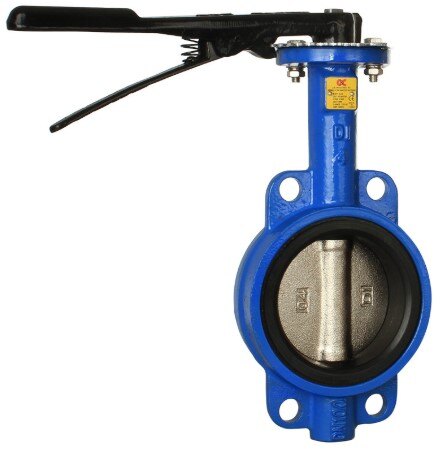
A rubber-lined butterfly valve is a quarter-turn rotary valve. It regulates the flow of liquids, gases, or media containing solids through a centrally located disc. The valve body and seat area are lined with elastic rubber material, which improves corrosion resistance and provides more reliable sealing performance.
Butterfly valves are rotary motion valves that operate through a 90-degree rotation. They are commonly used in large-diameter, low-pressure pipeline systems. Because of their wide application range and critical role in industrial systems, butterfly valves are considered one of the essential basic valve types in industry.
The main components of a rubber-lined butterfly valve include:
- Disc (Butterfly Plate): The core flow control element. When rotated 90 degrees, the valve changes from fully open to fully closed.
- Stem (Shaft): Connects the actuator or handle and transmits torque to rotate the disc.
- Seat: The key sealing interface. The rubber-lined seat deforms elastically during closure, filling small gaps and forming a tight, uniform seal.
- Valve Body: The structural housing connected to the pipeline. The internal surface is typically rubber-lined to isolate the metal body from direct contact with the medium.
- EPDM (Ethylene Propylene Diene Monomer): Suitable for water and steam applications, with a temperature range of approximately -40°C to 150°C.
- NBR (Nitrile Rubber): Suitable for oils and petroleum-based media, with a temperature range of approximately -40°C to 125°C.
- VITON (FKM, Fluoroelastomer): Suitable for chemical and high-temperature environments. It offers superior temperature resistance but comes at a higher cost.
Different materials are selected based on media type and operating temperature conditions.
Rubber-lined butterfly valves can be classified into several types based on structural design and actuation method to meet different operating requirements.
Wafer Type Butterfly Valve: Installed between pipeline flanges, this is a compact and cost-effective design suitable for general flow control applications. It is the most common and economical connection type.
Semi Lug Butterfly Valve: Features bolt holes on the valve body, making installation and alignment easier compared to wafer type. It also allows single-sided pipeline disassembly, improving maintenance convenience.
High-Performance Double Offset Butterfly Valve: The disc is offset from the seat centerline, reducing wear and improving sealing performance. It is suitable for applications requiring higher sealing reliability.
Triple Offset Butterfly Valve: Typically uses a metal sealing structure and is designed for high-pressure, high-temperature, and zero-leakage conditions. Although not part of rubber-lined designs, it is often used as an alternative in extreme conditions.
Grooved Butterfly Valve: Widely used in HVAC and fire protection systems. It uses grooved mechanical connections for fast installation and improved construction efficiency.
Manual Operation: Operated by a handle or worm gear. Suitable for low-frequency opening and closing applications.
Electric Actuator: Integrated with PLC systems for remote control and automation.
Pneumatic Actuator: Driven by compressed air, offering fast response and suitable for quick shut-off operations.
Hydraulic Actuator: Used in large-diameter or high differential pressure applications, providing high torque output.
Rubber-lined butterfly valves are widely used in water treatment, chemical, and supply systems due to their strong performance advantages in several key areas: corrosion resistance, sealing performance, compact structure, cost efficiency, fast operation, media adaptability, and low flow resistance.
One of the most significant advantages is corrosion resistance. The valve body is typically lined with elastic materials such as natural rubber (NR), NBR, EPDM, or FKM. These materials effectively isolate the metal body from direct contact with the medium, preventing corrosion.
In chemical industries, media may include sulfuric acid, hydrochloric acid, nitric acid, alkaline solutions, saltwater, and other corrosive substances. Rubber lining resists chemical attack, extending valve life and improving operational stability.
In wastewater treatment systems, rubber lining resists complex wastewater compositions, organic acids, salts, and suspended particles. Its elasticity also absorbs vibration and reduces erosion wear, making it suitable for both corrosive and abrasive conditions.
In seawater desalination and water treatment facilities, rubber lining prevents corrosion caused by aggressive media, protecting metal components and ensuring long-term stable operation.
However, rubber-lined butterfly valves are generally not suitable for strong oxidizing acids such as concentrated sulfuric acid or chromic acid.
Sealing performance is one of the core advantages. The rubber lining is vulcanized and firmly bonded to the metal body, preventing leakage.
During closure, the rubber seat elastically deforms to fill microscopic gaps, achieving bubble-tight sealing performance. These valves can typically meet ANSI/FCI 70-2 Class VI leakage standards.
They also offer bidirectional sealing capability, maintaining effective sealing in either flow direction. This makes them widely used in food, pharmaceutical, and ultra-pure water systems where leakage control is critical.
Even with slight deformation between disc and seat, the elastic recovery of rubber ensures stable sealing performance.
Rubber-lined butterfly valves are compact and lightweight compared to gate or globe valves of the same size. This reduces transportation, installation, and support structure costs.
For large-diameter pipelines above DN200, the weight advantage becomes even more significant. Their short face-to-face dimension allows installation in space-limited environments such as machinery rooms and compact industrial systems.
They are also flexible in installation orientation and can be used in horizontal, vertical, or inclined pipelines.
Due to simple structure and fewer components, butterfly valves are generally more economical than ball valves of the same specification. Maintenance is also easier, as the rubber seat can often be replaced online without removing the entire valve body.
This reduces downtime and maintenance costs, making them highly cost-effective for large pipeline systems.
The quarter-turn design allows full opening or closing within seconds, making it suitable for emergency shut-off and automated systems.
The required operating torque is relatively low due to the lightweight disc and streamlined design. This makes manual operation easy and reduces actuator load in automated systems.
They can be integrated with electric, pneumatic, or hydraulic actuators and easily connected to PLC control systems. For DN200 and above, automated actuation is often recommended.
Rubber-lined butterfly valves can handle a wide range of media, including certain corrosive and particle-containing fluids. Stainless steel bodies (e.g., CF8M) can be used for specific chemical environments.
They also perform well in slurry and solid-laden fluids, with good flow capacity and minimal clogging risk.
Rubber lining provides good wear resistance, protecting the valve from erosion and extending service life in water treatment systems.
When fully open, the disc aligns with flow direction, resulting in minimal resistance and low pressure loss. This reduces pumping energy consumption and improves system efficiency.
They are widely used in high-flow systems such as water distribution networks, cooling systems, and fire protection systems.
Despite their advantages, rubber-lined butterfly valves also have inherent limitations.
- Limited Temperature Range: Rubber materials have restricted temperature resistance. NBR, EPDM, and FKM each have different limits, but overall performance is lower than metal-seated or PTFE-lined valves. At high temperatures, rubber may harden, age, or crack, leading to reduced sealing performance.
- Limited Pressure Capacity: Rubber is compressible and may deform under high pressure. These valves are generally suitable for PN0.6 to PN1.6 MPa systems. For high-pressure applications, triple-offset or metal-seated valves are preferred.
- Seat Wear Issues: Repeated disc movement causes compression and friction on the seat. In abrasive media such as slurry or sand, wear is accelerated, reducing service life.
- Cavitation in Throttling Conditions: When operating between 30%–80% opening under high pressure drops, cavitation may occur and damage internal components.
- Sensitivity to High-Viscosity Media: Viscous fluids may adhere to the disc surface, affecting sealing performance. Gate valves may be more suitable in such conditions.
- High Torque in Large Sizes: Manual operation becomes difficult for sizes above DN300 due to increased torque requirements.
- Environmental Aging Effects: UV exposure, ozone, and weather conditions accelerate rubber aging, causing hardening or cracking over time.
After fully understanding the advantages and limitations of rubber-lined butterfly valves, it is important to clearly identify the operating conditions where they are the best choice, as well as the conditions where their use should be avoided, and to master a systematic selection methodology. The following provides specific guidance from three aspects: ideal application scenarios, unsuitable operating conditions, and key selection considerations.
Rubber-lined butterfly valves are best suited for low-to-medium pressure, normal temperature, and moderately corrosive media, including:
- Water treatment systems (wastewater, desalination, municipal water supply)
- Chemical processing (acid, alkali, and salt solutions)
- HVAC systems (cooling and heating water circulation)
- Water supply networks and fire protection systems
- General industrial fluid systems
They should not be used in:
- High-temperature environments
- High-pressure systems above PN1.6 MPa
- Highly abrasive slurry or mining systems
- Strong oxidizing media such as concentrated acids
Important considerations include:
- Media characteristics (corrosion, abrasion, viscosity, solids content)
- Temperature range and rubber material selection
- Pressure rating compatibility
- Connection type (wafer, semi lug, grooved)
- Actuation method (manual, electric, pneumatic, hydraulic)
- Sealing requirements (bidirectional or specific leakage class)
Rubber-lined butterfly valves play an important role in many industrial sectors. Through their rubber-lined structure, they provide excellent corrosion resistance, reliable sealing, lightweight operation, and cost efficiency. Their compact design, low flow resistance, and easy maintenance make them ideal for low-pressure and moderately corrosive applications.
However, users must also recognize their limitations in temperature, pressure, and abrasion resistance. Proper selection based on actual operating conditions is essential to ensure safety and long-term reliability.
In extreme conditions such as high temperature, high pressure, strong abrasion, or highly oxidizing media, alternative valve types such as metal-seated butterfly valves, PTFE-lined valves, or ball valves should be considered.
