
Bolted Bonnet Valves: Types, Selection Criteria & Uses
In industrial piping systems, valves are essential devices that control the flow of media and ensure the safe and stable operation of the entire system. Among various valve structural designs, the bolted bonnet valve stands out due to its detachable structure and reliable sealing performance. It is widely used in industries such as oil and gas, chemical processing, and power generation. This type of valve connects the bonnet to the valve body using bolts, allowing it to maintain stable sealing under high-pressure conditions while also enabling convenient maintenance and internal component replacement. As a result, it holds significant practical value in industrial operations.
This article provides a comprehensive overview of bolted bonnet valves, covering their basic structure, major types, comparison with welded bonnet designs, application fields, selection criteria, installation guidelines, and maintenance practices, offering valuable reference for engineering applications.
A bolted bonnet valve is a widely used industrial valve in piping systems, characterized by its bonnet being firmly connected to the valve body using bolts or studs. This connection forms a stable sealing interface between the bonnet and body, preventing leakage of internal media.
Unlike permanent connection methods, the bolted bonnet design is fully detachable. This means that when internal inspection or part replacement is required, the bonnet can be removed directly without taking the entire valve out of the pipeline system. This significantly improves maintenance efficiency and reduces downtime.
In terms of operation, the bolted bonnet valve uses the valve stem to transmit actuator force, enabling opening and closing actions. When the valve opens, the stem lifts the disc away from the seat, allowing smooth flow of the medium. When closing, the disc tightly presses against the seat to completely block fluid passage.
For regulating valves such as globe valves, precise flow control can be achieved by adjusting the vertical movement of the stem, enabling accurate modulation of flow rate.
A bolted bonnet valve is composed of several key components, each performing a critical function:
- Valve Body: The valve body is the main pressure-bearing structure. It is typically made of carbon steel, stainless steel, or alloy materials. The material selection depends on the corrosion properties, temperature, and pressure conditions of the working medium.
- Bonnet: The bonnet is located at the top of the valve and houses internal moving components such as the stem and disc. It is secured to the valve body using high-strength bolts or studs. Common fastener materials include ASTM A193 B7 high-strength steel.
- Valve Stem: The valve stem connects the actuator and the disc, transmitting external operating force to enable opening or closing of the valve.
- Seat and Disc: The seat and disc form the sealing pair, which is the core element responsible for controlling fluid flow and ensuring shutoff performance.
- Seals and Packing: Sealing components typically include graphite, PTFE (polytetrafluoroethylene), or spiral wound gaskets. These prevent leakage at connection and moving interfaces. In special applications involving toxic or hazardous media, a combination of bolted connection and seal welding is sometimes used to provide enhanced leak protection.
The bolted bonnet design is not limited to a single valve type. It is widely applied across several valve categories, each serving different functional requirements.
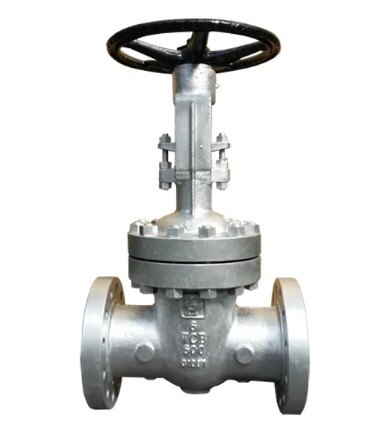
Bolted bonnet gate valves are primarily used for fully open or fully closed operations and are not suitable for throttling. The gate moves vertically, and when fully open, it rises into the bonnet cavity, allowing nearly unobstructed flow with minimal resistance.
Gate valves can be divided into two types:
Rising stem (OS&Y): The stem threads are outside the bonnet, and the opening position can be visually observed by stem height.
Non-rising stem (NRS): The stem rotates internally without vertical movement, suitable for installations with limited space.
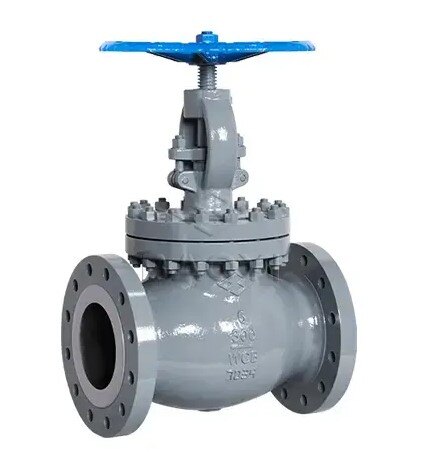
Bolted bonnet globe valves are widely used for throttling and flow regulation in industrial systems. Their internal flow path is typically S-shaped or curved to reduce flow resistance and pressure loss.
The disc moves linearly along the centerline of the seat, enabling precise flow adjustment. This results in good linear or equal-percentage flow characteristics.
The bolted bonnet structure enhances sealing integrity, providing higher structural strength and more stable sealing performance, especially under high-pressure conditions.
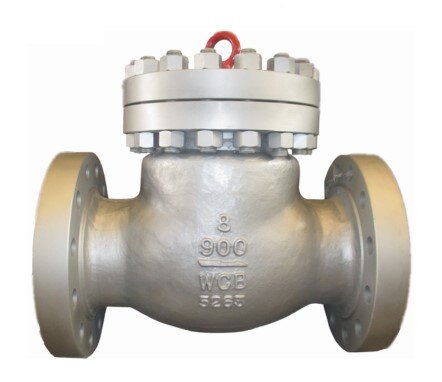
Bolted bonnet check valves are designed to prevent backflow and ensure one-way fluid movement. They typically use a disc or swing mechanism that opens under forward flow and closes automatically under reverse flow conditions.
Bolted bonnet ball valves are used in high-pressure systems requiring tight shutoff. The ball contains a circular bore, and rotation of the ball enables opening and closing. These valves offer low operating torque and excellent sealing performance.
Although their working principles differ, both types benefit from the bolted bonnet design in terms of maintenance convenience and disassembly.
In industrial valve design, both bolted bonnet and welded bonnet structures are commonly used. However, they differ significantly in maintenance, sealing, and application suitability.
The most notable advantage of bolted bonnet valves is their ease of maintenance. The bonnet can be quickly removed by loosening bolts, allowing internal inspection, repair, or part replacement without removing the valve from the pipeline.
In contrast, welded bonnet valves are permanently sealed structures. If internal components fail or the bonnet is damaged, the entire valve often needs replacement, resulting in higher maintenance cost and longer downtime.
Welded bonnet valves provide superior theoretical sealing performance due to the absence of detachable joints. They are suitable for applications requiring extremely low leakage rates.
However, bolted bonnet valves also achieve reliable sealing through high-quality gaskets and bolt preload force. In some cases, seal welding is added for extra protection in toxic or hazardous environments.
Bolted bonnet valves offer better flexibility and cost efficiency. However, improper maintenance may lead to bolt loosening due to vibration or thermal expansion, which can affect sealing performance.
Therefore, both designs have their own advantages and are selected based on pressure, temperature, and maintenance requirements.
Oil and Gas Industry: In the oil and gas sector, bolted bonnet valves are widely used in pipelines, wellhead equipment, and refining systems. These applications involve high pressure, high temperature, and flammable or explosive media, requiring strict sealing reliability. They are often designed according to standards such as API 600 and API 6D. The detachable structure facilitates on-site maintenance and reduces downtime losses.
Power and Chemical Industries: In power plants, bolted bonnet valves are mainly used in high-pressure steam systems. Thermal and nuclear power plants require valves capable of long-term operation under high temperature and pressure, often in the PN100–PN420 range. In chemical industries, corrosive media such as acids and alkalis are common. Therefore, corrosion-resistant materials such as stainless steel and Hastelloy are widely used. Frequent maintenance needs also make bolted bonnet designs highly advantageous.
Shipbuilding and Offshore Engineering: In marine applications, bolted bonnet valves are used in seawater cooling systems, ballast systems, and fuel transfer systems. Due to high salinity and humidity, corrosion resistance is critical. Special coatings or corrosion-resistant alloys are often applied. Additionally, compact maintenance space on ships makes the detachable structure particularly valuable.
When selecting a bolted bonnet valve, several technical factors must be considered:
Pressure and temperature ratings: Must exceed actual operating conditions with safety margin.
Media characteristics: Material compatibility is essential for corrosion resistance.
End connection type: Flanged, threaded, or butt-weld connections depending on pipeline design.
Actuation method: Manual, electric, or pneumatic operation.
Flow characteristics: On-off or throttling requirements.
Installation constraints: Space and accessibility limitations.
Proper selection ensures system safety, operational stability, and cost efficiency.
Several international and national standards regulate the design and manufacturing of bolted bonnet valves:
- ISO 6002: Steel gate valves with bolted bonnet requirements
- GB/T 12234: Chinese standard for petroleum and natural gas valves
- API 600: Steel gate valve design and manufacturing standard
- API 602: Small forged steel valves specification
- ASME B16.34: Pressure-temperature ratings, materials, and testing requirements
Compliance with these standards ensures product reliability and interchangeability.
Proper installation directly affects valve performance and service life. Key steps include:
Prepare tools such as gaskets, bolts, torque wrenches, and pipe fittings.
Inspect the valve for transport or manufacturing defects.
Ensure correct alignment between valve and pipeline to avoid stress concentration.
Position gaskets properly on sealing surfaces.
Tighten bolts evenly using a cross-pattern torque method.
Perform leak testing after installation.
Conduct opening and closing tests to verify smooth operation.
Only after passing all checks should the valve be put into service.
Regular maintenance is essential for long-term reliability. Key tasks include:
Inspect sealing between bonnet and body for leakage.
Check bolt tightness and detect loosening due to vibration or thermal expansion.
Monitor gasket and packing wear conditions and replace when necessary.
Lubricate valve stem and moving parts to reduce friction and corrosion.
Many valve failures result from undetected leakage or improper operation. Establishing routine inspection systems and training operators are critical to reducing failure rates.
In summary, bolted bonnet valves have become indispensable components in modern industrial piping systems due to their detachable structure, reliable high-pressure sealing performance, and wide applicability. From oil and gas to power generation and chemical processing, and from land-based facilities to marine engineering, these valves play a vital role in demanding operating conditions. A proper understanding of their structure, careful selection, correct installation, and consistent maintenance are essential to ensure long-term stable and safe operation of bolted bonnet valves in industrial systems.
