Guide to Installation of Wafer Check Valves
Wafer check valves are widely used one-way flow control devices in modern piping systems. They are also commonly referred to simply as check valves. Their fundamental function is to allow fluid to flow in only one direction while automatically closing when the flow stops or reverses, thereby preventing backflow in the pipeline system.
Because of their compact wafer-type structure, these valves can be installed directly between two pipeline flanges without the need for additional support brackets or complex fastening structures. This design significantly reduces installation space requirements and overall cost. As a result, wafer check valves are extensively used in water supply and drainage systems, chemical processing industries, petroleum and petrochemical pipelines, HVAC systems, power generation facilities, and food and pharmaceutical production lines.
Correct installation plays a crucial role in ensuring stable system operation, preventing reverse flow damage, reducing vibration and noise, and extending the service life of both the valve and the surrounding pipeline equipment. This article provides a comprehensive explanation of wafer check valve installation procedures, key precautions, and long-term maintenance practices.
A wafer check valve is an automatically operated, pressure-driven one-way valve. It does not require any external power source or manual operation. Instead, it relies entirely on the pressure difference of the flowing medium to open and close the valve disc.
When the medium flows in the forward direction, the fluid pressure pushes the valve disc open, allowing smooth passage through the pipeline. When the flow stops or reverses, the disc quickly returns to the closed position under the combined action of gravity, backpressure, or spring force, effectively preventing reverse flow.
Thanks to its wafer-style structure, the valve is installed between two flange faces and tightly clamped by bolts from the pipeline flanges. This compact arrangement makes it space-saving, lightweight, and easy to install. Additionally, it provides low flow resistance, quick response, and reliable sealing performance under normal working conditions.
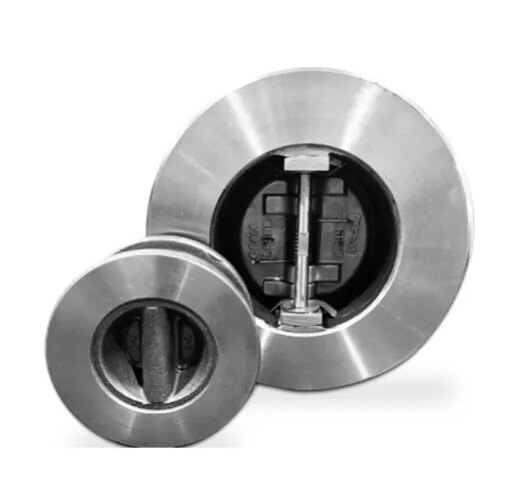
Proper preparation before installation is essential to ensure correct assembly, long-term reliability, and safe operation of the valve system. Preparation work includes verifying system parameters, preparing installation tools, inspecting the valve and pipeline, and ensuring cleanliness of all sealing surfaces.
Before installation begins, all necessary tools should be prepared in advance. These typically include a torque wrench to ensure accurate bolt tightening, pipe cutting tools for adjusting pipeline length if necessary, flange alignment tools to guarantee parallel positioning of flanges, and suitable gasket or sealing materials to ensure leak-free installation.
In addition, lubricants should be prepared for bolt threads to prevent seizing or galling during tightening. Proper preparation helps improve installation efficiency and reduces the risk of assembly errors.
Before installing the valve, a full inspection should be carried out. The valve body should be checked for cracks, dents, corrosion, or any mechanical damage.
The internal disc and valve seat should be examined for wear, scratches, or foreign particles. The disc should be manually moved to confirm smooth operation without sticking or resistance.
At the same time, the flow direction arrow marked on the valve body must be clearly visible and correctly identified to ensure proper installation orientation.
The pipeline ends and flange sealing surfaces must be carefully inspected and thoroughly cleaned. Any rust, welding slag, oil stains, or debris should be completely removed.
It is also important to confirm that the valve size matches the nominal diameter of the pipeline and that flange standards are consistent. Common flange standards include ANSI, DIN, BS, and JIS. Compatibility between valve flanges and pipeline flanges is essential.
Additionally, the flange spacing must be checked to ensure that there is sufficient space to accommodate the valve thickness without forcing or deformation.
Correct flow direction is one of the most critical installation requirements. The arrow on the valve body indicates the intended flow direction and must strictly match the system design flow.
If installed incorrectly, the valve disc may not open fully, resulting in restricted flow, increased pressure drop, abnormal vibration, noise, and potential damage to sealing surfaces. In severe cases, reverse flow may damage upstream equipment such as pumps and compressors.
The installation position of a wafer check valve directly affects its operating stability and overall system performance. Different valve types have specific installation requirements, and sufficient surrounding space must always be ensured.
All types of wafer check valves can generally be installed in horizontal pipelines. For single disc swing valves, it is important to ensure that the hinge pin remains in a vertical position so that the disc can move freely under gravity.
The valve should be installed centrally between flanges, and no obstacles should interfere with the disc movement range during opening.
Not all wafer check valves are suitable for vertical installation. Single disc swing valves are typically restricted to horizontal use. In contrast, dual disc and spring-assisted valves can be installed vertically.
In vertical installation, the flow must always be from bottom to top. Reverse vertical flow will prevent proper disc operation and may lead to system failure.
To ensure stable fluid flow and reduce turbulence impact on the valve, sufficient straight pipe sections must be maintained.
The upstream straight pipe length should be at least five times the pipe diameter, while the downstream section should be at least two times the diameter. At pump discharge points, a minimum of six times the diameter is recommended to reduce turbulence and mechanical stress.
The valve should not be installed near elbows, tees, reducers, or pump outlets where flow turbulence is strong. Pipeline inclination should not exceed five degrees.
If installation near such components is unavoidable, additional straight pipe length should be provided to stabilize the flow profile and protect valve performance.
Once installation positioning is confirmed, flange connection and gasket installation are carried out. This step is critical for ensuring sealing integrity and structural stability.
Flanges used in installation must strictly match valve specifications in terms of type, pressure rating, and sealing surface design. The flange surface must be clean, smooth, and free from defects or contamination.
Proper alignment between valve and pipeline flanges is necessary to prevent stress concentration and deformation during tightening.
Gasket materials must be selected based on operating conditions such as medium type, temperature, and pressure.
EPDM is commonly used for water and general chemicals. NBR is suitable for oil-based media. Viton is used for high-temperature applications, while PTFE is ideal for highly corrosive chemical environments.
The gasket thickness must also match system requirements to ensure proper compression and sealing performance.
The valve is placed between flanges with the correct flow direction. Gaskets are installed, and alignment tools are used to ensure parallel flange positioning.
Bolts should first be inserted loosely to confirm smooth fit. Tightening must follow a cross or diagonal sequence to ensure even force distribution. Initial tightening is done at low torque, followed by gradual tightening to the final specified torque value.
After system operation begins, bolts should be rechecked and retightened if necessary to compensate for gasket compression and thermal expansion effects.
Single Disc Valve: Ensure sufficient disc movement space and proper hinge orientation. This valve is not suitable for downward vertical flow conditions.
Dual Disc Valve: Ensure both discs open and close synchronously with proper sealing alignment. Suitable for both horizontal and vertical installation with correct flow direction.
Spring-Assisted Valve: Verify correct spring installation and proper tension. Ensure spring direction matches design requirements for stable operation.
Visual Inspection: Check bolt tightening, flange alignment, and gasket condition. Ensure no deformation or abnormal stress exists in the valve or pipeline.
Pressure Testing: Perform hydrostatic or pneumatic testing gradually. Inspect for leakage at all connection points and observe disc movement stability.
Bolt Retightening: After initial operation, periodic bolt retightening is required due to gasket compression and temperature variation effects.
Common errors include incorrect flow direction installation, improper flange spacing, insufficient straight pipe length, over-tightening or under-tightening of bolts, poor cleaning of pipeline debris, and incorrect material selection.
Proper inspection, adherence to installation standards, and careful execution can effectively prevent these problems.
Even though wafer check valves have a simple structure, regular maintenance is essential to ensure long-term stable operation.
Inspection should be conducted quarterly under normal conditions and monthly in corrosive environments. Check valve movement, sealing condition, and fastener tightness.
Every six months, internal cleaning should be performed to remove sediment or deposits. Moving components such as hinges and pins should be lubricated regularly. External surfaces should also be inspected for corrosion or coating damage.
Water treatment systems require corrosion-resistant materials. Oil and gas pipelines require strict inspection under high pressure and temperature. HVAC systems require monitoring of frequent cycling fatigue. Chemical plants require customized maintenance schedules based on medium corrosivity.
Although wafer check valves are structurally simple, their correct installation and maintenance are critical to ensuring system reliability and service life. Every stage—from preparation and flow direction confirmation to installation, testing, and maintenance—must be carried out with precision and care.
By following standardized procedures, avoiding common installation mistakes, and applying appropriate maintenance strategies based on operating conditions, wafer check valves can operate safely and efficiently for long periods. This ensures reliable one-way flow control and contributes to the stable, safe, and economical operation of the entire pipeline system.