
Rubber-Lined Valve vs. Fluorine-Lined Valve: How to Choose
In industrial production, corrosion protection in pipeline systems remains a key concern for enterprises. Whether in the chemical, pharmaceutical, power generation, or environmental protection industries, pipelines transporting corrosive media require reliable valves to regulate fluid flow. Rubber-lined valves and fluorine-lined valves are two major types of corrosion-resistant valves, each offering unique performance characteristics and application ranges. This article introduces their structure, materials, advantages, disadvantages, and typical applications to help users make informed decisions based on practical requirements.
Rubber-lined valves are control valves with rubber material applied to the internal cavity surfaces of the valve body. They are mainly used to regulate non-corrosive, mildly corrosive, or highly corrosive media. The core feature of these valves is the isolation of the metal body from the conveyed medium through an inner rubber lining, achieving effective corrosion and wear resistance.
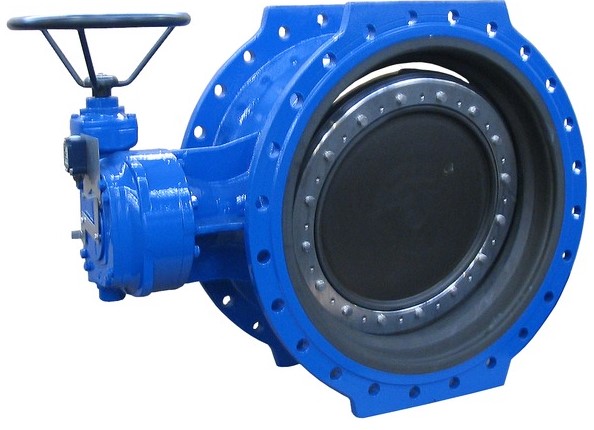
The basic structure of rubber-lined valves is similar to conventional valves, consisting of the valve body, bonnet, disc, and stem. The key difference lies in the rubber lining covering all internal surfaces that come into contact with the medium. This lining is bonded tightly to the metal substrate through specialized adhesion processes, forming a protective barrier.
Depending on the lining position and thickness, rubber-lined valves can be classified into fully lined and semi-lined types. Fully lined valves have rubber covering all flow passage surfaces and are suitable for highly corrosive media, while semi-lined valves only protect critical areas, offering lower manufacturing costs for mildly corrosive conditions.
The performance of rubber-lined valves largely depends on the selected lining material. Common rubber lining materials include:
- Butyl Rubber (IIR): Offers excellent airtightness and chemical corrosion resistance, especially suitable for transporting phosphoric acid and acetic acid media.
- Natural Rubber (NR): Provides high elasticity, mechanical strength, and outstanding abrasion resistance, making it suitable for slurry and ore pulp containing solid particles.
- Ethylene Propylene Diene Monomer (EPDM): Exhibits excellent aging resistance, ozone resistance, and weather resistance, suitable for water and steam systems in outdoor or moderate high-temperature environments.
- Chloroprene Rubber (CR): Shows good oil resistance, solvent resistance, and flame retardancy, widely used in petrochemical applications.
- Nitrile Rubber (NBR): Demonstrates excellent oil resistance and is preferred for petroleum media.
- Fluororubber (FKM): Provides outstanding high-temperature resistance, capable of operating above 200°C under strong corrosive environments.
- Silicone Rubber (VMQ): Features excellent performance across wide temperature ranges, is non-toxic and odorless, and is suitable for food and pharmaceutical industries.
- Hard Rubber and Soft Rubber: Hard rubber offers better wear resistance, while soft rubber provides superior sealing performance; combinations can be selected according to operating conditions.
Rubber-lined valves are suitable for transporting a wide range of media, including hydrogen cyanide, 50% fluorosilicic acid, hydrochloric acid, 30% sulfuric acid, 50% hydrofluoric acid, 85% phosphoric acid, various alkali and salt solutions, electroplating solutions, sodium hydroxide, potassium hydroxide, neutral brine, 10% sodium hypochlorite, moist chlorine gas, ammonia water, most alcohols, organic acids, aldehydes, cement slurry, lime slurry, vegetable oil, various gases, ethers, ketones, esters, desalinated water, and purified water.
However, rubber-lined valves are not suitable for strong oxidizing media such as concentrated nitric acid, chromic acid, concentrated sulfuric acid, hydrogen peroxide, or organic solvents, as these substances may chemically react with rubber, causing rapid degradation of the lining.
Fluorine-lined valves, also known as fluoroplastic-lined corrosion-resistant valves, are manufactured by placing polytetrafluoroethylene resin or other fluoroplastic materials inside the pressure-bearing metal valve body or on internal components using molding or embedding processes. These valves utilize the exceptional chemical resistance of fluoroplastics to withstand highly corrosive media.
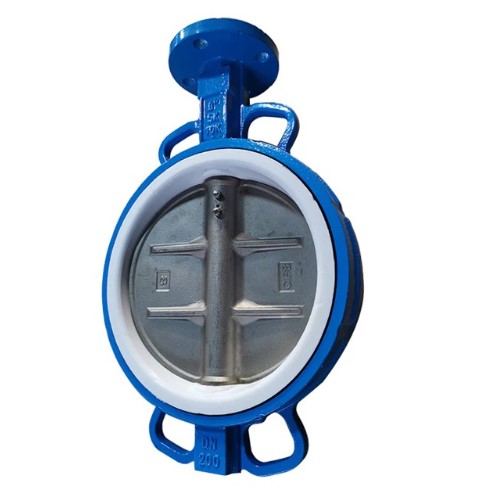
The manufacturing process of fluorine-lined valves is relatively complex and generally involves the following steps:
First, the metal valve body is designed with sufficient wall thickness to withstand system pressure. Then, polytetrafluoroethylene (PTFE) or other fluoroplastic materials are molded into lining components of specific shapes. These lining parts are either pressed onto the metal body through molding processes or installed using embedding techniques.
Finally, precision finishing and performance testing are conducted to ensure the lining is firmly bonded to the metal substrate without bubbles or cracks.
High-quality fluorine-lined valves typically require uniform lining thickness, usually maintained between 3 and 5 mm. Excessively thin lining layers are prone to damage, while overly thick lining may affect the mechanical strength of the valve.
Fluorine-lined valves use several types of fluoroplastic materials, each with distinct characteristics:
- Polytetrafluoroethylene (PTFE, F4): The most commonly used lining material, featuring excellent chemical stability, resistance to nearly all chemical media, and a wide operating temperature range from approximately -196°C to 260°C, with extremely low friction coefficients.
- Fluorinated Ethylene Propylene (FEP, F46): Compared with PTFE, FEP has better melt flow properties and can be injection molded with higher production efficiency. Its corrosion resistance is similar to PTFE, but the upper temperature limit is lower, around 200°C.
- Polychlorotrifluoroethylene (PCTFE, F3): Provides high mechanical strength, good cold flow resistance, and transparency, making it suitable for applications requiring visual monitoring of fluid flow.
- Polyvinylidene Fluoride (PVDF, F2): Offers high mechanical strength, excellent wear resistance, and superior radiation resistance, making it suitable for special applications such as nuclear power systems.
- Polypropylene (RPP): Although not a fluoroplastic, it is often used as an auxiliary sealing material in fluorine-lined valves due to its good corrosion resistance and relatively low cost.
- Polyvinyl Chloride (PVC): Rigid PVC provides certain corrosion resistance and is mainly used in low-pressure, room-temperature conditions.
- Polyolefin (PO): A new lining material with balanced performance and moderate cost.
Fluorine-lined valves can be classified into several types according to structural design:
- Fluorine-Lined Butterfly Valve: Features simple structure and fast opening/closing, suitable for large-diameter pipelines, mainly used for shut-off or flow regulation.
- Fluorine-Lined Ball Valve: Provides excellent sealing performance and low flow resistance, suitable for frequent operation conditions.
- Fluorine-Lined Globe Valve: Offers good regulation performance and is suitable for precise flow control pipelines.
- Fluorine-Lined Diaphragm Valve: Uses a flexible diaphragm as the opening and closing element, fully isolating the medium from moving parts such as the stem, making it especially suitable for high-purity or highly toxic media.
- Fluorine-Lined Gate Valve: Exhibits low flow resistance and is mainly used for non-frequent shut-off operations.
- Fluorine-Lined Plug Valve: Characterized by simple structure and fast operation, suitable for media containing suspended particles.
Understanding the performance differences between these two valve types helps in practical selection.
Fluorine-lined valves have significant advantages in corrosion resistance. Fluoroplastic materials such as PTFE exhibit extremely high chemical stability and can resist almost all strong acids, strong alkalis, strong oxidizing agents, and organic solvents. Media such as concentrated sulfuric acid, concentrated nitric acid, aqua regia, and hydrofluoric acid can be handled stably over long-term operation, making fluorine-lined valves the preferred choice for highly corrosive environments.
Rubber-lined valves offer relatively limited corrosion resistance. Although certain special rubbers such as fluororubber can withstand some strong corrosive media, most rubber materials are susceptible to swelling, softening, or degradation when exposed to strong oxidizing acids, concentrated sulfuric acid, or organic solvents. Therefore, rubber-lined valves are mainly used in environments with medium or low corrosion levels.
Fluorine-lined valves have a relatively narrow temperature range. Although fluoroplastics themselves can withstand high temperatures (PTFE up to approximately 260°C), differences in thermal expansion coefficients between the lining and the metal substrate may cause delamination or deformation under high-temperature conditions. In practical applications, fluorine-lined valves are typically limited to operating temperatures between -50°C and 150°C.
The temperature resistance of rubber-lined valves depends on material type. Ordinary rubber is generally suitable for -20°C to 80°C, while special materials such as silicone rubber and fluororubber can extend the range to approximately -60°C to 200°C. Overall, rubber-lined valves perform well in room temperature and medium-low temperature environments but are not suitable for high-temperature conditions.
Rubber-lined valves demonstrate excellent wear resistance. Rubber materials possess good elasticity and toughness, allowing them to absorb impact from solid particles and reduce abrasion. Natural rubber and butyl rubber are particularly suitable for transporting slurry media containing solid particles.
Fluorine-lined valves have relatively poor wear resistance. Fluoroplastics are relatively soft and can be easily scratched by hard particles. When the medium contains solid particles, the lining surface may develop scratches that eventually affect sealing performance. Therefore, fluorine-lined valves are generally unsuitable for media containing solid particles.
Fluorine-lined valves are manufactured using molding processes that ensure tight bonding between the lining and metal substrate, resulting in high surface smoothness. When combined with precision-machined sealing surfaces, excellent sealing performance can be achieved. Under high-pressure or high-vacuum conditions, the cold flow characteristics of fluoroplastics help fill microscopic surface irregularities, improving sealing reliability.
Rubber-lined valves rely on elastic deformation of rubber to achieve sealing. They require relatively lower machining precision of sealing surfaces because rubber elasticity can compensate for installation errors and thermal deformation. However, under high pressure differentials or frequent operation, rubber may wear out and require periodic replacement.
The service life of fluorine-lined valves mainly depends on the integrity of the lining and operating conditions. Under suitable temperature and medium conditions, fluoroplastic linings can last for many years. However, once the lining is damaged, repair is difficult and usually requires complete valve replacement.
Rubber linings may develop aging, cracking, or embrittlement after long-term use, but replacement is relatively easier and more economical. Some rubber-lined valve designs allow on-site lining replacement, improving maintenance convenience.
The manufacturing process of fluorine-lined valves is more complex and material costs are higher, typically costing several times more than equivalent metal valves. However, considering their irreplaceability in strong corrosion environments, the overall lifecycle cost may be lower.
Rubber-lined valves are relatively less expensive, especially when using natural rubber or nitrile rubber. For media with low corrosion severity, rubber-lined valves provide a cost-effective solution.
Selection between rubber-lined and fluorine-lined valves should consider media characteristics, operating conditions, and economic factors.
If the conveyed medium includes strong acids (such as concentrated sulfuric acid, concentrated nitric acid, or hydrochloric acid), strong alkalis (such as sodium hydroxide or potassium hydroxide), strong oxidizing agents (such as hydrogen peroxide or sodium hypochlorite), or organic solvents, fluorine-lined valves must be selected, as these media can quickly damage rubber materials.
If the medium is weak acid, weak alkali, salt solution, water, oil, or slurry containing small amounts of solid particles, rubber-lined valves are usually a more economical choice.
When operating temperatures exceed 150°C, fluorine-lined valves are generally not recommended because high temperatures may cause fluoroplastic softening, deformation, or decomposition.
Rubber-lined valves are suitable for room temperature and medium-low temperature environments. If the temperature exceeds the allowable range of rubber materials, hardening, cracking, or softening may occur, affecting service life.
Fluorine-lined valves are generally suitable for medium and low-pressure conditions (below PN16). Under high-pressure conditions, fluoroplastic linings may experience cold flow deformation, leading to sealing failure.
Rubber-lined valves have a broader pressure applicability range, covering vacuum to high-pressure applications. Hard rubber linings can withstand higher pressure, while soft rubber is more suitable for low-pressure sealing.
Under the premise of meeting operational requirements, priority should be given to lower-cost solutions. For mildly corrosive media, rubber-lined valves are more economical. For strongly corrosive media, although fluorine-lined valves are more expensive, their lower replacement frequency and maintenance costs may make them more cost-effective in long-term operation.
As the main types of industrial corrosion-resistant valves, rubber-lined valves and fluorine-lined valves each have unique advantages and application ranges. Fluorine-lined valves, with excellent resistance to strong corrosive media, are the preferred choice in chemical and pharmaceutical industries for handling strong acid and alkali media. Rubber-lined valves, on the other hand, are widely used in mining, metallurgy, and water treatment industries due to their good wear resistance, elasticity, and cost-effectiveness. In practical selection, users should fully evaluate the chemical properties of the medium, operating temperature and pressure, solid content, and economic factors before making an optimal choice. Strict adherence to installation and maintenance standards is also necessary to ensure safe and stable operation of corrosion-resistant pipeline systems.
