
Double Offset Butterfly Valve: Structure, Principle & Advantages
In industrial pipeline systems, valves serve as key equipment for controlling fluid flow, and their performance directly affects the operational efficiency and safety of the entire system. As a high-performance valve type, the double offset butterfly valve has been widely used in fields such as water treatment, power generation, metallurgy, and chemical engineering in recent years. This article provides a comprehensive introduction to the structural characteristics, working principle, performance advantages, installation considerations, and application scenarios of double offset butterfly valves, helping readers gain a deeper understanding of this important industrial valve.
The double offset butterfly valve, also known as a high-performance butterfly valve, is an improved version developed on the basis of the single offset butterfly valve. The term “double offset” originates from its unique structural design, the valve stem axis is simultaneously offset from both the center of the butterfly plate and the center of the valve body. This dual-offset design is the core feature that distinguishes the double offset butterfly valve from centerline butterfly valves and single offset butterfly valves.
Structurally, the valve shaft center is eccentric relative to both the valve body centerline and the sealing centerline of the valve disc. This design enables rapid separation and contact between the butterfly plate and the valve seat during opening and closing operations, thereby significantly improving sealing performance and operational characteristics. When the valve is closed, a line seal is formed between the butterfly plate and the valve seat, resulting in a small contact area but high pressure intensity, achieving excellent sealing performance. When the valve is opened, the butterfly plate quickly separates from the valve seat, avoiding unnecessary friction.
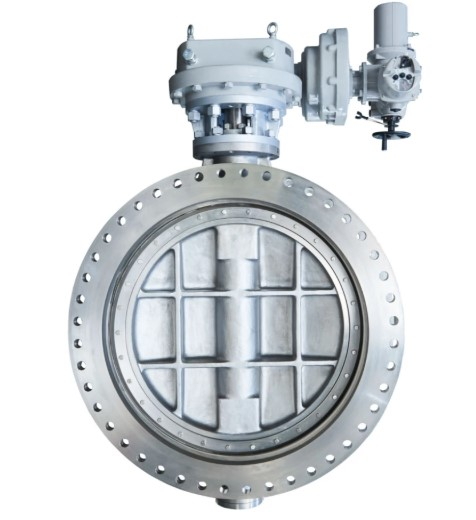
After understanding the basic concept and definition of the double offset butterfly valve, we can further explore its internal structure. It is precisely this unique structural design that gives the double offset butterfly valve superior performance compared with ordinary butterfly valves. The structural characteristics are analyzed in detail from several key perspectives below.
The core of the double offset butterfly valve lies in its double eccentric structure. The first offset is the deviation of the valve stem axis from the center of the butterfly plate, and the second offset is the deviation of the valve stem axis from the valve body centerline. The superposition effect of these two offsets generates a cam-like effect during the rotation of the butterfly plate. When the valve is opened, the butterfly plate can quickly detach from the valve seat; when the valve is closed, the butterfly plate can smoothly press against the valve seat to achieve reliable sealing.
The direct advantage of this structure is the significant reduction of unnecessary excessive compression and scraping between the butterfly plate and the valve seat. In traditional centerline butterfly valves, the butterfly plate remains in contact or near-contact with the valve seat during opening and closing, leading to severe friction, rapid wear, and high operating torque. The double offset design effectively solves these problems.
The sealing performance of the double offset butterfly valve is one of its most important advantages. The valve can adopt either soft sealing or hard sealing forms.
Soft sealing usually uses a combination of stainless steel and nitrile oil-resistant rubber. The rubber sealing ring can be installed either on the valve body or on the butterfly plate, allowing flexible selection according to medium characteristics. Soft sealing is suitable for general working conditions, offering good sealing performance and convenient replacement.
Hard sealing adopts metal valve seats such as stainless steel or other alloy materials. Since the double offset structure significantly reduces scraping, metal sealing becomes feasible. This greatly expands the application range of butterfly valves in high-temperature and high-pressure fields.
Double offset butterfly valves also exhibit a “tighter as closing progresses” sealing characteristic. As medium pressure increases, the sealing effect becomes better. In the fully closed state, zero leakage can be achieved, and the valve may even be used in ultra-high vacuum conditions.
The butterfly plate is designed with a frame structure, providing high strength and a large flow passage area while maintaining relatively low flow resistance. The valve body structure is compact and treated with baking paint coating to effectively prevent corrosion. By changing the material combinations of the valve plate sealing ring, butterfly plate, and shaft, the valve can adapt to various media and temperature conditions, offering strong versatility.
The working principle of the double offset butterfly valve is based on the eccentric cam effect. When the actuator (manual, worm gear, pneumatic, or electric) drives the valve stem to rotate, the movement trajectory of the butterfly plate is not simple circular motion but a complex eccentric motion due to the double offset structure.
During the opening process (0° to 90° rotation), the sealing surfaces of the butterfly plate and valve seat separate rapidly. Especially in the early opening stage (after approximately 10° rotation), the two sealing surfaces are basically detached, greatly reducing friction. This rapid separation feature significantly lowers opening resistance and makes operation easier.
During the closing process (90° to 0° rotation), the butterfly plate contacts the valve seat only when approaching the fully closed position, forming a line seal. As the closing angle decreases, the sealing specific pressure gradually increases, achieving reliable sealing performance. If the direction of medium pressure is correct, the sealing performance will be further enhanced.
It should be noted that within the opening and closing range of 0° to 10°, sliding friction still exists near the upper and lower ends of the sealing surfaces between the butterfly plate and valve seat. At this stage, the torque is relatively high, making this the region where sealing surfaces are most susceptible to scratching or biting damage, and it also represents a potential leakage risk zone.
- Excellent sealing performance: The double offset butterfly valve adopts line sealing, which provides high sealing specific pressure and good sealing effectiveness. Combined with appropriate sealing materials, it can achieve complete sealing, with leakage reduced to zero. This characteristic enables its use in applications requiring extremely high sealing standards, including ultra-high vacuum systems.
- Low operating torque and long service life: Since the butterfly plate can quickly separate from the valve seat during opening, unnecessary friction is significantly reduced, resulting in much lower operating torque. Meanwhile, sealing surface wear is greatly reduced, extending the service life of the valve seat and butterfly plate. Compared with centerline butterfly valves, double offset butterfly valves offer significantly better durability.
- Good regulating performance: Double offset butterfly valves have a wide regulating range and high control precision. Their flow characteristic is close to an equal percentage characteristic, meeting process requirements for precise flow control. Whether micro-adjustment or large-range regulation is required, this valve can handle both throttling and shut-off applications.
- Rapid opening and closing capability: The valve can complete full opening or closing with a 90° rotation, enabling fast operation. This feature is particularly important in situations requiring frequent operation or emergency shutoff, allowing the system to respond quickly and control fluid flow in time.
- Low pressure drop and energy saving: The double offset butterfly valve has low flow resistance and small pressure drop during fluid passage. This not only reduces system energy loss but also ensures smoother fluid flow inside the pipeline and lowers pumping costs.
- Compact structure and convenient maintenance: The valve structure is simple and compact, with small volume and lightweight design, occupying less installation space. Especially for large-diameter valves, the material weight is lower and cost is relatively reduced compared with other valve types. Disassembly and assembly are easy, and maintenance is convenient, requiring only replacement of sealing seat materials to adapt to different media.
- Wide adaptability: By selecting different material combinations, double offset butterfly valves can adapt to various working environments such as water, oil, gas, steam, and corrosive media, with a wide temperature application range. The hard sealing design enables the valve to be used under high temperature and high pressure conditions.
- Bidirectional sealing capability: Some double offset butterfly valves have bidirectional sealing functions. During installation, they are not restricted by medium flow direction or spatial position and can be installed in any direction, increasing operational flexibility.
Double offset butterfly valves are directional valves, and installation direction directly affects sealing performance and system safety. Therefore, special attention must be given.
From structural analysis, the double offset butterfly valve is a unidirectional sealing design. The arrow marked on the valve body indicates the main sealing direction, which can be understood as the arrow pointing toward the drainage end (or maintenance end). The correct installation direction should ensure that the arrow on the valve body points toward the frequently maintained pressure relief end so that medium pressure acts on the sealing side of the butterfly valve, thereby enhancing sealing performance.
Many installation workers tend to install valves according to the medium flow direction of supply and return pipelines, which often leads to directional errors. Incorrect installation direction will significantly reduce sealing performance. During pipeline maintenance or accident handling, the valve may fail to close tightly, affecting system safety.
Before installation, the markings on the valve body should be carefully checked to confirm the sealing direction. For heating systems, it is recommended that the arrows of supply and return butterfly valves all point toward the frequently maintained pressure relief end. After installation, a sealing test should be conducted to ensure that the valve is free from leakage in the closed state.
With excellent overall performance, double offset butterfly valves are widely used in multiple industrial fields.
- Water Treatment Systems: In water plants, water source projects, and water supply and drainage systems, double offset butterfly valves are used to regulate and shut off water flow. Their excellent sealing performance can prevent water resource waste, while their regulating capability meets flow control requirements.
- Power Industry: Cooling water systems, steam systems, and circulating water systems in power plants widely use double offset butterfly valves. Their high temperature and high pressure resistance (especially hard-sealed types) makes them suitable for complex working conditions in power plants.
- Metallurgical Industry: Cooling water, gas transmission, and dust removal systems in steel smelting processes require reliable and durable valve equipment. The long service life and low maintenance characteristics of double offset butterfly valves make them highly suitable.
- Chemical Industry: Chemical production involves various corrosive media and different temperature conditions. Through material selection, double offset butterfly valves can adapt to these complex environments and achieve reliable process control.
- Environmental Protection Facilities: In wastewater treatment, flue gas desulfurization and denitrification projects, double offset butterfly valves are used to regulate and shut off various media, fully demonstrating their corrosion resistance and sealing reliability.
- Paper and Food Industries: These industries have high requirements for hygiene and sealing. The zero-leakage performance and easy-cleaning structure (in some designs) of double offset butterfly valves can meet production requirements.
When selecting a double offset butterfly valve, the following factors should be considered:
- Diameter selection: Since a butterfly plate exists in the flow path, butterfly valves are not cost-effective for pipelines smaller than DN200. It is recommended to prioritize double offset butterfly valves for diameters of DN200 and above.
- Pressure rating: Select an appropriate pressure class within the working pressure range of PN0.1–10MPa according to system conditions.
- Sealing type: Use soft sealing for normal temperature and pressure conditions, and hard sealing for high temperature and high pressure conditions.
- Actuation mode: Select manual, worm gear, pneumatic, or electric drive according to operation frequency and control requirements.
- Material matching: Select valve body, butterfly plate, and sealing material based on medium characteristics to ensure corrosion resistance and service life.
Compared with centerline butterfly valves, double offset butterfly valves are more resistant to high pressure, have longer service life, better stability, and superior sealing performance, but their structure is relatively more complex and the cost is slightly higher.
Compared with single offset butterfly valves, the double offset design further reduces friction and offers better performance with a wider application range.
Compared with triple offset butterfly valves, double offset butterfly valves have a simpler structure and lower cost, making them suitable for most working conditions. Triple offset butterfly valves offer more extreme performance but are more expensive and are mainly used in extreme working conditions.
Through a clever double offset structural design, the double offset butterfly valve achieves significant improvements in sealing performance, service life, and operating characteristics, making it an ideal high-performance valve choice in industrial pipeline systems. A correct understanding of its working principle, reasonable selection, and standardized installation can fully leverage its technical advantages and provide reliable, efficient, and economical fluid control solutions for various industrial systems. With the continuous development of industrial technology, the application fields of double offset butterfly valves will continue to expand, replacing traditional valves in more scenarios and creating greater value.
