In petroleum and chemical production facilities, chemical valves are core components that ensure the safe and stable operation of process systems. Whether for raw material transfer, reaction control, or product separation, the success of any process depends on selecting the right valve. Poor valve selection can lead to reduced production efficiency and increased energy consumption, and in severe cases may cause equipment damage, safety incidents, or environmental pollution. Therefore, proper chemical valve selection is a systematic engineering task that requires collaboration across multiple disciplines, including chemical processes, system engineering, safety and environmental protection, energy efficiency, and piping layout.
This article approaches the topic from a practical engineering perspective, systematically outlining the key factors that must be considered when selecting chemical valves to help technical professionals establish a comprehensive selection methodology.
Valve selection is a multidisciplinary system engineering task involving chemical processes, safety and environmental protection, and piping equipment. The rationality of selection directly determines the safety, economic performance, and reliability of plant operations.
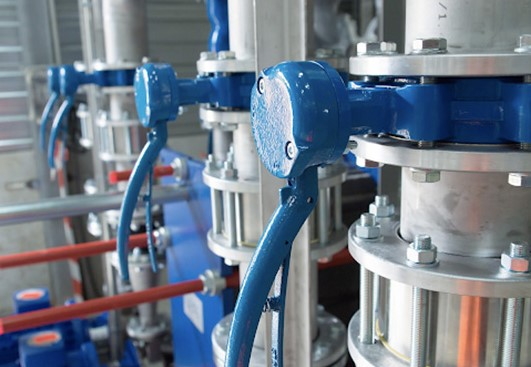
Fluid characteristics form the foundation of valve selection and directly influence material choice and structural design. The following information must be evaluated comprehensively:
- Chemical composition analysis: Clearly identify the chemical formula, main components, and types and concentrations of impurities. Different chemicals exhibit vastly different corrosiveness, and even trace impurities can significantly alter the corrosion environment. For example, chloride-containing media can cause pitting corrosion in standard stainless steel, while sulfide-containing oil and gas may lead to stress corrosion cracking.
- Hazard assessment: Focus on toxicity, flammability, and corrosion intensity. For highly toxic media such as hydrogen cyanide or phosgene, bellows-sealed valves or double-seal designs are mandatory. For flammable media, fire-safe valve designs and anti-static measures must be considered.
- Physical parameters: These include density, viscosity, and rheological behavior. High-viscosity fluids such as heavy oil require gate or ball valves with unobstructed flow paths, while globe valves with complex throttling paths should be avoided. Slurries containing solid particles demand wear-resistant designs with self-cleaning capability.
- Chemical characteristics: Reaction activity, heat effects, and reaction rates determine valve stability under high-temperature conditions. Media prone to polymerization require low-resistance valve types to prevent material stagnation. Scaling media should be paired with structures that allow easy disassembly and cleaning. pH levels directly affect corrosion resistance, and strong acid or alkali environments may require special materials such as Hastelloy or titanium.
Valve design must account not only for normal operation but also for all possible condition combinations:
- Extreme parameter identification: Beyond design temperature and pressure, determine maximum and minimum values under all operating scenarios, including startup, shutdown, and fault conditions. For example, steam systems must consider cold-start pressure versus hot operating pressure, while reaction systems must evaluate peak temperatures during runaway reactions.
- Operating mode analysis: Clarify operating durations and switching frequency. Applications with frequent opening and closing require wear-resistant seat materials, whereas valves that remain open or closed for extended periods must consider sealing durability and the risk of seizure.
- Rate-of-change limitations: Maximum changes in operating parameters directly affect resistance to thermal shock. Rapid heating or cooling conditions favor forged valve bodies over cast ones, as forged structures better withstand thermal stresses caused by temperature gradients.
- Installation conditions: Outdoor valves must address freeze protection, anti-corrosion coatings, and resistance to wind and sand erosion. Marine environments require duplex or super austenitic stainless steels resistant to seawater corrosion. High-altitude installations must consider the effect of atmospheric pressure on sealing performance.
- Economic balance: Lifecycle cost includes procurement, installation, maintenance, downtime losses, and energy consumption. Expensive super duplex valves may be more economical in highly corrosive environments than frequently replaced carbon steel valves. Electric actuators, although requiring higher upfront investment, significantly reduce labor costs and response times in large-diameter, high-frequency applications.
- Regulatory compliance: Valves must comply with design codes such as ASME, API, and GB/T, satisfy special equipment safety regulations, and meet environmental emission standards. Valves used in Safety Instrumented Systems (SIS) must meet the required Safety Integrity Level (SIL).
Actual petrochemical operations are far more complex than ideal conditions. Even valves selected strictly according to fluid properties and operating parameters may fail under special conditions such as pressure pulsation, thermal shock, or cavitation. These phenomena often stem from the dynamic characteristics of process systems and cannot be fully avoided through steady-state design alone. Understanding these mechanisms and implementing preventive measures during the selection stage is essential for improving valve reliability.
Valve pressure-temperature ratings are based on stable operating assumptions, yet real conditions are often variable.
- Thermal shock hazards: Sudden temperature changes generate significant thermal stress within valve materials. Mild shock may cause galling or seizure with sharply increased operating torque, while severe shock can crack valve bodies or permanently deform seals. Insufficient steam line warm-up or rapid introduction of high-temperature media are common triggers.
- Pressure pulsation damage: Reciprocating pump outlets, compressor pipelines, and throttling control valves can produce pulsations. Cyclic pressure accelerates wear of internal components and erodes sealing surfaces, while long-term alternating stress may cause fatigue failure and cracking at stress concentration points.
- Vibration mechanisms: High-velocity turbulence can loosen fasteners, cause packing leakage, and lead to actuator positioning drift. Gas-line vibration may also generate pneumatic noise, making low-noise trim designs necessary for environmental compliance.
- Normal flow state: Most valve flows operate in the turbulent region with Reynolds numbers far exceeding 2300. While pressure loss remains relatively stable, high-throttling conditions can create intense turbulence, leading to vibration and noise.
- Choked flow: During safety valve discharge or emergency venting, fluid velocity may reach sonic speed, forming choked flow. This can produce shock waves, flashing, and cavitation downstream, causing erosion damage. Strict inlet and outlet velocity limits are required, often addressed through specialized flow path designs or expanded outlet piping.
- Two-phase flow challenges: Gas-liquid mixtures generate severe pulsations due to density differences and interfacial fluctuations, often exceeding those in single-phase flow. Calculating choked flow becomes more complex, requiring specialized valves or additional separation and buffering facilities.
Water hammer (or gas hammer) is a pressure wave phenomenon caused by rapid changes in flow or pressure and can severely damage valves.
- Typical scenarios: Rapid opening of relief valves, formation of choked two-phase flow, sudden closure of check valves, or reverse flow after pump failure can all generate water hammer. Pressures may reach several times the normal operating level, producing intense noise and vibration that can destroy seals, cause flange leakage, or even rupture pipelines.
- Engineering protections: Use slow-opening/closing mechanisms such as damped handwheels or buffered actuators; install surge protection devices like slow-closing tanks, gas-liquid separators, and pressure-regulating chambers; select check valves with controlled closing features; and install water hammer arrestors in long-distance pipelines.
- Formation mechanism: When liquid accelerates through a throttling point, pressure drops. If outlet pressure falls to or below the liquid’s vapor pressure, vapor bubbles form (flashing). When pressure recovers downstream, bubble collapse generates microjets—this is cavitation. Cavitation not only reduces flow capacity but also severely damages valve internals.
- Damage characteristics: Cavitation creates honeycomb-like pits on plug and seat surfaces, sometimes several millimeters deep. Severe cases may penetrate the valve wall and cause leakage. Noise levels can exceed 100 dB and are typically accompanied by strong vibration.
- Material protection strategies: Select cavitation-resistant valve types such as multi-stage pressure-reduction control valves; use anti-cavitation plug designs or angle-body structures; and apply surface-hardened alloys exceeding HRC40, including Stellite overlays, tungsten carbide coatings, or nitriding treatments.
Special operating conditions impose stringent requirements on valve materials. Stainless steel, with excellent corrosion resistance, high-temperature and high-pressure performance, and low lifecycle cost, has become the preferred valve body material in petroleum, chemical, and pharmaceutical industries.
- Mechanical performance: Austenitic stainless steels offer high strength, ductility, and toughness, enabling them to withstand high pressure and impact without brittle fracture. Duplex stainless steels provide roughly twice the yield strength of standard austenitic grades, making them suitable for high-pressure thin-wall designs.
- Corrosion resistance: Chromium forms a passive film, nickel stabilizes the austenitic structure, molybdenum enhances pitting resistance, and nitrogen improves both strength and corrosion resistance, allowing stainless steel to adapt to environments ranging from mildly to highly corrosive.
- Temperature adaptability: Stainless steel maintains strength at high temperatures while avoiding cold brittleness at low temperatures, with a service range from –196°C to above 800°C.
- Economic benefits: Although initial costs exceed those of carbon steel, stainless steel valves require less maintenance and can last 20–30 years, delivering superior lifecycle economics.
- SS 304 Series: The most versatile material for valves, resistant to mildly corrosive media such as atmosphere, water, alkaline solutions, and organic acids. Non-magnetic and suitable from –196°C to 800°C. The low-carbon 304L version provides excellent resistance to intergranular corrosion after welding.
- SS 316 Series: Molybdenum significantly improves resistance to pitting and crevice corrosion, making it suitable for sulfuric acid, acetic acid, halides, and fatty acids—especially chloride environments such as seawater. 316L offers enhanced resistance to intergranular corrosion and is widely used in chemical valves.
- Duplex Stainless Steel: Its austenite-ferrite structure provides superior resistance to stress corrosion cracking and double the strength of 304, ideal for high-pressure, high-stress environments containing hydrogen sulfide or chlorides.
- Super Austenitic Stainless Steel: High alloy content delivers exceptional corrosion resistance against seawater, concentrated hydrochloric and sulfuric acids, caustic solutions, and virtually all inorganic acids.
- Super Duplex Steel: Combines duplex strength with super austenitic corrosion resistance, suitable for strong alkalis, inorganic acids, offshore platforms, and harsh chemical environments.
Avoid treating stainless steel as a universal material. Standard 304 may suffer pitting in chloride-containing seawater; 316 can be less corrosion-resistant than 304 in concentrated sulfuric acid; duplex steels may experience stress corrosion in soda ash solutions. Always consult corrosion data or conduct coupon testing for the specific medium.
- Cast valves: Suitable for complex structures and large-scale production at relatively lower cost. Investment casting achieves intricate shapes but offers lower strength and thermal shock resistance than forging. High-quality castings require strict control of solidification, riser design, and heat treatment to avoid shrinkage cavities and porosity.
- Forged valves: Produced by heating and die-forging stainless billets, resulting in dense, defect-free structures with high strength, toughness, dimensional accuracy, and uniform wall thickness. Forged valves better withstand high temperature, high pressure, and thermal shock. Although more expensive, they are typically used in small-diameter, high-pressure classes or critical applications with frequent temperature changes.
After mastering fluid analysis, special condition responses, and material principles, these elements must be integrated into a practical engineering workflow. Without a systematic approach, selection may become fragmented, overly reliant on experience, or prone to overlooked verification steps.
Establish a complete operating data sheet including medium name, molecular formula, composition, impurities, toxicity and flammability data, corrosion level, density, viscosity, phase, normal/design/extreme temperatures and pressures, flow range, allowable pressure drop, operating frequency, installation environment, regulatory requirements, leakage class, fire-safe requirements, and expected service life.
- Isolation: Prioritize gate valves (low resistance, suitable for large diameters), ball valves (fast operation, excellent sealing), and butterfly valves (compact, cost-effective). Use bellows-sealed valves for highly toxic or vacuum systems.
- Regulation: Select control valves (single-seat, double-seat, cage-guided, angle type) and choose trim structures based on flow characteristics—linear, equal percentage, or quick opening—while considering noise reduction and anti-cavitation designs.
- Check function: Based on installation orientation, flow velocity, and water hammer prevention requirements, choose swing, lift, tilting-disc, or non-slam check valves.
- Safety relief: Select spring-loaded, lever-operated, or pilot-operated safety valves according to discharge capacity, back pressure, and allowable overpressure.
Calculate Cv or Kv values based on process parameters to preliminarily determine valve size. However, valve size should not simply match pipeline size: undersizing restricts flow and increases pressure drop, while oversizing degrades control performance and raises costs. Ensure the valve operates within the optimal 30%–70% opening range, verify that maximum velocity remains within material limits, and confirm that noise levels meet environmental standards.
Select body materials based on corrosion, temperature, and pressure; choose hardened treatments or hard alloys for plugs and seats subject to erosion; use graphite, PTFE, or metal seals depending on temperature and media; and ensure fasteners avoid galvanic corrosion by minimizing potential differences with the body material.
Choose manual, pneumatic, electric, or hydraulic actuators according to operating frequency, torque requirements, and control precision. Configure necessary accessories such as positioners, solenoid valves, limit switches, handwheel mechanisms, and travel indicators. Valves in Safety Instrumented Systems should include solenoid valves to enable Emergency Shutdown (ESD) functions.
Chemical valve selection is a critical technical aspect of chemical plant design and requires a systematic and standardized methodology. Starting with an accurate understanding of media characteristics and operating conditions, engineers must comprehensively evaluate fluid properties, operational scenarios, external environments, economic factors, and regulatory requirements to scientifically determine valve type, material, size, and configuration.
Special attention must be paid to pressure pulsation, thermal shock, cavitation, and water hammer rather than relying solely on standard ratings. While stainless steel offers excellent performance, the appropriate grade must always be selected based on specific media characteristics to avoid one-size-fits-all mistakes. Through rigorous testing and lifecycle management, chemical valves can maintain reliable performance over decades of service, providing a solid guarantee for the safe and stable operation of chemical plants.

