
Spiral Wound Gaskets vs. Ring Type Joint Gaskets
In industrial sectors such as petrochemicals, power generation, and oil and gas extraction, the sealing performance of flange connections directly affects equipment safety and operational efficiency. Spiral wound gaskets and ring type joint (RTJ) gaskets are two of the most widely used high-pressure sealing elements. However, they differ significantly in structure, working principles, and applicable operating conditions.
Understanding these differences between the two gaskets is essential for engineering selection, installation practices, and long-term maintenance strategies.
In industrial high-pressure sealing systems, spiral wound gaskets are among the most widely used sealing components due to their unique composite structure. To understand why they are dominant in medium-to-high pressure systems with frequent fluctuations, it is necessary to examine their structural design, material functions, and the role of inner and outer rings.
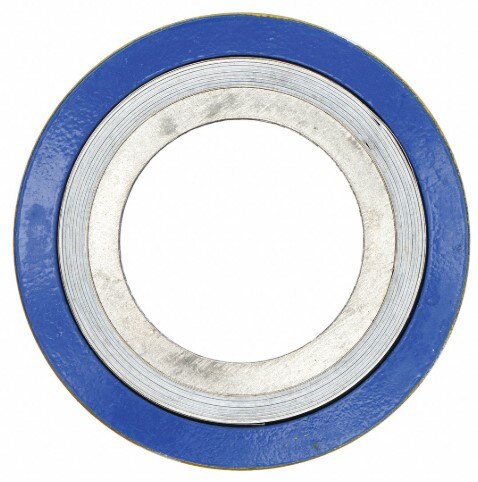
A spiral wound gasket is a composite sealing element made of metallic and non-metallic materials. During manufacturing, a metal strip and flexible filler material are alternately wound in a spiral pattern using specialized equipment, forming a circular gasket body.
The key advantage of this structure is that it combines the strength of metal with the adaptability of soft fillers. After compression, the metal winding layers behave like a spring, providing elastic recovery that maintains sealing contact even under minor flange movement or misalignment.
In spiral wound gaskets, the metal strip is typically made of stainless steel. It provides structural support, elasticity, and corrosion resistance.
The filler material is commonly flexible graphite or PTFE. Its main function is to fill microscopic irregularities on the flange sealing surface, creating a tighter sealing interface.
Graphite is suitable for high-temperature applications
PTFE is suitable for highly corrosive media
This combination enables the gasket to withstand both mechanical stress and chemical attack simultaneously.
Most ASME B16.20 compliant spiral wound gaskets include ring components, commonly referred to as the CGI type.
Outer ring (centering ring): Typically made of carbon steel. It positions the gasket precisely at the bolt circle center and prevents misalignment during installation. It also limits compression and prevents radial blowout under high pressure.
Inner ring: Typically made of stainless steel. It supports the inner winding section, preventing collapse or deformation under high pressure or vacuum conditions. It also reduces turbulence and flow disturbance inside the pipeline.
Unlike composite spiral wound structures, RTJ gaskets represent a completely different sealing philosophy: all-metal rigid sealing. These solid metal rings rely on plastic deformation to achieve sealing and are irreplaceable in extreme high-pressure applications.
Understanding their precision machining, cross-sectional types, and metal deformation behavior is essential for correct selection.
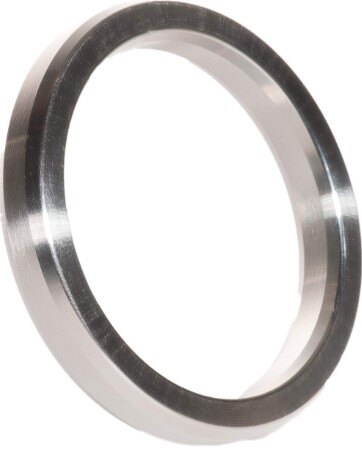
Ring Type Joint (RTJ) gaskets are solid metal sealing rings manufactured through precision machining into specific cross-sectional profiles.
Unlike spiral wound gaskets that rely on compressible filler materials, RTJ gaskets achieve sealing entirely through metal-to-metal contact.
During installation, the gasket is placed into a dedicated groove on the flange face. As bolt load is applied, the gasket undergoes controlled plastic deformation, forming a tight metal-to-metal sealing interface with the groove surface.
RTJ gaskets are mainly available in two profiles: oval and octagonal.
Oval type: Earlier design, used with round-bottom grooves
Octagonal type: Modern standard design, offering larger contact area and better sealing performance
In modern oil and gas applications, octagonal RTJ gaskets are more widely used because they provide higher contact stress and more stable sealing under extreme pressure conditions.
The sealing principle of RTJ gaskets is based on plastic deformation of metal.
When bolt torque is applied, the flange material slightly embeds into the softer gasket surface, creating a highly tight sealing interface.
Since RTJ gaskets do not rely on soft fillers, they are not affected by aging, decomposition, or gas release issues. They are typically manufactured from soft iron, stainless steel, or special alloys depending on media corrosivity and flange hardness compatibility.
After understanding both structures and working principles, it is necessary to compare them systematically. Temperature and pressure range, elasticity, flange compatibility, and installation requirements directly determine their engineering applications.
Spiral wound gaskets typically operate within a temperature range of -200°C to 800°C, depending on material combination. Under properly designed flange systems and bolt loads, they can handle pressures exceeding 250 bar.
Their key advantage lies in dynamic operating conditions. The metal winding layers provide continuous elastic recovery, maintaining sealing integrity during pressure cycling.
RTJ gaskets can operate above 750°C and withstand pressures exceeding 700 bar. In special designs, they can reach up to 20,000 psi (API 10K and above).
Due to their all-metal structure, RTJ gaskets are widely used in ultra-high-pressure environments such as high-pressure steam systems, hydrogen service, sour gas processing, and critical refinery units.
The main advantage of spiral wound gaskets is their excellent elasticity and recovery capability. When flange movement occurs due to thermal expansion, vibration, or pressure fluctuation, the gasket maintains sealing performance through continuous elastic compensation.
RTJ gaskets do not provide elastic recovery. Their sealing depends entirely on initial plastic deformation during installation. Once flange displacement occurs, sealing integrity may be compromised, increasing leakage risk.
Therefore, RTJ gaskets are best suited for stable, high-pressure systems with minimal flange movement.
Spiral wound gaskets are compatible with raised face and flat face flanges. Installation tolerance requirements are relatively flexible, requiring only proper bolt tightening sequence and torque control.
RTJ gaskets must be used with specially machined RTJ grooves. Groove dimensions must strictly comply with standards such as ASME B16.20 or API 6A. Surface roughness typically must reach 32–63 microinch Ra.
Any deviation in machining accuracy or misalignment during installation can lead to sealing failure.
Engineering selection must be based on actual operating conditions. Key factors include thermal cycling, vibration, pressure level, and installation constraints.
For systems with frequent start-stop cycles, temperature fluctuations, or mechanical vibration, spiral wound gaskets are generally the preferred choice.
Their elastic metal winding structure absorbs movement and maintains sealing stability.
Typical applications include heat exchangers, reactors, and reciprocating compressor piping systems.
In ultra-high-pressure applications with strict safety requirements, RTJ gaskets are the standard solution.
Applications such as wellhead assemblies, high-pressure gas pipelines, and hydrogenation reactors commonly use API 6A RTJ systems.
These systems operate under sustained high pressure with minimal flange movement but require absolute leak prevention.
Spiral wound gaskets are easier to install and require lower operator skill levels. They also tolerate flange surface imperfections more effectively.
RTJ gaskets require strict inspection of groove cleanliness, surface finish, and alignment accuracy, making installation more demanding.
In maintenance practice, both types are generally considered non-reusable in critical applications. However, spiral wound gaskets may occasionally be reused in low-to-medium pressure systems if structurally intact, while RTJ gaskets must always be replaced after plastic deformation.
Proper selection is only the first step. Installation quality directly determines long-term sealing reliability.
Before installation, verify gasket dimensions, material identification, and integrity of inner and outer rings.
Flange surface roughness should be within 125–250 microinch Ra, with sufficient flatness.
The gasket must be centered properly to avoid deformation during bolt tightening. Bolts should be tightened in a cross-pattern sequence with controlled torque.
In high-pressure applications, the inner ring must be installed to prevent inward collapse of the winding structure.
The most common issue in RTJ installation is hardness mismatch.
If a hard stainless steel RTJ gasket is used with a softer carbon steel flange, the groove may be damaged instead of the gasket deforming properly.
Therefore, hardness compatibility must be verified before installation.
The gasket surface must also be checked for scratches, dents, or corrosion defects.
RTJ groove surface quality requirements are extremely strict. Surface roughness typically must reach 63 RMS or better, with controlled machining direction.
Grooves must be thoroughly cleaned before installation. Even minor scratches may create leakage paths under high pressure.
For long-term service equipment, groove geometry should be measured during maintenance to ensure no deformation or wear has occurred.
Spiral wound gaskets and ring type joint (RTJ) gaskets represent two fundamental sealing technologies: composite flexible sealing and all-metal rigid sealing.
Spiral wound gaskets provide excellent elasticity, thermal adaptability, and installation convenience, making them suitable for medium-to-high pressure systems with frequent fluctuations.
RTJ gaskets provide unmatched performance in extreme high-pressure environments and are widely used in oil and gas extraction and high-pressure chemical systems.
In real engineering applications, selection must be based on temperature, pressure, media characteristics, flange design, and operating dynamics. Regardless of gasket type, proper material matching, precision manufacturing, and strict installation control are essential to ensure long-term sealing reliability. Only when design, selection, installation, and maintenance are properly executed can the full performance of these two high-level sealing solutions be achieved, ensuring safe and stable industrial operation.
