
Ultimate Guide to Selecting Valve Internal Materials
This guide provides a comprehensive overview of selecting valve internal materials, including stems, discs, and seats, to ensure reliable performance under complex industrial conditions. It covers fundamental principles such as temperature compatibility, chemical stability, mechanical strength, cavitation resistance, electrochemical compatibility, manufacturability, environmental constraints, and cost-effectiveness. Common metallic materials, bronze, cast iron, 13Cr martensitic stainless steel, austenitic stainless steel, nickel alloys, and hard overlays, are analyzed alongside non-metallic options like PTFE and synthetic rubbers.If we liken a valve to the heart of an industrial piping system, then the internal components, such as the stem, disc, and seat, are its valves, directly controlling whether the heart can beat reliably under complex operating conditions. Statistics indicate that over 60% of valve failures are related to improper selection of internal materials. In challenging environments, such as high-temperature steam, highly corrosive acids, or media containing solid particles, choosing the right materials for valve internals is critical. This guide provides a comprehensive exploration of the principles, characteristics, and strategic considerations for selecting valve internal materials.
Valve internal components typically include the stem, disc, and seat. In some designs, bushings, bolts, and other parts are also considered internal elements. These components directly determine a valve's sealing performance, operational smoothness, and service life. Since valves often operate under high temperature, high pressure, corrosive media, and mechanical wear, the selected materials must meet specific physical, chemical, and mechanical property requirements. Below are eight fundamental principles that form the foundation of material selection.
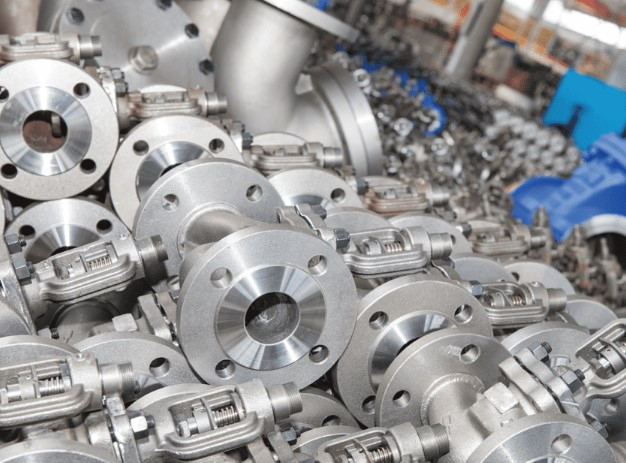
Every material has a temperature "red line." For instance, 13Cr stainless steel (13% chromium martensitic stainless steel) offers high strength but must be carefully applied as a valve stem, because exceeding its critical temperature may induce metallurgical changes that drastically reduce strength and toughness. Bronze valves, while widely used, generally have a maximum working temperature of around 280°C. Before selecting a material, thoroughly evaluate the operating temperature—this is the first line of defense for safe operation.
The corrosion resistance of internal components should never be lower than that of the valve body. In highly corrosive environments, such as hydrochloric or sulfuric acid, a valve disc with poor corrosion resistance relative to the body may cause a situation where the valve body remains intact but sealing fails. In industries such as chemical processing and offshore platforms, ensuring chemical stability for stems, sealing surfaces, and media-contacting parts is essential.
Generally, the stem's strength and hardness should not be lower than the valve body. Imagine a stem softer than the body: repeated operation can easily deform it, causing leakage or operational sticking. For high-frequency valves, surface hardening techniques such as nitriding or induction hardening may be applied, effectively giving the stem a protective armor.
High-pressure differential and high-velocity systems (e.g., water supply, throttling applications) may cause cavitation—the implosion of bubbles generates shock forces comparable to bullets. In such cases, the disc and seat sealing surfaces must have excellent cavitation resistance. A common engineering solution is overlaying hard alloy coatings, often applied to one or both sides of the seat, forming a robust “stainless armor.”
When dissimilar metals contact each other in an electrolyte environment (e.g., seawater or brine), a galvanic cell forms, accelerating corrosion of the less noble metal. For example, when Monel or stainless steel internals are paired with a carbon steel body, the electrochemical potential difference must be assessed to avoid sacrificing the valve body. Experienced engineers treat internal and body materials as part of a single electrochemical system rather than choosing materials in isolation.
When overlaying hard alloys on sealing surfaces, the base material must be weldable. Poor weldability can cause cracks, porosity, or delamination in the overlay, creating potential leakage risks. Material selection should account for both operational performance and manufacturability.
In H₂S-containing oil and gas fields (acidic environments), materials must resist sulfide stress cracking (SSC); conventional high-strength steels can fracture easily. Conversely, in ultra-low-temperature conditions such as LNG (-196°C), materials must retain low-temperature toughness to prevent brittle fracture. These environmental constraints often outweigh standard performance metrics.
While hard alloy overlay significantly improves wear resistance, for small-diameter valves (DN50 and below), dual-sided overlay can account for 30–50% of the total valve cost. For non-critical applications, blindly choosing premium materials wastes resources. Smart selection balances safety margins with cost-effectiveness.
Once the guiding principles are clear, material selection requires evaluating specific material properties. Below, we categorize common valve internal materials into metallic and non-metallic groups, describing their chemical composition, mechanical characteristics, and typical applications.
- Bronze Family: Bronze is among the most widely used valve materials, suitable for steam, water, oil, air, and natural gas. Maximum operating temperatures typically reach around 280°C. Aluminum bronze, free of zinc, performs exceptionally in seawater and corrosive environments. For low-temperature media such as liquefied gas, liquid oxygen, or ammonia, bronze discs paired with stainless steel stems are a classic combination.
- All-Iron Valves: Valves with cast iron or cast steel components (except stems) offer a cost-effective solution for handling mixed acids, such as concentrated sulfuric acid and hydrocarbons. They also work well with brine, ammonia solutions, alcohol, detergents, and chloride solutions. However, users must consider temperature limits and brittleness issues.
- 13Cr Stainless Steel (Martensitic): 13% chromium martensitic stainless steel is commonly used for stems, sealing rings, and discs. In lubricated oil media, it provides excellent wear, scratch, and erosion resistance. Its strong oxidation resistance allows it to operate reliably on oil and steam pipelines at temperatures up to 600°C, making it a “long-lasting” choice in refining and power generation.
- Nickel Alloys: Nickel-copper-tin alloys, used for seats in combination with 13Cr discs, suit non-lubricated, mildly corrosive gas and liquid media, such as superheated steam, natural gas, and fuel oil. Steam applications should remain below 450°C, and other media below 260°C.
- Austenitic Stainless Steel (18-8): Grades like 304 and 316 are widely employed in internal valve components. They excel in highly corrosive and high-temperature environments, and in compounded conditions such as chemical reactor inlets/outlets. Their excellent ductility and corrosion resistance make them a versatile “all-purpose” option.
- Special Stainless Steels and Monel: Alloys like Alloy 20 and Incoloy 825 handle extreme corrosion where conventional stainless steel fails. Monel (nickel-copper alloy) resists seawater and brine, common in marine and offshore valves. Hastelloy B (resistant to sulfuric acid) and Hastelloy C (resistant to hydrochloric acid and ammonia) are often used in entire valve bodies but can also be applied to critical internal components.
- Hard Alloys: Overlaying cobalt- or nickel-based hard alloys on discs and seats enhances wear and scratch resistance, especially in high-temperature dry or particulate-laden media. Engineering tip: hard overlays are applied to both mating surfaces, but maintain a hardness difference of 5–10 HRC to reduce seizing or scratching during operation.
PTFE (Polytetrafluoroethylene): PTFE resists nearly all chemical media, withstands temperatures up to 250°C, and has an extremely low friction coefficient. It is widely used as valve seats in ball and butterfly valves, as diaphragm surfaces in diaphragm valves, and as stem packing. However, PTFE exhibits cold flow under high pressure, so reinforcement with glass fibers or spring-loaded anti-creep structures is necessary for high-pressure applications.
Synthetic Rubber:
- Nitrile (NBR): Excellent oil resistance; widely used in O-rings and stem seals.
- Fluorocarbon (FKM): High-temperature resistance.
- EPDM: Resists hot water and steam.
- Silicone: Low-temperature resilience.
Synthetic rubbers provide elastic sealing, achieving “zero-leak” closure in butterfly and diaphragm valves. Proper temperature limits and media compatibility (e.g., EPDM is not oil-resistant) must be considered.
- High-Temperature, High-Pressure Steam: Prioritize 13Cr or hard alloy-coated surfaces. Valve bodies can use carbon steel or chrome-moly steel. Match thermal expansion coefficients to prevent thermal seizure.
- Particulate-Laden Media (Slurry, Catalyst): Use hard alloy-coated surfaces and design flow paths to minimize erosive angles.
- Chloride Environments (Seawater, Brine): Avoid 13Cr (prone to pitting); prefer austenitic stainless steel, duplex steel, or Monel, and evaluate electrochemical compatibility with the valve body.
- Frequent Cycling Control Valves: Use 17-4PH precipitation-hardened stainless steel stems and cobalt-based hard alloy surfaces with hardness above HRC 40.
- Ultra-Low Temperature Cryogenic Valves (< -100°C): Stems and discs should be austenitic stainless steel (304/316L) or aluminum alloys. Seal materials should be specially designed low-temperature rubbers or PTFE.
Selecting valve internal materials is an art of balance—balancing performance and cost, corrosion resistance and wear resistance, high-temperature strength and low-temperature toughness. By adhering to the eight principles outlined above and understanding the characteristics of various materials, you can select internal components that are safe, reliable, and cost-effective. When facing selection challenges, remember the hierarchy: prioritize safety, ensure process performance, and then consider economic efficiency. A detailed valve datasheet and correctly specified material selection are the best insurance against future leakage, failures, and unexpected downtime.
