
In modern industrial production, valves may appear to be only small components within piping systems, yet they are often the most significant sources of fugitive emissions. In oil, chemical, and natural gas facilities, large amounts of volatile media slowly escape into the environment through seemingly minor sealing gaps. Over time, this not only leads to resource loss but also contributes to air pollution and safety hazards.
With increasingly strict environmental regulations, especially those targeting volatile organic compound (VOC) emissions, industrial enterprises are no longer focused solely on “whether equipment works,” but increasingly on “whether it leaks” and “how much it leaks.” As a result, valve sealing performance has become a key parameter in both design and selection. From packing structure optimization to metal bellows sealing and the establishment of international certification systems, the industry is continuously evolving toward the goal of low leakage or even near-zero leakage.
Against this backdrop, it is essential to systematically understand the sources, hazards, and technical approaches for controlling fugitive emissions in valves. This article starts from fundamental concepts and gradually explores valve sealing design, industry standards, and engineering practices, providing a comprehensive overview of industrial valve fugitive emissions control.
Fugitive emissions refer to the release of gases or vapors from pressurized equipment due to equipment failure, seal degradation, or other unforeseen conditions. These emissions mainly occur in industrial environments such as factories, power plants, refineries, and chemical processing facilities.
The primary source of fugitive emissions is volatile organic compounds (VOCs), including benzene, methane, and ethanol. These substances not only degrade air quality but also participate in ozone formation, causing significant environmental harm. As a result, governments worldwide continue to strengthen regulatory oversight and impose strict emission limits, with violations potentially resulting in substantial fines.
Due to the large number of potential leakage points in industrial systems and the difficulty of detection and repair, fugitive emissions can lead to serious consequences in multiple areas:
Data shows that approximately 60% to 62% of fugitive emissions originate from valve systems, and about 80% of valve leakage occurs at the stem sealing area. This indicates that even under increasingly strict regulatory frameworks—such as the Clean Air Act Amendments (CAAA, 1990, EPA)—fugitive emissions remain a core challenge in process industries.
Therefore, in addition to regular inspection and maintenance of industrial facilities, valve manufacturers must implement more rigorous design measures to ensure reliable stem sealing and prevent harmful gas or vapor leakage.
After understanding the sources and risks of fugitive emissions, the core solution lies in valve sealing design. Since most leakage occurs at the stem packing area, the selection of packing materials and structural design directly determines emission performance. Industry control valve packing standards commonly reference ISO 15848 for emission classification and testing.
From a design perspective, reducing fugitive emissions depends heavily on optimizing sealing systems. According to the U.S. Environmental Protection Agency (EPA), around 80% of valve leakage occurs at the stem packing area. Therefore, packing materials must balance flexibility for operation with sufficient sealing strength.
Common materials include:
Structural design also plays a critical role in leakage control:
V-shaped packing rings: Multi-layer compression design ensures tight sealing and reduces stem leakage. This is a simple and widely used configuration.
Live-loaded packing systems: Spring-loaded mechanisms maintain constant pressure on packing, ensuring sealing integrity over long-term operation and temperature variations. This prevents loosening-induced leakage and is suitable for continuous-duty applications.
For higher safety requirements, metal bellows sealing is used. The bellows create a complete physical isolation between stem and process fluid, enabling ultra-low or near-zero leakage.
This design is particularly suitable for highly hazardous media such as chlorine gas or hydrogen. Among all valve designs, only metal bellows systems can achieve complete elimination of fugitive emissions, and they must comply with strict international standards to ensure safety and environmental protection.
For critical applications, a secondary stem sealing system may be installed, typically integrated into an extended bonnet structure. It provides an additional layer of safety protection.
This dual-seal configuration includes a primary stem seal and a secondary emission containment seal. The bonnet includes machined sealing surfaces to ensure reliable static sealing. It may also include monitoring ports to detect leakage between seal stages in real time. The system ensures containment of process media until maintenance and includes blowout-proof and fire-safe design features.
The main standards for evaluating valve fugitive emissions include API 624, API 641, and ISO 15848-1:2015. These provide testing frameworks and certification criteria for low-emission valves.
API 624 applies to rising stem valves and requires 310 mechanical cycles and 3 thermal cycles using methane as the test medium, with leakage maintained below 100 ppm.
API 641 applies to quarter-turn valves and covers all stem sealing materials. It specifies a maximum leakage limit of 100 ppmv using methane as the test medium and EPA Method 21 for detection.
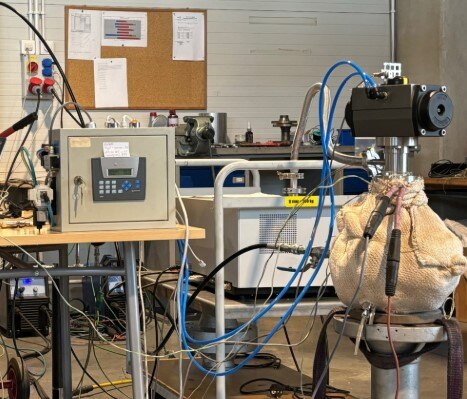
Testing includes 610 mechanical cycles and 4 thermal cycles to simulate approximately five years of service life. Temperature cycles range from ambient to 260°C, with pressure at 600 psig.
ISO 15848-1 defines measurement and certification methods for valve stem and body fugitive emissions. Testing is conducted between 40% and 60% valve opening and classified into tightness, endurance, and temperature classes:
Tightness class: measured using helium or methane leakage
Endurance class: number of cycles under sealing conditions
Temperature class: operating temperature range
API standards use a pass/fail threshold of ≤100 ppm leakage. ISO 15848 uses a grading system (e.g., Class CM may allow 100–500 ppm), meaning “low emission” does not always equate to EPA-compliant levels.
Additionally, ISO helium testing results are expressed in atm-cm³/s, which are not directly convertible to ppm, making comparisons more complex.
Low-emission valves are those verified to meet strict leakage requirements through standardized testing. Definitions may vary depending on project specifications, often requiring a written guarantee of ≤100 ppm leakage over five years.
However, relying solely on manufacturer claims can be risky, so standardized testing data is increasingly preferred.
Some valve manufacturers use advanced systems such as Total HermetiX™ technology, combining fire-safe stem sealing and compliance with both API 641 and ISO 15848-1.
These systems include dual body seals and proprietary stem sealing technology, achieving near-zero leakage and up to 500,000 maintenance-free cycles.
API 641 tests show leakage below 100 ppmv under 600 psi methane conditions after thermal cycling. ISO 15848 testing confirms BH-class performance under 4,500 cycles.
Independent third-party testing ensures objectivity and credibility. Certification reports should include test location, methodology, and full results for regulatory compliance and risk management.
Valve design alone cannot eliminate all leakage; therefore, LDAR systems are essential as a complementary control measure.
LDAR programs use EPA Method 21 to detect leaks, identify sources, and require timely repairs. Continuous monitoring helps reduce VOC emissions.
EPA Method 21 is only used for leak detection and classification, not for quantifying total emissions or certifying low-emission performance.
The EPA enforces environmental regulations through mechanisms such as Consent Decrees. Non-compliance may result in fines exceeding $1,000 per valve, making compliance economically essential.
Selection begins with understanding process media, temperature, pressure, and cycle frequency.
Verify Certifications: Prefer valves certified under API 624, API 641, or ISO 15848-1, and always request complete test documentation.
Supplier Capability: Choose suppliers capable of handling high-pressure, cryogenic, corrosive, and hazardous environments with reliable technical support.
Lifecycle Cost Consideration: Although initial cost may be higher, low-emission valves reduce leakage losses, maintenance frequency, and environmental risks, providing long-term economic benefits.
Fugitive emissions control is not only a matter of regulatory compliance but also directly impacts safety, environmental protection, economic efficiency, and system reliability. Engineers and plant operators must fully understand relevant standards and select qualified valve suppliers to ensure safe operation under complex industrial conditions.
As environmental regulations tighten globally and technology advances, low-emission valves are becoming standard industrial equipment. Through proper material selection, optimized sealing design, advanced technologies, and strict adherence to standards, enterprises can effectively control fugitive emissions and achieve both economic and environmental sustainability.

Copyright © 2026 China Topper Valve Packing Seal Kits Co., Ltd. All Rights Reserved.