
How to Reduce Friction in Compression Packing Systems
In natural gas transmission pipelines, water treatment systems, and industrial applications involving caustic soda and high-temperature steam, compression packing remains a cost-effective and reliable sealing solution. This traditional sealing technology has been proven through decades of practical use to effectively prevent media leakage under demanding operating conditions. However, the friction generated during operation often becomes a key limiting factor affecting overall system performance.
For industrial users operating pneumatic and electric control valves, the demand for low-friction packing is particularly critical. Automated valves require precise, efficient, and consistent actuation performance while simultaneously ensuring effective sealing of the process medium. Excessive friction increases actuator load, slows response speed, reduces positioning accuracy, and in severe cases may cause equipment damage or control failure.
This article systematically explains the mechanisms behind friction in compression packing and outlines three core strategies for reducing friction in practical applications, helping engineers optimize valve sealing system performance.
Before discussing friction reduction methods, it is essential to understand where friction originates. Although the sealing principle of compression packing appears straightforward—axial compression producing radial expansion to block leakage—the process inevitably generates friction.
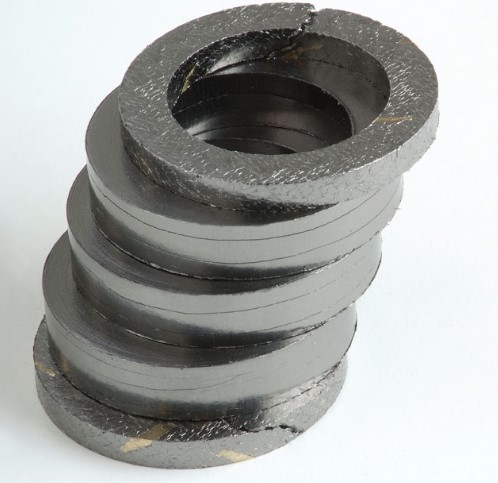
The primary function of compression packing is to act as a pressure barrier, preventing process media from leaking from a high-pressure system to a lower-pressure environment. The sealing mechanism relies on intimate contact between the packing and the dynamic sealing surface, such as a valve stem.
This contact is achieved by applying axial compression. When gland bolts are tightened, the packing is compressed axially and expands radially, pressing firmly against the sealing surface to form an effective seal.
Leakage is influenced by several system variables, including media characteristics, operating pressure, packing structure and installation quality, shaft runout, and operating temperature. Understanding these variables is essential for optimizing sealing performance.
Friction and sealing are independent yet interrelated factors. In theory, zero friction can be achieved by installing no sealing material at all—but this would result in severe leakage. Conversely, welding the valve stem to the bonnet would provide absolute sealing—but render the valve inoperable. Practical applications require a balanced compromise between these two extremes.
Operators can directly control several key factors: the type and number of packing rings, correct installation procedures, and the applied axial load. The goal of optimization is to minimize friction while maintaining effective sealing.
Friction on the dynamic sealing surface is primarily determined by three factors:
- Material type: Different packing materials exhibit different friction characteristics. Polytetrafluoroethylene (PTFE) has an extremely low coefficient of friction, while traditional fiber materials generate higher friction.
- Contact surface area: The greater the contact area between packing and shaft, the higher the friction. This directly relates to the number and geometry of packing rings.
- Compression load: Higher axial compression increases radial sealing force—but also increases friction proportionally.
Other operational variables such as temperature fluctuations, media lubricity, and surface finish also influence friction, but these factors are often difficult to quantify or adjust in the field.
Based on the understanding of friction mechanisms, three fundamental strategies have been developed in industrial practice: optimizing stuffing box load, reducing the number of packing rings, and selecting low-friction materials.
Stuffing box load directly determines the radial pressure exerted on the valve stem. While higher compression improves sealing reliability, it significantly increases friction resistance. Optimization requires balancing sealing integrity with ease of operation.
In practice, gland bolts should be tightened strictly according to the manufacturer’s recommended torque values. Over-tightening not only increases friction but also accelerates packing wear and shortens service life. For critical applications, torque wrenches should be used to ensure uniform and compliant loading.
Additionally, packing designs that promote radial movement can achieve effective sealing at lower axial loads. For example, die-formed graphite rings with angled surfaces more efficiently convert axial force into radial sealing pressure, reducing the compression required to achieve equivalent sealing performance.
Reducing the number of rings is a direct and effective way to decrease contact area. Each ring removed reduces the length of material contacting the valve stem, lowering total friction. Fewer rings also reduce uncompressed packing height, which correlates positively with friction.
In theory, compressive stress is concentrated in the two or three rings nearest the gland, which perform most of the sealing function. Inner rings contribute less to sealing while increasing total friction area. Therefore, reducing ring count—without compromising sealing reliability—can significantly reduce friction.
However, simply removing rings may introduce two issues: reduced packing stack height causing internal gaps, and insufficient sealing performance, particularly under high differential pressure.
Solution: Install carbon or steel spacers to maintain proper packing height and geometry. These spacers do not contact the moving shaft and therefore do not increase friction, while preserving structural stability of the sealing assembly.
Determining the minimum required ring count should be performed by qualified professionals who understand system pressure levels, media properties, and safety requirements.
This is the most direct and often most effective friction-reduction strategy. By selecting materials with a lower coefficient of friction (COF), friction can be significantly reduced without altering structural design or installation methods.
PTFE is one of the lowest-friction solid materials known, offering excellent self-lubricating properties. Braided PTFE packing can achieve a friction coefficient as low as approximately 0.08.
However, PTFE has limitations:
Maximum service temperature of 260°C (500°F)
Susceptibility to creep and cold flow under load, potentially affecting long-term sealing stability
PTFE can be manufactured in various forms, including pure PTFE fiber braid, lubricant-impregnated PTFE fiber, and lattice-structured PTFE braid, each suited to specific operating conditions.
Flexible graphite is another important low-friction sealing material. It can withstand temperatures up to 454°C (850°F) in oxidizing atmospheres and up to 649°C (1200°F) in steam environments—far exceeding PTFE’s temperature capability.
Pure die-formed graphite rings typically have a friction coefficient around 0.10, slightly lower than lubricated graphite braid (approximately 0.09). Compared with PTFE, graphite offers superior thermal stability and creep resistance, making it suitable for high-temperature applications, though with slightly higher friction.
Modern sealing technology has developed composite materials that combine advantages of different materials:
PTFE-coated carbon fiber: A thin PTFE layer applied over carbon fiber or graphite braid significantly reduces surface friction while maintaining structural strength and creep resistance. Testing shows that such composite structures offer among the lowest friction performance of braided packings.
Die-formed graphite sets: Flexible graphite compressed into rings with angled surfaces promotes radial motion and minimizes required compression load. Soft graphite rings deform to balance shear friction and material strength. Lower compression requirements also reduce the load on harder braided end rings, further decreasing total friction. Field measurements indicate that die-formed graphite sets typically produce less friction than equivalent braided graphite packings.
Impregnation and dispersion technologies: Graphite, PTFE, polymers, and lubricants can be impregnated or dispersed into base fibers, providing continuous lubrication during operation while preserving mechanical strength.
- Temperature Considerations: Temperature is the primary selection factor. While PTFE offers lower friction, its 260°C limit prevents use in high-temperature steam or process environments. Graphite must be used for applications above this threshold. For temperatures between 260°C and 454°C, graphite is typically preferred. In steam service, graphite can withstand up to 649°C, making it ideal for high-temperature steam valves in power plants.
- Chemical Compatibility: PTFE offers excellent chemical inertness and resists most corrosive chemicals, including strong acids and alkalis. Graphite performs well in most media but requires caution in strongly oxidizing environments. Material compatibility with the process medium must always be verified.
- Leakage Requirements: Leakage tolerance varies widely across industries. Applications with strict environmental requirements may demand ultra-low or near-zero leakage, requiring high-performance graphite or specialized designs. In general-purpose services where limited leakage is acceptable, low-friction PTFE-based materials may be prioritized to improve operational performance.
- Cost Considerations: Budget constraints also influence material selection. Pure PTFE and advanced composites are typically more expensive than conventional graphite braid. However, when considering total lifecycle cost, low-friction materials may offset higher initial investment through reduced actuator energy consumption, lower maintenance frequency, and extended service life.
Even the best materials will fail if improperly installed. Likewise, mechanical issues such as shaft runout or gland follower interference can negate low-friction design benefits.
Key installation steps include:
Thoroughly clean the stuffing box and valve stem
Verify stem surface finish of 32 micro-inch (AA) or better
Stagger ring joints by 90° or 120°
Compress each ring individually before installing the next
Apply final gland load evenly to avoid uneven loading
Stem runout causes uneven loading and unloading of packing, potentially exceeding material compressibility and resilience limits. This negatively impacts sealing performance and increases friction fluctuation. Proper shaft straightness, concentricity control, and bearing condition monitoring are essential.
Clearance between the gland follower and the moving stem must be properly controlled. Too little clearance can cause interference and dramatic friction increase; too much clearance may compromise packing positioning and sealing effectiveness.
Compression packing remains a classic and widely used valve sealing technology. Through proper material selection, structural optimization, and correct installation and maintenance, it is possible to achieve low-friction operation while maintaining reliable sealing performance.
The three primary friction-reduction strategies—optimizing stuffing box load, reducing packing ring count, and selecting low-COF materials—can be applied individually or in combination to meet diverse operating requirements.
As material science and sealing technologies continue to evolve, new composite materials and optimized designs offer expanding options for industrial users. In practice, close collaboration with professional sealing suppliers is recommended to evaluate temperature, media, pressure, leakage requirements, and cost considerations, ensuring the most suitable solution for specific operating conditions.
Through scientific selection and proper application, compression packing technology will continue to play a vital role in industrial sealing, achieving the optimal balance between sealing reliability and operational performance.
