
An Introduction to ISO 15848 Valve Low-Leakage Standard
In industrial production, valves are critical devices for controlling fluid transportation. Micro-leakage refers to the unintended and often concealed release of chemicals or chemical mixtures from industrial equipment. Although such leakage is difficult to detect with the naked eye, its long-term accumulation may cause serious safety risks, environmental pollution, and economic losses. To address this issue, the International Organization for Standardization has established the ISO 15848 series of standards. This standard is primarily used to evaluate external leakage from valve stem seals and body joints and serves as an important benchmark for assessing valve sealing performance.
The ISO 15848 standard consists of two main parts:
- ISO 15848-1: This section specifies the classification system and qualification procedures for valve type testing. Manufacturers must complete prototype testing and obtain certification through compliance verification, which is usually conducted by independent third-party testing institutions to ensure objectivity and authority of the results.
- ISO 15848-2: This section defines inspection requirements for mass-produced valves. Compared with type testing, it is more cost-effective and efficient while maintaining reliable quality assurance, making it widely adopted in practical manufacturing processes.
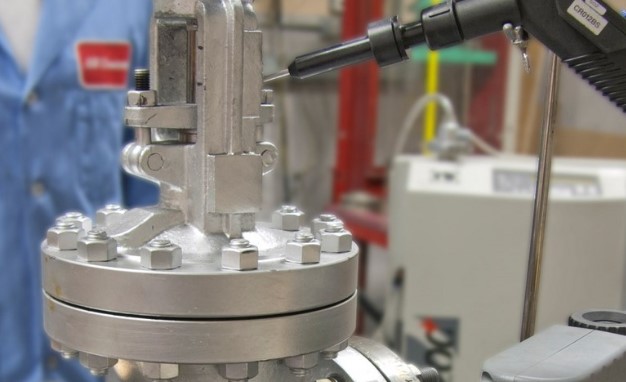
ISO 15848-1:2015 specifies that the test medium should be helium with a purity of no less than 97%. Helium has small molecular size and strong permeability, enabling the detection of extremely small leaks. The standard also allows methane to be used as an alternative test medium, providing flexibility for different application scenarios.
According to detection principles and application scope, valve micro-leakage testing is mainly divided into the following methods:
This method is suitable for detecting leakage rates ranging from 10⁻³ to 10⁻⁷ Pa·m³/s. Operators use portable leak detectors and move the probe around potential leakage locations in a “sniffing” manner to identify local leakage points.
The sniffer method is simple and cost-effective and is mainly used for leakage rate testing of Class B and Class C low-leakage valves specified in ISO 15848. However, it can only detect leakage at specific locations and cannot evaluate overall sealing integrity.
This method is suitable for detecting leakage rates between 10⁻⁵ and 10⁻¹³ Pa·m³/s and offers higher sensitivity. The valve or its specific part is enclosed within a sealed chamber, vacuum is applied, and the total leakage is calculated by measuring changes in vacuum pressure.
The vacuum method is mainly used for Class A and Class B low-leakage valves defined in ISO 15848 and can effectively evaluate overall sealing performance.
This method has been removed from the latest version of the ISO 15848 standard but is still used in some legacy standards or specific applications.
ISO 15848 adopts a three-dimensional classification system that defines valve performance based on sealing tightness, durability, and temperature resistance.
Depending on the test medium, sealing performance is divided into two classification systems.
When helium is used as the test medium:
- AH grade: Highest sealing level with the lowest leakage rate
- BH grade: Medium sealing level
- CH grade: Basic sealing level
When methane is used as the test medium:
- AM grade: Corresponds to AH grade
- BM grade: Corresponds to BH grade
- CM grade: Corresponds to CH grade
Acceptance criteria vary according to sealing grade and test medium, and requirements for valve body joints and stem packing are also different.
Durability classification reflects the service life of valves under mechanical cycling and thermal cycling conditions.
Isolation valve durability classification:
- CO1: Suitable for infrequent operation scenarios (e.g., once per month process isolation)
- CO2: Suitable for medium-frequency operation
- CO3: Suitable for high-frequency operation
Control valve durability classification:
- CC1: 20,000 mechanical cycles and 2 thermal cycles
- CC2: Higher cycling requirements
- CC3: Highest cycling requirement level
Temperature classes are determined according to the actual operating environment of the valve:
- t-196°C: Ultra-low temperature applications such as liquefied natural gas service
- t-46°C: Low-temperature applications
- t-29°C: Conventional low-temperature service
- tRT: Room temperature service
- t200°C: Medium-temperature applications
- t400°C: High-temperature applications
When determining ISO 15848-1 performance classification, manufacturers and users must consider several factors:
- Application Scenario: For lethal gas handling such as chlorine or hydrogen sulfide, the AH sealing grade must be selected to ensure zero leakage risk.
- Operating Frequency: Isolation valves that are rarely operated may choose CO1 class durability, while control valves requiring frequent regulation should adopt CO2 or CO3 classes.
- Temperature Environment: Low-temperature or high-temperature applications require corresponding temperature classifications, and thermal cycling test requirements must be carefully evaluated.
- Valve Type Differences: Different valve types such as gate valves, globe valves, ball valves, and butterfly valves have different structural characteristics and testing parameter requirements. The standard allows flexible combination of classification levels according to valve type and expected application.
In addition to ISO 15848, several other important micro-leakage testing standards are widely used in the industry.
Developed by the American Petroleum Institute, this standard is mainly used in the petrochemical industry. The high-temperature test condition is 260°C, and generally test procedure A1 is selected, which includes a specified number of mechanical cycles plus two thermal cycles.
This corporate standard developed by Shell specifies detailed size requirements for valves:
Valves with DN ≤ 200 require 100 mechanical cycles and one thermal cycle between 80°C and 200°C.
High-temperature tests above 200°C require two thermal cycles.
Low-temperature testing threshold is −20°C; testing is not required above this temperature.
This German standard imposes very strict environmental protection requirements and is an important reference for the European chemical industry.
Major differences among standards include:
- Temperature levels determined by valve material, structure, and service conditions
- Number of thermal and mechanical cycles
- Testing timing, usually at the intersection of mechanical and thermal cycling curves
- Test pressure corresponding to maximum allowable working pressure at the test temperature
- Test medium, typically helium with purity ≥97% or methane
- Stem seal adjustment requirements specified by each standard
- Design Considerations for Test Equipment
Specially designed blind flange fixtures are required for sealing valve body ends, featuring:
- Connection method: Raised-face or male-female blind flanges combined with bolting and spiral-wound gaskets
- Functional interfaces: Gas inlet port, pressure monitoring port, gas release port, and flow-path temperature measurement block
- Material selection: Solid-solution treated 304 or 316 stainless steel castings or forgings for harsh conditions such as high temperature, low temperature, and corrosion
- Wall thickness design: Based on ASME B16.34 and ASME B16.5 standards with an additional 5 mm safety allowance, and strength verification referenced to GB 150
- Machining accuracy: High-precision machining of mating surfaces and optimized pipeline layout to ensure testing safety and reliability
Vacuum measurement chambers are designed according to different stem seal structures.
A vacuum chamber is formed using double O-rings, packing material, and a gland cover
Leakage detection channels and ports are provided on the gland cover
The structure is simple, reliable, and cost-effective
The vacuum chamber is formed by upper packing, lower packing, packing gland, and isolation rings
Leakage channels are opened on the valve bonnet
Through-holes aligned with the valve stem are required on the isolation ring
Leakage Measurement at Temperature Stages: When the valve is operating under high or low temperature conditions, leakage measurement is mainly conducted at the stem sealing position using the vacuum method. This is because thermal expansion and contraction affect sealing performance, making this stage critical for evaluating reliability.
Cycling Test Implementation: Mechanical cycling and thermal cycling simulate real operating conditions. Mechanical cycling tests valve opening and closing durability. Thermal cycling evaluates the influence of temperature variation on sealing performance. The intersection point of the two cycles is usually the optimal timing for leakage detection.
- Sealing Material: The selection of packing materials such as PTFE, graphite, or metal significantly influences sealing performance and temperature resistance.
- Structural Design: Stem-packing matching, packing chamber geometry, and sealing ring arrangement all affect final leakage rates.
- Machining Accuracy: Fit precision between stem and packing, packing box machining quality, and surface roughness of mating surfaces are critical factors determining micro-leakage performance.
- Assembly Process: Fastener tightening sequence, preload torque control, and packing compression parameters have significant impacts on sealing performance.
Although ISO 15848 provides a systematic testing framework, several practical challenges remain.
Comparability issues arise because manufacturers may selectively test different combinations of sealing level, durability level, and temperature level. This means the standard does not provide a fully unified evaluation system, making it difficult for users to directly compare valve performance across brands.
End users must evaluate test results from manufacturers based on their specific application requirements and select products that best match their needs rather than simply comparing grade labels.
The ISO 15848 standard provides a scientific and systematic framework for evaluating valve micro-leakage performance. Understanding its classification system, testing methods, and application principles is of great importance for both manufacturers seeking to improve product quality and users selecting appropriate equipment. In practical applications, performance levels should be selected based on specific operating conditions to achieve safe, environmentally friendly, and economically efficient valve operation.
With technological advancement and continuous improvement of standards, micro-leakage control technology will continue to evolve, contributing more to industrial safety and environmental protection. Both equipment manufacturers and end users should keep track of technological developments in this field and continuously improve valve sealing management levels.
