
A Complete Guide to Metal Seated Butterfly Valves
Metal Seated Butterfly Valve is a type of pipeline valve specifically designed to control the flow of liquids and gases. Its core structure consists of upper and lower semi-valve bodies, each featuring a circular opening at the center surrounded by an annular edge. When the valve opens or closes, the two discs move relative to each other, adjusting the size of the opening to regulate the flow rate and velocity of the fluid within the pipeline.
Unlike conventional rubber-seated butterfly valves, metal seated butterfly valves use valve seats made of stainless steel or other corrosion-resistant metals. This metallic seat design provides additional wear protection, enabling the valve to maintain superior performance during long-term operation. Whether handling corrosive media or operating under high-temperature and high-pressure conditions, metal seated butterfly valves demonstrate stronger adaptability.
The outstanding performance of metal seated butterfly valves stems from their precise structural design and reliable sealing principles. The following sections describe their internal configuration and operating mechanism.
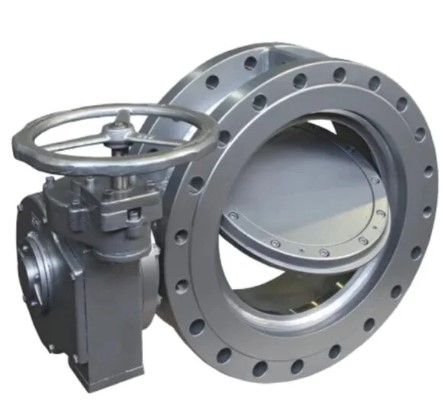
The primary components of a metal seated butterfly valve include the valve body, butterfly disc (also known as the valve plate or closure member), valve stem, valve seat, and sealing ring. The butterfly disc is circular and installed along the diameter of the pipeline. Within the cylindrical passage of the valve body, the disc rotates around its axis.
One of the discs is equipped with a central hub connected to the valve stem. When an operator turns the handle or activates an actuator, the valve stem drives the butterfly disc toward or away from the seat, changing the opening size and enabling precise control of liquid or gas flow.
Metal seated butterfly valves operate on a quarter-turn mechanism, meaning a 90-degree rotation of the disc completes the transition from fully closed to fully open:
- Closed Position: The disc is perpendicular to the pipeline axis, completely blocking the fluid passage.
- Opening Process: As the disc gradually rotates, the opening area increases, allowing the flow rate to rise accordingly.
- Fully Open Position: The disc rotates to 90 degrees and becomes parallel to the pipeline axis. At this point, the valve is fully open and fluid resistance is minimized.
This design also incorporates a dedicated valve seat structure. When the two discs separate, the seat is tightly clamped between them, effectively preventing media backflow and ensuring reliable sealing. Additionally, each disc is fitted with a lip seal to further prevent leakage and avoid system contamination.
Advanced metal seated butterfly valves commonly adopt a triple-offset sealing structure. This design allows the valve seat and disc to experience almost no wear while providing a “tighter-as-it-closes” sealing effect. The sealing ring is made of stainless steel, combining the advantages of both metal-to-metal sealing and elastic sealing.
Key features of the triple-offset structure include:
- The seat sealing ring consists of a soft T-shaped sealing ring laminated with multiple stainless steel layers on both sides.
- The sealing surfaces of the disc and seat form an oblique conical structure.
- The inclined conical surface of the disc is overlaid with temperature-resistant and corrosion-resistant alloy materials.
- A compensation structure composed of springs and adjusting bolts is incorporated.
This design effectively compensates for tolerance bands between the shaft sleeve and valve body, as well as elastic deformation of the valve stem under medium pressure, thereby resolving sealing challenges during bidirectional media transmission.
- Excellent Corrosion Resistance: Metal seated butterfly valves offer strong resistance to corrosive liquids and gases. Valve bodies and sealing components made from stainless steel or other corrosion-resistant materials can operate for extended periods in harsh environments such as chemical processing and petroleum industries without deterioration. This makes them particularly suitable for handling acidic, alkaline, or otherwise corrosive industrial media.
- Capability to Withstand Extreme Conditions: The metal seat design enhances durability, allowing the valve to easily withstand high-pressure and high-temperature environments. Triple-offset metal seated butterfly valves are commonly used in applications where the medium temperature does not exceed 425°C and are widely installed in industrial pipelines across metallurgy, power generation, petrochemicals, water supply, drainage, and municipal construction.
- Flexible Installation and Operation: Metal seated butterfly valves provide bidirectional sealing, meaning installation is not restricted by the direction of media flow or spatial orientation. They can be mounted in virtually any direction. Thanks to their lightweight and compact structure, they are suitable for pipelines of various sizes, including locations with limited space. Operationally, only a 90-degree rotation is required for quick opening and closing, making the valve simple and convenient to use. When fully open, the thickness of the butterfly disc becomes the only resistance to fluid flow through the valve body, resulting in minimal pressure drop and excellent flow control characteristics.
- Easy Maintenance and Low Cost: These valves are easy to maintain, with most components removable using hand-tightened screws or bolts. Their simple structure and limited number of parts mean that only minimal servicing is required during long-term operation. Compared with more complex valve types, this significantly reduces maintenance costs and downtime.
- Precise Flow Control: Metal seated butterfly valves can be opened gradually to achieve throttling control. When paired with actuators, flow regulation becomes even more precise. Fine control can be achieved by using positioners in pneumatic and hydraulic actuators or modulation modules in electric actuators, meeting the demands of industrial automation.
Petrochemical Industry: In petroleum, gas, and chemical sectors, metal seated butterfly valves are used to control various corrosive media as well as high-temperature and high-pressure fluids. Their corrosion resistance and wear durability make them ideal for critical equipment such as refining units and chemical reactors.
Power Generation and Metallurgy: Cooling water systems in thermal power plants and high-temperature gas pipelines in the metallurgical industry widely utilize metal seated butterfly valves. Triple-offset valves are particularly suitable for regulating flow and shutting off fluids in systems where medium temperatures do not exceed 425°C.
Water Treatment and Supply Systems: In municipal water supply networks, wastewater treatment plants, and industrial circulating water systems, metal seated butterfly valves are often the preferred choice for large-diameter pipelines due to their reliable sealing performance and low flow resistance.
Food and Pharmaceutical Industries: Because they can be manufactured from stainless steel and other materials that meet hygiene standards, metal seated butterfly valves are also used in food processing plants and pharmaceutical equipment where cleanliness is essential.
With numerous models available on the market, differing in structure, material configuration, drive method, and price, selecting the most suitable product based on actual operating conditions is critical for ensuring long-term stable performance.
Before purchasing, clarify the following:
Medium Type: Liquid or gas, and whether it is corrosive
Working Pressure: Normal operating pressure and potential peak pressure
Working Temperature: Temperature range of the medium, including high- or low-temperature conditions
Pipeline Diameter: Valve size determined by flow requirements
Select single-offset, double-offset, or triple-offset structures according to specific needs. For high-pressure and high-temperature conditions, triple-offset metal seated butterfly valves are recommended, while simpler and more cost-effective designs may suffice for general applications.
Valve bodies and discs are typically made from stainless steel (such as 304 or 316). Sealing ring materials should be chosen based on media characteristics, often using stainless steel combined with graphite composite plates or other alloy materials. Strongly corrosive media may require special alloy materials.
Metal seated butterfly valves are available with various actuation methods:
Manual: Suitable for small diameters and infrequent operation
Worm Gear Drive: Provides higher output torque, ideal for medium and large valves
Electric: Facilitates remote control and integration into automated systems
Pneumatic: Ideal for applications requiring rapid opening/closing or explosion-proof performance
Although metal seated butterfly valves offer excellent performance, improper installation or inadequate maintenance can still lead to failures. Issues such as seal leakage or operational sticking often stem from installation errors or lack of servicing. Mastering proper installation techniques and maintenance practices is essential to fully realize the valve’s value.
Several factors should be considered during installation:
Environmental Compatibility: Ensure the valve is suitable for the working temperature and pressure range of the application to avoid failures or damage caused by exceeding design parameters.
Spatial Layout: Leave sufficient clearance between the butterfly disc sealing surface and nearby components so the disc can rotate freely without obstruction.
Centered Installation: The valve must be aligned with the pipeline to prevent leakage and ensure an unobstructed flow path. Misalignment can lead to poor sealing and abnormal wear.
Flow Direction: Although metal seated butterfly valves provide bidirectional sealing, some specific types may have recommended flow directions. Always review the product manual before installation.
Accessories used with metal seated butterfly valves—such as flange gaskets, fasteners, and support structures—should be carefully selected to ensure optimal system performance.
Maintenance is relatively straightforward:
Regularly check the valve stem packing for leakage and adjust or replace it when necessary
Inspect the valve seat and disc sealing surfaces for wear
Keep the valve clean and promptly remove impurities attached to sealing surfaces
Lubricate moving components periodically
Verify the tightening condition of connecting bolts
With their unique structural design and dependable performance, metal seated butterfly valves have become indispensable components in modern industrial fluid control systems. Their application continues to expand, from petrochemical processing to power generation and metallurgy, from municipal water supply to food and pharmaceutical production.
When selecting a metal seated butterfly valve, users should thoroughly understand their operating requirements and choose the appropriate structural type, material specifications, and drive method. Proper installation and regular maintenance will ensure long-term stable operation and provide reliable fluid control for industrial production.
As material science and manufacturing technologies continue to advance, the performance of metal seated butterfly valves will further improve, offering solutions for increasingly complex operating conditions. For users seeking reliability, durability, and cost-effectiveness, metal seated butterfly valves are undoubtedly a valve type worthy of priority consideration.
