
Comparison of Slab Gate Valves and Wedge Gate Valves
Gate valves are among the most widely used shut-off valves in industrial pipeline systems. Their primary function is to control the opening and closing of pipelines rather than to regulate fluid flow. In industries such as oil, natural gas, chemical processing, and power generation, the selection of gate valves directly affects pipeline safety, maintenance costs, and operational efficiency.
Currently, the most common types of gate valves on the market fall into two main categories: slab gate valves (parallel slide gate valves) and wedge gate valves. Although both belong to the gate valve family, they differ significantly in structural design, sealing principles, and applicable operating conditions. Understanding these differences helps engineers and technicians make the correct selection based on actual application requirements.
Slab gate valves are an important member of the gate valve family. Compared with wedge gate valves, the most significant difference lies in the gate design: slab gate valves use a parallel gate plate, rather than a wedge-shaped gate. This structural distinction gives slab gate valves unique advantages in sealing method, flow resistance, and application scenarios.
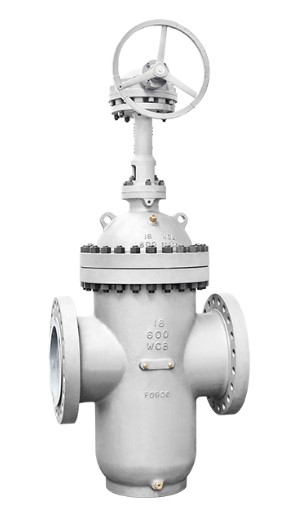
The core feature of a slab gate valve is that the gate plate is parallel to the fluid flow channel and moves vertically to open or close the valve. This design provides several key structural characteristics:
- Parallel sliding structure: The gate plate slides vertically between two parallel valve seats. Unlike wedge gate valves, the gate plate has no inclination angle and relies entirely on vertical movement for opening and closing.
- Floating seat design: Modern slab gate valves typically adopt floating seats with O-ring seals, allowing the seats to move slightly within a limited range. This design ensures reliable sealing at both the inlet and outlet, providing bi-directional sealing capability.
- Through-conduit design: In slab gate valves with a through conduit, the gate contains a hole equal to the pipe diameter. When the valve is fully open, the conduit aligns with the pipeline to form a smooth, straight flow path.
- Extremely low flow resistance: When fully open, the through-conduit gate forms a straight pipeline channel with minimal resistance, comparable to a short section of pipe with the same diameter. This makes slab gate valves especially suitable for long-distance pipelines, significantly reducing pumping energy consumption.
- Pigging compatibility: Slab gate valves with through-conduit design allow pipeline pigs to pass directly through the valve. This feature is particularly important in oil and gas transmission pipelines because pipeline cleaning can be performed without removing the valve.
- Bi-directional sealing capability: Thanks to the floating seat structure and O-ring sealing, slab gate valves can seal from both directions, regardless of flow direction.
- Low operating torque: The opening and closing torque of slab gate valves is roughly half that of conventional gate valves, making operation easier and reducing requirements for actuators.
- Zero-leakage sealing system: Slab gate valves often feature dual sealing systems combining soft and metal seals, along with an emergency sealant injection system. Grease can be injected through external fittings into the seat sealing surfaces to ensure sealing reliability even under extreme conditions.
- Automatic pressure relief: When the valve is closed, it can automatically relieve excess pressure from the internal cavity, preventing safety hazards caused by pressure accumulation.
- Good thermal expansion adaptability: Because the gate slides parallel to the seats, thermal expansion of the stem does not overload the sealing surfaces. Even under alternating hot and cold conditions, stable sealing performance can be maintained.
- Higher manufacturing cost: The sealing pair includes two sealing surfaces that require high machining precision, resulting in a more complex manufacturing process and higher cost.
- Larger structural dimensions: Compared with ball valves or butterfly valves, slab gate valves have a greater installation height and require more space.
- Longer opening and closing time: Due to the longer gate travel distance, full opening or closing requires more time and is not suitable for applications requiring rapid shut-off.
- Sealing surface wear: Relative sliding occurs between sealing surfaces during operation, which may cause wear or scratches over long-term use.
Unlike slab gate valves, wedge gate valves use a completely different sealing principle and gate design. As one of the oldest and most widely used gate valve types, wedge gate valves occupy an important position in high-pressure sealing applications.
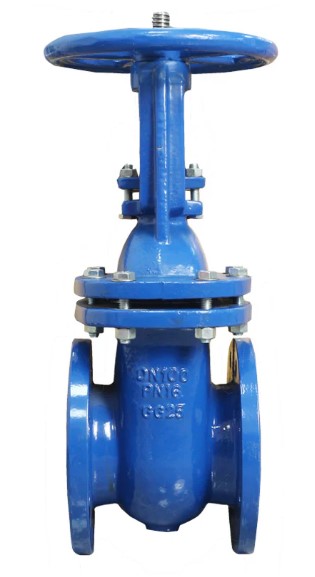
The gate of a wedge gate valve has a wedge shape. The sealing surfaces on both sides form an angle with the vertical centerline of the gate, known as the wedge half-angle, typically 2°52′ or 5°.
- Wedge-shaped gate design: The two sealing surfaces incline toward the center, forming a wedge. During closing, the gate moves downward and wedges between the two valve seats, generating additional sealing force.
- Forced sealing mechanism: The wedge structure creates mechanical force to achieve sealing, requiring relatively high closing torque to wedge the gate tightly into the seats.
- Guide mechanism: Special guides inside the valve body prevent rotation of the gate during operation, ensuring accurate alignment between the sealing surfaces and valve seats.
- Elastic Gate: One-piece structure with two sealing surfaces supported by a central cantilever; A circumferential groove in the center provides slight elastic deformation; Small deformation compensates for machining deviations and ensures full contact with the seats; Sealing force comes from elastic load rather than direct stem wedging force; Temperature changes or body deformation will not wedge the gate permanently; Suitable for small- and medium-sized valves across various pressures and temperatures; Not suitable for media containing excessive solid particles that could clog the groove.
- Rigid Gate: One-piece solid structure without elastic deformation; Cannot compensate for seat misalignment caused by pipeline loads or thermal fluctuations; Requires extremely high machining precision of wedge angle; Sealing surfaces wear easily during operation; Gate may jam under temperature changes; Generally used for small-diameter valves below DN50; Not recommended for temperatures exceeding 121 °C.
- Double Disc Gate (Split Gate): Consists of two independent discs connected by a spherical pivot forming a wedge; Automatically adjusts angle to fit both seats; Lower machining precision required; Less likely to jam during temperature changes; Worn sealing surfaces can be compensated by adding shims; Structure is complex and unsuitable for viscous media; Long-term corrosion may cause disc detachment; Usually installed vertically in water or steam pipelines; Suitable for sizes DN50–600 and temperatures –196 °C to 816 °C.
- Excellent high-pressure sealing performance: The wedge structure generates additional sealing load, enabling reliable sealing under high pressure conditions.
- High potential sealing grade: Compared with parallel metal-seated gate valves, wedge gate valves can achieve a higher sealing level, making them suitable for applications requiring strict sealing.
- Simple and reliable structure: Especially in the case of elastic gates, fewer components result in high reliability.
- Unidirectional sealing: Wedge gate valves typically provide forced sealing in one direction, meaning flow direction is usually restricted.
- Sediment accumulation: Guide grooves at the bottom of the valve may accumulate deposits, which cannot be removed during pigging operations.
- High operating torque: Large closing torque is required to achieve sealing, placing higher demands on actuators.
- Thermal expansion sensitivity: Thermal expansion of the valve stem may overload sealing surfaces.
- Sensitivity to solid particles: Solid particles in the medium can easily become trapped between sealing surfaces.
- No through-conduit design: Due to the wedge structure, pigging tools cannot pass through the valve.
- Poor throttling capability: Gate valves are not suitable for flow regulation.
- Vibration under high-velocity flow: High-speed or high-density media may cause gate vibration during shut-off, affecting valve life.
Comparison Item | Slab Gate Valve | Wedge Gate Valve |
Sealing Method | Floating seat bi-directional sealing | Wedge-type forced sealing (usually one direction) |
Flow Resistance | Extremely low | Relatively high |
Operating Torque | About half of conventional gate valves | Requires high closing torque |
Pigging Capability | Pig can pass through (with conduit) | Pig cannot pass |
Flow Direction | Bi-directional | Usually one direction |
Sealing Reliability | Zero leakage with dual seal & grease injection | Excellent under high pressure |
Thermal Expansion | Not sensitive | Sensitive |
Solid Particle Tolerance | Good | Poor |
Manufacturing Cost | Higher | Lower (elastic gate) |
Structural Height | Higher | More compact |
Applicable Size | Wide range | DN50–600 (double disc) |
Temperature Adaptability | Good | Rigid gate limited |
Slab gate valves and wedge gate valves each have their own application advantages, and neither can be considered universally superior. Slab gate valves dominate long-distance pipelines and systems requiring frequent pigging, thanks to their low flow resistance, bi-directional sealing capability, and pigging compatibility. Wedge gate valves, on the other hand, are widely used in steam systems and small-diameter pipelines due to their excellent high-pressure sealing performance, compact structure, and relatively lower cost.
The correct valve selection should be based on specific operating conditions, considering factors such as medium characteristics, pressure and temperature parameters, installation space, maintenance requirements, and lifecycle costs. A thorough understanding of the structural principles and performance characteristics of both valve types is essential for making the right engineering decision.
With continuous advancements in industrial technology, both valve designs are being further optimized. Engineers should consider the latest product standards and practical operating experience to select the most suitable valve solution for their systems.
