
Differences Between PTFE Packing and Graphite Packing
In industrial production and equipment operation, valve sealing is a critical process to prevent media leakage and ensure system safety. As the core component of valve sealing, the choice of valve packing material directly determines the sealing performance and operational stability of the equipment. Among the many packing materials, PTFE and graphite are the two most widely used sealing materials in the industrial sector due to their unique performance advantages. This article provides a systematic overview of these two types of valve packing, covering material properties, performance comparisons, application scenarios, and selection methods, to assist readers in making informed choices in practical applications.
Valve packing is the sealing material installed inside the valve packing box. It fills the gap between the valve stem and the valve body, preventing the medium from leaking from the valve to the outside. Packing is positioned and adjusted using a gland and bolts, maintaining tight contact with the valve stem during its linear or rotary movement, thereby forming a dynamic seal. Selecting the appropriate packing material directly affects the valve’s sealing performance, service life, and maintenance costs.
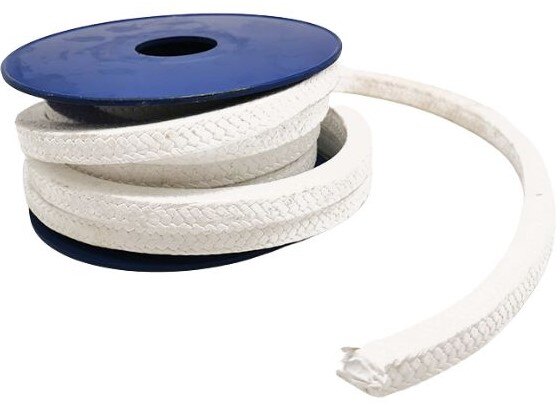
PTFE, short for polytetrafluoroethylene, is a white synthetic polymer material obtained through the polymerization of tetrafluoroethylene monomers. PTFE packing is typically made in a braided structure and can incorporate lubricants to enhance flexibility and sealing performance. This material has an extremely low coefficient of friction, ranking among the lowest of all solid materials. PTFE is highly resistant to various corrosive substances, including chemical agents, acids, gases, and other corrosive or abrasive media—except for molten alkali metals. Additionally, PTFE has excellent electrical insulation properties, protecting valve stems and shafts from wear while preventing current conduction. In the food processing and pharmaceutical sectors, certain PTFE packing braided from multiple filaments can meet FDA standards, ensuring hygiene and safety.
Graphite is a naturally occurring inorganic form of pure carbon, appearing black in color, and is usually used in braided packing form. Graphite packing is made from flexible graphite fibers that are heat-treated, twisted into yarns, and braided, typically containing over 95% carbon. Flexible graphite packing, also known as expanded graphite, is produced by oxidizing graphite flakes with sulfuric and nitric acids and then expanding them at high temperatures. This process forms a worm-like layered structure, resulting in excellent flexibility and sealing characteristics. Graphite packing exhibits exceptional self-lubricating properties, allowing it to function normally in both dry and wet environments without additional lubrication. Furthermore, graphite has good thermal conductivity, rapidly dissipating heat, making it suitable for high-temperature applications.
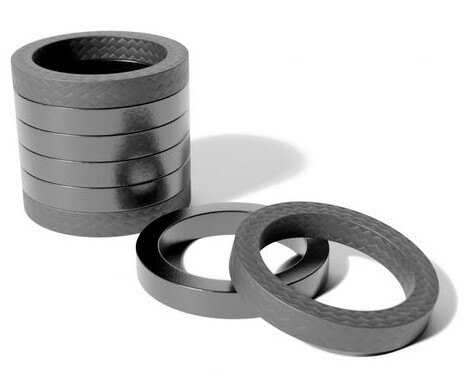
Although both PTFE and graphite are used for valve sealing, offering low friction coefficients and good corrosion resistance, they differ fundamentally in material origin. PTFE is a synthetic polymer, while graphite is a naturally occurring carbon material. This essential difference results in distinct physical and chemical properties, making each suitable for different industrial scenarios. Visually, PTFE packing is white, while graphite packing is black, making them easy to distinguish.
Understanding the basic characteristics of PTFE and graphite packing reveals significant differences in material origin, appearance, and fundamental performance. To facilitate informed decision-making, this section compares the two materials across multiple key performance dimensions, including temperature tolerance, corrosion resistance, friction coefficient, and mechanical strength, highlighting their respective advantages and limitations.
Temperature adaptability is a primary consideration when selecting packing. PTFE packing typically operates in a temperature range of -300°F to 500°F (-184°C to 260°C). Beyond 500°F, PTFE may soften, decompose, or carbonize, leading to decreased mechanical strength or extrusion from the packing box, resulting in seal failure. Thus, PTFE is unsuitable for high-temperature steam, hot oil, or other extreme heat conditions.
Graphite packing has a much broader temperature range, generally from -400°F to 850°F (-240°C to 454°C), with some specially treated graphite packing able to withstand even higher temperatures. Graphite remains stable at high temperatures, maintaining sealing performance, making it the preferred choice for high-temperature applications.
PTFE packing excels in corrosion resistance, capable of withstanding nearly all corrosive chemicals, acids, gases, and other highly aggressive media, across a wide pH range. Its chemical inertness ensures minimal reaction with other substances, making PTFE irreplaceable in environments demanding high chemical compatibility. The only notable limitation is that PTFE cannot contact molten alkali metals.
Graphite packing also demonstrates good corrosion resistance, tolerating most acidic and alkaline media. However, caution is needed in strongly oxidizing environments, especially at high temperatures, as carbon may oxidize or degrade.
PTFE packing has one of the lowest coefficients of friction among solid materials, minimizing resistance during valve stem movement and reducing wear on the stem and shaft. Pre-lubrication may enhance its smooth operation in humid or chemically corrosive environments.
Graphite packing also has a low friction coefficient and naturally lubricates itself. Its layered structure allows sheets to slide and exfoliate during friction, forming a stable transfer film that further reduces friction. Graphite performs particularly well in dry or high-temperature conditions, maintaining long-term operation without additional lubrication.
PTFE packing has a tensile strength of approximately 2000 PSI, providing robust resistance to extrusion and mechanical stress, suitable for sealing high-pressure systems at moderate temperatures. Graphite packing has a lower tensile strength, around 650 PSI, requiring consideration of compressive stress in high-pressure applications. Its mechanical strength can be enhanced by composite construction with materials such as aramid fibers.
Graphite’s excellent thermal and electrical conductivity allows rapid heat dissipation in high-speed rotating equipment, preventing localized overheating. However, in situations requiring electrical insulation, graphite’s conductivity may be a disadvantage, potentially causing galvanic corrosion.
PTFE has poor thermal conductivity but outstanding electrical insulation, making it the necessary choice where current conduction must be prevented.
PTFE packing generally offers long service life, reducing downtime and maintenance costs. However, PTFE is prone to cold flow, slowly deforming and extruding under prolonged pressure, eventually requiring replacement.
Graphite packing, with its self-lubricating property, is low-maintenance and easy to install and remove. Its durability under high-temperature, high-pressure conditions is superior.
Different industrial sectors have diverse operational environments—chemical plants deal with highly corrosive media, power plants handle extreme high temperatures, and the food industry emphasizes hygiene. By mapping the performance strengths of PTFE and graphite to specific industries, we can determine the material with the greatest practical value in each context.
Both materials are widely used in chemical industries, but with different focuses. Graphite packing is preferred for equipment handling acidic media, valves, shafts, and agitators, especially under high-temperature, high-pressure conditions. PTFE packing is commonly used in shafts, valves, impellers, and rollers, particularly where pH variations are significant. When chemical purity and medium compatibility outweigh temperature resistance, PTFE is the first choice.
The oil and gas industry demands highly reliable sealing materials. PTFE packing is used in pipeline coatings, valve seats, cores, and rotating shafts, leveraging its corrosion resistance and low friction to ensure long-term operation. Graphite packing seals pumps, pipelines, and storage equipment, maintaining stability under high-temperature, high-pressure conditions in oil and gas transport.
High-temperature equipment such as steam turbines and valves in the power sector relies primarily on graphite packing for its heat tolerance and thermal conductivity. PTFE is less common in this sector, mainly used in moderate-temperature auxiliary systems or for electrical insulation purposes.
Food and beverage processes demand stringent hygiene. FDA-certified PTFE packing is clean, non-contaminating, and used in temperature-controlled housings and media transfer systems. While graphite can maintain cleanliness, its black color and conductivity limit its use in this sector.
The pharmaceutical industry requires sealing materials with high purity and chemical inertness. PTFE packing is widely applied in pumps and valves due to its non-reactive, non-contaminating properties. Graphite may be used in some equipment, but its impact on product purity must be assessed.
Aerospace applications demand stringent overall performance. PTFE is used in control surfaces, braking systems, fuel systems, and pneumatic devices, taking advantage of low friction and chemical stability. Graphite is applied where higher pressure, higher rotational speeds, or extreme temperatures require superior mechanical performance.
- Temperature Considerations: If operating temperatures exceed 260°C or involve high-temperature steam or hot oil, graphite is preferred for its thermal stability. PTFE is suitable for -184°C to 260°C with minor fluctuations.
- Medium Characteristics: For highly corrosive media, PTFE’s chemical inertness makes it irreplaceable. For weaker corrosive media with high temperatures, graphite offers good performance and cost-effectiveness.
- Pressure and Rotation Speed: PTFE’s higher tensile strength suits high-pressure systems, while graphite’s self-lubrication and heat dissipation make it ideal for high-speed shafts. Dry operation favors graphite.
- Electrical Requirements: PTFE is required where electrical insulation is needed. Graphite’s conductivity may be advantageous for static discharge.
- Hygiene Standards: In food, beverage, or pharmaceutical industries, FDA-certified PTFE packing is necessary. Graphite can be used selectively but is less clean.
- Composite Options: In special cases, graphite-filled PTFE combines chemical resistance of PTFE with improved wear resistance and sliding performance, suitable for environments requiring both chemical inertness and durability.
- Installation Tips: PTFE and graphite packing are installed similarly via packing boxes and glands. Stagger the cuts of packing rings to prevent leakage. PTFE requires valve stem surfaces with 2–4 μinches RMS finish to prevent leaks. Graphite is less sensitive but must maintain tight contact with the stem.
- Routine Maintenance: Neither material generally requires flushing. Graphite’s self-lubrication reduces maintenance, needing only gland tightness checks. PTFE requires monitoring for cold flow; if leakage increases, adjust the gland or replace packing. For graphite in temperatures above 427°C, consider extended gland designs or steel supports to protect the packing.
- Replacement Cycle: Replacement depends on operating conditions. Frequent thermal cycles shorten PTFE life due to expansion/contraction. Graphite lasts longer under high-temperature, high-pressure conditions but requires periodic checks for oxidation or wear.
PTFE and graphite packing are the most commonly used materials for industrial valve sealing, each with clear advantages and applicable ranges. PTFE offers exceptional chemical inertness, very low friction, and electrical insulation, making it ideal for corrosive media, moderate-temperature conditions, and sectors with strict hygiene standards. Graphite excels in high-temperature tolerance, self-lubrication, thermal conductivity, and cost-effectiveness, suitable for high-pressure, high-speed, and dry operation environments.
Material selection should not be a matter of “better or worse,” but rather a comprehensive evaluation based on temperature, pressure, medium characteristics, rotation speed, electrical requirements, and hygiene standards. Understanding the fundamental differences and performance characteristics of these materials helps reduce leakage risk, extend equipment lifespan, and enhance overall operational efficiency. Proper material selection and application ensure long-term, stable, safe, and efficient operation of industrial pumps, valves, and rotating equipment in complex environments.
