
Metal-Seated Ball Valves: Hardening Process Selection
In industrial production, valves are critical components of fluid control systems, and their performance directly affects the stability and safety of the entire production process. As a specialized type of valve, metal-seated ball valves are widely used in harsh environments, such as high-temperature and high-pressure conditions, as well as services involving dusty media or fluids containing solid particles, thanks to their unique sealing characteristics and ability to adapt to complex operating conditions.
This article provides an in-depth discussion of sealing pair material combinations, hardening processes, and applications of metal-seated ball valves across different industries, aiming to help practitioners better understand and select suitable ball valves to meet real-world production requirements.
The core of a metal-seated ball valve lies in its sealing pair, namely the material combination between the valve seat sealing surface and the ball sealing surface. This type of ball valve adopts a metal-to-metal sealing design. Compared with traditional PTFE-seated valves, it offers significantly superior wear resistance and high-temperature performance.
In applications such as thermal power plants, petrochemical systems, and coal chemical industries, where media may include high-viscosity fluids, mixtures containing dust and solid particles, or highly corrosive fluids, metal-seated ball valves are often the preferred choice. This is because PTFE materials tend to age and deform under high-temperature, high-pressure, and strongly corrosive conditions, leading to sealing failure. Metal sealing pairs, by contrast, can effectively overcome these limitations and ensure reliable performance under severe service conditions.
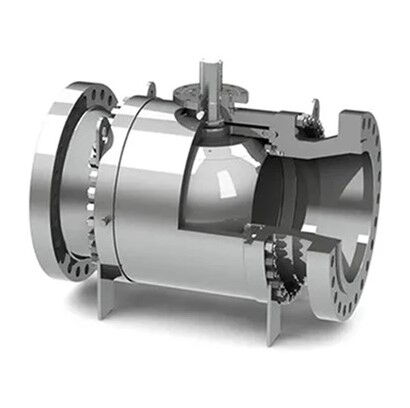
Given the extremely harsh operating environments of metal-seated ball valves, selecting appropriate hardening processes for the ball and seat is of vital importance. The hardening process not only affects sealing performance but also directly determines the valve’s service life and reliability.
At present, there are several commonly used surface hardening technologies for ball valves, each with its own characteristics and suitable application range. Understanding these processes is essential for making the right selection.
After understanding the importance of sealing pair material combinations and their role in industrial applications, it is necessary to focus on ball surface hardening technologies. These processes are critical to ensuring the performance of metal-seated ball valves, as they directly influence wear resistance, corrosion resistance, and service life.
Different hardening methods exhibit distinct characteristics and application scenarios. Selecting the appropriate process is therefore crucial. The following are several commonly used ball surface hardening processes and their features.
Hardfacing hard alloys on the ball surface is a traditional hardening method, capable of achieving hardness levels above 40 HRC. However, this process has several drawbacks. First, the procedure is complex and production efficiency is low. Second, large-area hardfacing tends to cause component deformation, adversely affecting the sealing performance of the ball valve. As a result, this method is now less commonly used.
Hard chrome plating is a relatively simple hardening process, with hardness reaching 60–65 HRC and a coating thickness of approximately 0.07–0.10 mm. Chrome-plated layers offer high hardness, good wear resistance, and corrosion resistance, while maintaining a bright surface finish over long periods. The cost is also relatively low.
However, the hardness of hard chrome coatings decreases rapidly as temperature rises, and their maximum working temperature should not exceed 427 °C. In addition, the bonding strength of chrome plating is relatively low, making it prone to peeling. These limitations restrict its application in high-temperature and high-pressure environments.
Plasma-nitrided ball surfaces can achieve hardness levels of 60–65 HRC, with a nitrided layer thickness of about 0.20–0.40 mm. While this process provides relatively high hardness, its corrosion resistance is poor, making it unsuitable for strongly corrosive chemical applications. Therefore, careful consideration of actual service conditions is required when selecting this hardening method.
HVOF spraying is currently the primary hardening method for metal-seated ball valve balls. The resulting hardness can reach 70–75 HRC, with high bonding strength and coating thickness of approximately 0.3–0.4 mm.
The HVOF process uses oxygen-fuel combustion to generate high-velocity gas streams that accelerate powder particles toward the workpiece surface, forming a dense coating. During impact, particles travel at high speeds (500–750 m/s) but relatively low temperatures (below 3000 °C), producing coatings with high bond strength, low porosity, and low oxide content.
Because the workpiece heating temperature is low (below 93 °C), deformation does not occur, enabling cold spraying. The high particle velocity (up to 1370 m/s) eliminates heat-affected zones, leaving the workpiece composition and microstructure unchanged. The coating hardness is high and suitable for machining. In thermal power, petrochemical, and coal chemical industries—where high-viscosity fluids, particulate-laden media, and strongly corrosive fluids are common—most ball valves adopt this hardening technology.
Spray welding is a thermal spraying surface treatment process for metal materials. Powder materials (metal powders, alloy powders, or ceramic powders) are heated to a molten or highly plastic state by a heat source and then sprayed onto a pretreated workpiece surface using a gas stream, forming a firmly bonded coating (or weld layer).
In both spray welding and hardfacing processes, the hard alloy and the substrate undergo melting, creating a thermal fusion zone at the interface. To fully achieve the desired performance of spray-welded or hardfaced layers and avoid exposing the fusion zone as a metal contact surface after machining, it is recommended that the thickness of spray-welded or hardfaced hard alloy layers exceed 3 mm.
Metal sliding contact surfaces must have a certain hardness difference; otherwise, galling or seizure may occur. In practical applications, the hardness difference between the ball and the seat is generally maintained at 5–10 HRC, ensuring satisfactory service life.
Because ball machining is complex and costly, and to protect the ball from damage and wear, the ball surface hardness is usually selected to be higher than that of the valve seat. Two common hardness combinations are widely used:
- Ball surface hardness 55 HRC, seat surface hardness 45 HRC. The ball surface can be treated with HVOF-sprayed Stellite 20 alloy, while the seat surface can use hardfaced Stellite 12 alloy. This is the most widely adopted hardness combination for metal-seated ball valves and meets general wear requirements.
- Ball surface hardness 68 HRC, seat surface hardness 58 HRC. The ball surface can be treated with HVOF-sprayed tungsten carbide, while the seat surface can be treated with HVOF-sprayed Stellite 20 alloy. This combination is widely used in coal chemical industries, offering excellent wear resistance and long service life.
In some overseas applications, balls and seats with equal surface hardness exceeding 72 HRC are used. However, due to the lack of mature grinding technologies domestically, such ultra-high-hardness ball and seat combinations are rarely produced.
For metal-seated ball valves, stainless steels or corrosion-resistant alloys are generally selected for balls and seats. This is because the bonding layer between hard alloys and the seat (or ball) is susceptible to corrosion by the process medium, which can cause the hard alloy layer to peel off and shorten valve service life.
Different base materials require different hardening processes. For example, duplex stainless steel is widely used in coal chemical industries due to its excellent resistance to corrosion fatigue and erosion-corrosion. Duplex stainless steel features a mixed ferritic and austenitic microstructure.
However, duplex stainless steel is not suitable for spray welding or hardfacing with hard alloys, as these processes can damage its metallographic structure. Instead, HVOF spraying is more suitable for surface hardening of duplex stainless steel, and the process must ensure that the substrate microstructure remains unaffected.
In addition to the commonly used hardening processes discussed above, many other methods are available, each with its own advantages, disadvantages, and application scenarios.
- Flame Quenching: Uses oxy-acetylene or similar flames to rapidly heat the ball and seat surfaces to quenching temperature, followed by water cooling to form martensitic structures and increase surface hardness. Equipment is simple and cost is low, but heating is uneven and deformation may occur. Suitable for small ball valve components produced in single or small batches.
- Induction Hardening: Places the ball and seat in an induction coil, generating induced currents through alternating magnetic fields to rapidly heat the surface, followed by water quenching. This method offers fast heating, high efficiency, good hardening quality, and easy automation, but requires high equipment investment. Suitable for mass production.
- Carburizing: Low-carbon balls and seats are placed in a carbon-rich medium at high temperature to allow carbon diffusion into the surface, followed by quenching and low-temperature tempering. This produces a hard, wear-resistant surface with a tough core. While effective, carburizing involves long processing cycles and complex post-treatment.
- Nitriding: Nitrogen atoms diffuse into the surface at elevated temperature, forming a hard nitrided layer with good wear resistance and some corrosion resistance. Deformation is minimal, but the nitrided layer is thin and brittle, suitable for components operating under low or no impact loads.
- Carbonitriding: Simultaneous diffusion of carbon and nitrogen combines the advantages of carburizing and nitriding, offering lower processing temperature, shorter cycle time, minimal deformation, high surface hardness, and good wear resistance. This method is widely used.
- Plasma Spraying: Uses plasma arcs to heat coating powders to molten or semi-molten states and spray them onto surfaces. Various coating materials, such as cermets and ceramics, can be applied. Coatings have high hardness and wear resistance but require expensive equipment and complex processes.
- Manual Arc Hardfacing: Uses manual arc welding to deposit one or more layers of alloy materials on ball and seat surfaces. Flexible and material options are diverse, but quality depends heavily on operator skill and labor intensity is high.
- Automatic Submerged Arc Hardfacing: Employs automated submerged arc welding for high efficiency, stable quality, and good bead formation. Suitable for mass production but requires large equipment and imposes limitations on component shape and size.
- Vacuum Evaporation Deposition: Metals or alloys are evaporated in a vacuum and deposited as hard thin films. Deposition rates are high, but bonding strength is relatively low, limiting applications.
- Ion Sputtering Deposition: Uses ion bombardment to sputter atoms onto surfaces, forming uniform, strongly bonded coatings. Suitable for metals, alloys, and ceramics, but deposition rates are low and equipment costs are high.
- Atmospheric Pressure Chemical Vapor Deposition (CVD): Introduces gaseous reactants at atmospheric pressure to form hard coatings via chemical reactions. Equipment is simple and cost is low, but coating quality is sensitive to process conditions.
- Low-Pressure Chemical Vapor Deposition (LPCVD): Conducted under reduced pressure to improve coating uniformity and purity, producing high-quality coatings with strong adhesion. Equipment and operation are more complex.
Metal-seated ball valves offer excellent sealing performance and adaptability to complex operating conditions, giving them broad application prospects in industrial fields. Selecting appropriate hardening processes for balls and seats is the key to ensuring valve performance.
Each hardening technology has its own advantages and limitations, suitable for different service conditions and materials. In practical applications, factors such as operating conditions, material properties, and cost should be comprehensively considered to select the most appropriate process. As technology continues to advance, new hardening methods and techniques are constantly emerging, providing greater potential for improving the performance of metal-seated ball valves.
It is hoped that this article will help industry professionals better understand and select metal-seated ball valves to meet diverse production needs and ensure safe, stable industrial operation.
