
A Comparison of Ramie Packing and PTFE Packing
In industrial production, the sealing issues of pumps, valves, and rotating machinery directly affect equipment safety and production efficiency. Pipeline leaks, pump shaft wear, valve seizure, or high-temperature equipment shutdown not only lead to production interruptions but also result in raw material waste and increased maintenance costs. According to statistics, pump and valve leakage issues account for more than 20% of industrial accidents. Therefore, selecting high-performance sealing materials is crucial. Ramie packing and PTFE packing have become important choices in industrial sealing due to their wear resistance, corrosion resistance, self-lubrication, and long-term stability. This article will provide a comprehensive analysis from structure, performance, working principle, application scenarios, and selection points to help enterprises scientifically select valve packing materials, improve equipment reliability, and enhance production efficiency.
Ramie packing, also known as ramie fiber packing, is a sealing product made primarily from natural ramie fibers, processed through square weaving and multiple special treatments. Its unique physical structure and chemical treatments enable it to perform excellently under medium-temperature and high-wear conditions, making it especially suitable for pumps, valves, filters, and various slurry transport equipment.
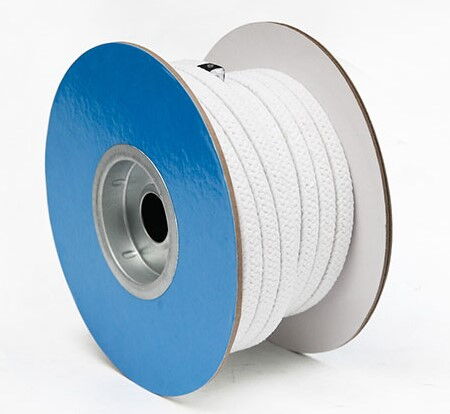
High-quality Ramie Fibers: Ramie fibers are naturally flexible, have high tensile strength, and can adapt to the rotational and reciprocating movements of pump shafts and valve stems. Compared to ordinary cotton fibers, ramie fibers have about 30% higher wear resistance and remain stable in environments with sand-containing slurry or abrasive media.
PTFE Emulsion and Barrier Treatment: After impregnation with emulsion, the fiber surface forms a thin film that prevents liquid penetration into the fibers while enhancing wear resistance. Barrier agents form a micro-hydrophobic layer to prevent medium penetration into the packing, enhancing sealing effectiveness.
Square Weaving Process: Using four-way cross weaving, each fiber bears uniform stress, forming a high-density structure that can withstand radial pump shaft pressure and liquid erosion, ensuring long-term sealing stability.
Color and Structure Options: Black is suitable for heavy-duty industrial conditions, white for food and pharmaceutical industries; loose braid structure is suitable for dynamic sealing, layered dense structure is suitable for static sealing or low-speed equipment, and multiple rings can be stacked to enhance sealing in high-pressure scenarios.
High Wear Resistance: In slurry transport, wastewater treatment, or paper industry, the packing can withstand pump shaft pressures up to 1.5–2 MPa and abrasive media at line speeds of 10 m/s; wear is more than 40% lower than ordinary cotton fiber packing.
Strong Corrosion Resistance: Resistant to water, steam, grease, weak acids and alkalis, and ethanol; suitable for various neutral and lightly corrosive environments.
Low Friction Coefficient: Self-lubrication reduces friction to 0.08–0.12, reducing energy consumption and pump shaft heating, helping extend mechanical life.
Wide Applicability: Pressure resistance up to 1.6 MPa, temperature ≤140°C, suitable for long-term continuous operation, suitable for medium- and high-pressure pumps, valves, and filters.
Easy Installation and Maintenance: Flexible and easy to fill, allowing quick adjustment of packing gaps, reducing downtime and labor costs.
Ramie packing achieves sealing through physical pressure and material properties:
Compression Sealing: Packed into the stuffing box, fibers tightly wrap around the shaft or valve stem to form a “sealing ring.”
Self-Lubrication for Friction Reduction: PTFE emulsion and barrier agents reduce friction, lowering shaft temperature rise by 10–15%.
Medium Penetration Barrier: Emulsion and barrier agents work together to prevent leakage of water- or slurry-containing media, ensuring reliable sealing.
Dynamic Self-Adaptation: Packing can slightly expand with minor radial changes of the shaft, ensuring no leakage under high-pressure or high-speed operation.
Pulp and Textile: Wear-resistant against slurry abrasion, prolonging the life of pumps and filter equipment.
Brewing and Beverage: Suitable for beer and beverage transport systems, ensuring fluid cleanliness without contaminating the product.
Marine and Seawater Equipment: Resistant to seawater corrosion, capable of stable long-term operation in ship pumps and onboard valves.
Chemical and Pharmaceutical: Suitable for weak acid, weak alkali, and organic solvent media, meeting food and pharmaceutical safety standards.
Sewage and Slurry Pumps: Can withstand high-sand-content liquid erosion, reducing maintenance frequency.
Packing Matching: Ensure the cross-section matches the shaft diameter; overly tight packing causes shaft wear, too loose causes leakage.
Uniform Filling: Each ring should have uniform gaps to avoid local pressure causing seal failure.
Inspection and Replacement: It is recommended to check wear every 3–6 months and replace when severely worn.
Special Conditions: In high-temperature, high-pressure, or abrasive media environments, increase the number of packing rings or choose a layered structure.
PTFE packing is made of high-purity polytetrafluoroethylene fibers, with ultra-high corrosion resistance, self-lubrication, and high-temperature stability. It is widely used in chemical, pharmaceutical, food, paper, and fine chemical industries, and is the first-choice sealing material under highly corrosive and high-purity conditions.
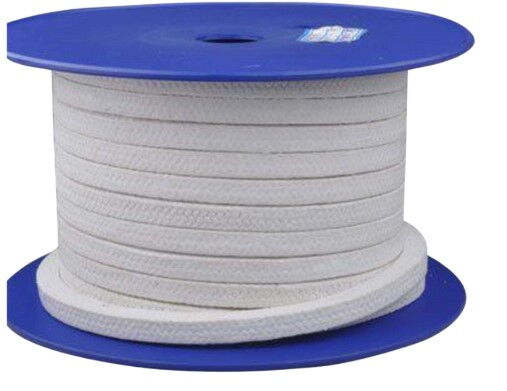
White Pure PTFE Packing: Contains no lubricant, suitable for high-purity environments such as food processing and pharmaceutical plants.
Black Lubricated PTFE Packing: Contains graphite or molybdenum disulfide to improve wear resistance, suitable for high-load pumps and valves.
Aramid-Interwoven Black PTFE Packing: Aramid fibers enhance wear resistance and pressure-bearing capacity, suitable for high-speed rotation and high-pressure conditions.
Solid Braid Structure: Flexible fibers with good compressibility, easy to fit with shafts and stuffing boxes, achieving long-term sealing stability.
Composite Layer Design: Some high-end products use multi-layer weaving to improve pressure resistance, wear resistance, and low friction while ensuring chemical stability.
Extremely High Corrosion Resistance: Almost unreactive with any chemical medium, resistant to strong acids, strong bases, and most organic solvents.
Wide Temperature Tolerance: -200°C~260°C, suitable for liquid nitrogen, steam, hot oil, and high-temperature chemical media.
Low Friction Coefficient: Friction coefficient as low as 0.05, reducing shaft wear and energy consumption.
Waterproof and Non-Stick: Sealing remains stable even under humid, high-temperature, and high-shear conditions.
High Mechanical Toughness: Maintains certain elongation at -196°C, ensuring dynamic sealing integrity.
Long-Term Stability: Excellent chemical stability and aging resistance, with long continuous service life.
PTFE packing seals through physical and chemical properties:
PTFE fibers form a tight sealing layer in the stuffing box, effectively preventing liquid leakage.
Self-lubrication reduces shaft wear, energy consumption, and shaft temperature rise.
Aramid-reinforced packing can withstand high line speeds (>10 m/s) and high pressures (>1.6 MPa), ensuring reliable dynamic sealing.
In strong corrosive media, PTFE molecular structure remains stable, insoluble and non-swelling, ensuring long-term sealing stability.
Chemical and Fine Chemical: Resistant to strong acids, strong bases, oxidizers, and organic solvents.
Food and Pharmaceutical: Oil-free type ensures fluid cleanliness, compliant with GMP standards.
Paper and Synthetic Fiber: Wear-resistant and corrosion-resistant, suitable for continuous operation.
Petrochemical and Seawater Equipment: Maintains sealing under high temperature and pressure.
Marine and Rotating Machinery: Low friction, wear-resistant, improving equipment reliability and service life.
Feature | Ramie Packing | PTFE Packing |
Material | Natural ramie fiber | PTFE fiber |
Corrosion Resistance | Medium-high (weak acids, bases, oils) | Extremely high (strong acids, bases, solvents) |
Temperature | ≤140°C | -200°C~260°C |
Friction Coefficient | 0.08–0.12 | 0.05–0.08 (self-lubricating) |
Installation & Maintenance | Easy, low maintenance | Easy, requires attention to compression and filling density |
Suitable Medium | Water, steam, sewage, oils, abrasive media | Chemicals, food, pharmaceuticals, slurry, seawater |
Dynamic Sealing Capability | High | High (aramid-reinforced suitable for high speed, high pressure) |
Cleanliness | Industrial grade | Oil-free, meets high-purity requirements |
Typical Applications | Pumps, valves, paper, brewing, marine | Chemical, food, pharmaceutical, fine chemical, paper, marine |
In industrial applications, proper selection of packing not only ensures sealing but also extends equipment life, reduces leakage, and lowers maintenance costs. Selection should consider temperature, pressure, medium characteristics, equipment speed, and cleanliness requirements.
- Temperature Conditions: Ramie packing suitable for ≤140°C, can be used long-term in medium-temperature pumps and valves; PTFE packing has a wide temperature range (-200°C~260°C), suitable for steam, hot oil, or low-temperature liquid nitrogen.
- Corrosive Conditions: Neutral or mildly corrosive liquids can use ramie packing; strong acids, strong bases, solvents, and oxidizing media should select PTFE packing.
- Abrasive and Erosive Media: Ramie packing suitable for pumps handling slurry or sewage; aramid-reinforced PTFE can withstand high-speed rotation and high-pressure abrasive media, suitable for fine chemical equipment.
- Cleanliness Requirements: Food, beverage, and pharmaceutical industries must select oil-free PTFE packing to avoid contamination; general industrial or paper industries can use ramie or lubricated PTFE packing.
- Cross-Section Matching: Packing cross-section must match pump shaft or valve stem; too tight causes shaft wear, too loose causes leakage.
- Number of Rings: Dynamic sealing equipment can increase rings to distribute pressure, reduce friction and heating.
- Compression Control: Recommended compression rate 10%–20%.
- Shaft Surface Finish: Ra ≤0.8 μm to reduce friction and packing wear.
- Uniform Filling: Each ring should be evenly and tightly packed.
- Adjust Ring by Ring: During initial installation, lightly compress each ring, then fine-tune after operation.
- Regular Inspection: Dynamic sealing equipment should be inspected every 1–3 months for shaft temperature, wear, and leakage.
- High-Pressure or High-Temperature Equipment: Can increase the number of rings or select layered structures.
- Lubrication and Cleanliness: Ramie packing may use lubricants to extend service life; PTFE packing must remain oil-free.
- Paper Mill: Pumps transporting pulp; ramie packing resists slurry abrasion, prolonging equipment life.
- Beverage Industry: White PTFE packing ensures no contamination, meeting food safety standards.
- Chemical Plants: PTFE packing resists corrosion and high temperature in acid/alkali pumps and solvent pipelines.
- Marine and Seawater Treatment: Ramie packing resists wear and seawater corrosion; PTFE packing resists chemical media and high-pressure temperature; combined use ensures long-term stable operation.
- Sewage Treatment: Ramie packing adapts to high-sludge load and abrasive media, reducing maintenance frequency.
Ramie packing and PTFE packing each have advantages, meeting different industrial sealing needs. Ramie packing, with excellent wear resistance, low friction, and good medium-temperature corrosion resistance, is an ideal choice for pumps, valves, and slurry-handling equipment. PTFE packing, with extremely high corrosion resistance, wide temperature adaptability, and self-lubrication, performs excellently in chemical, pharmaceutical, food, and high-temperature/high-pressure environments. Scientific selection should consider medium type, temperature, pressure, equipment speed, cleanliness, installation fit, and maintenance strategy. By selecting packing materials scientifically, enterprises can effectively prevent leakage, extend equipment life, reduce maintenance costs, and improve overall production efficiency, providing stable and reliable sealing protection for industrial production.
