
How to Choose the Optimal Seat Materials for Ball Valves?
In the industrial field, ball valves, as important fluid control devices, are widely used in petroleum, chemical, metallurgical, power, and other industries. The sealing performance, service life, and reliability of ball valves largely depend on the choice of seat material. This article will explore the types, characteristics, applications, and factors to consider when selecting ball valve seat materials, helping you better understand and choose suitable ball valve seat materials.
The shut-off function of a ball valve is achieved by the metal ball being pressed against the plastic seat by the medium (floating ball valve). Under a certain contact pressure, the seat sealing ring undergoes localized elastic-plastic deformation. This deformation can compensate for the manufacturing accuracy and surface roughness of the ball, ensuring the sealing performance of the ball valve. Therefore, the performance of the seat material directly affects the sealing effect and service life of the ball valve.
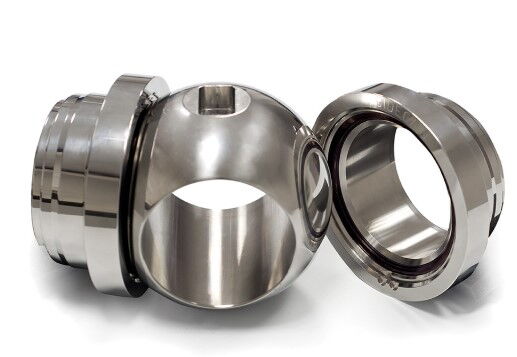
Soft-seated ball valves typically use rubber, nylon, and polytetrafluoroethylene (PTFE) as seat sealing ring materials. These materials have good sealing performance and certain elasticity, allowing sealing at relatively low pressures. However, their operating temperature is limited, usually below 200°C. For example, PTFE is a commonly used soft-sealing material with excellent chemical stability and corrosion resistance, but its operating temperature generally does not exceed 200°C.
Although soft-seated ball valves perform well in some ambient or low-temperature applications, their performance is limited in high-temperature, high-pressure, or particulate-laden environments. Media containing particles may damage the sealing ring, causing seal failure. Therefore, when selecting a ball valve, the appropriate seat material should be chosen based on actual operating conditions.
The most significant feature of hard-seated ball valves is that the sealing pair is entirely metal-to-metal. The seat is overlaid with hard alloy, with a surface hardness of up to 60 HRC and an operating temperature up to 500°C. This design allows hard-seated ball valves to withstand higher temperatures and pressures, suitable for slurry, black ash water, coal powder, and other solid particulate media.
In petroleum, petrochemical, chemical, power, and urban construction industries, pipeline systems with operating temperatures above 200°C can use hard-seated ball valves. In fire-safe designs of pipeline ball valves, the fireproof structure of the seat is key. It effectively ensures that, in case of a fire, leakage of the medium inside and outside the valve is minimized. During a fire, seat leakage generally occurs through three paths: between the medium and ball; between the seat grease injection hole and the valve body; and between the seat and the valve body. The solution is to design a fireproof ring between the O-ring and the middle cavity and a fireproof ring between the ball and seat. This design can effectively prevent medium leakage and avoid the escalation of fire accidents during a fire.
In industrial applications, ball valves often face various complex and special working conditions, which place higher demands on seat materials. To ensure reliable operation and good sealing performance under these special conditions, selecting the appropriate seat material is crucial. The following sections introduce key points and advantages of seat material selection under several special conditions.
With the development of offshore oil extraction and the increase in heavy crude oil production, countries worldwide are actively researching long-distance, ambient-temperature transportation of high-viscosity, easily solidifying crude oil. Under these conditions, ball valves need excellent wear, corrosion, and erosion resistance. Special seat designs are required to meet market needs. For example, a combination seat using an elastic expansion ring and PTFE lip seal can, under relatively low medium pressure, use the elastic force of the expansion ring to compensate for the insufficient elastic-plastic deformation of the single PTFE seat, improving sealing reliability and service life of the ball valve.
Natural gas pipelines are developing toward large-diameter, high-pressure directions. Under such conditions, the internal working environment of the ball valve becomes more severe, requiring more wear, corrosion, and erosion resistance. To ensure sealing under low medium working pressure, a certain pre-compression between the ball and seat must be maintained. In rigid seats, the reliability and service life of the valve depend on the correct choice of seat pre-compression. Insufficient pre-compression cannot guarantee low-pressure sealing; excessive pre-compression increases friction torque between the ball and seat, affects valve operation, and may cause plastic deformation of the seat, resulting in seal failure. Therefore, reasonable pre-compression selection is key to ensuring ball valve performance.
After discussing seat material selection under special conditions, it is worth broadening the view to understand various common seat materials and their wide applications. These materials have different characteristics and are suitable for different industrial scenarios. Their proper application is crucial to ensure the sealing performance, corrosion resistance, wear resistance, and reliability of ball valves. Let us explore common seat materials and their unique advantages in practical applications.
Stainless steel seats are commonly used in applications requiring good corrosion resistance and high-temperature performance, such as chemical, petroleum, food processing, and pharmaceutical industries. Common stainless steels include 304 and 316. 304 stainless steel offers good corrosion resistance and oxidation resistance, suitable for general corrosive media, while 316 stainless steel provides superior corrosion resistance, capable of withstanding harsher corrosive environments.
Alloy steel seats are typically used under high-temperature and high-pressure conditions, such as boiler valves in power plants. These seats usually contain chromium, molybdenum, cobalt, and other alloying elements, providing additional hardness and corrosion resistance. Alloy steel seats maintain good sealing performance and mechanical strength under high-temperature, high-pressure conditions, making them ideal for such applications.
Nickel alloy seats perform excellently in high-temperature, highly corrosive media and seawater environments, commonly found in marine, petrochemical, and aerospace fields. Nickel alloys exhibit excellent corrosion resistance and high-temperature performance, maintaining stable operation under extreme conditions. For example, in marine engineering, nickel alloy seats effectively resist seawater corrosion and ensure long-term stable valve operation.
PTFE seats have excellent chemical stability and corrosion resistance, suitable for acids, alkalis, and some corrosive media, such as in chemical engineering and food processing. PTFE’s chemical inertness allows it to resist most chemical media, and its low friction coefficient ensures smooth valve operation. However, the operating temperature of PTFE generally does not exceed 200°C, requiring caution under high-temperature conditions.
Polyester seats offer good mechanical properties and wear resistance, suitable for general industrial applications such as water treatment and supply systems. Their wear and fatigue resistance ensure long-term stable operation, while mechanical strength maintains sealing performance and reliability.
Fluororubber seats have good high-temperature and corrosion resistance, typically used in high-temperature hydrocarbon media or chemical processing. Fluororubber maintains elasticity at high temperatures and resists hydrocarbon corrosion, making it a common choice in petroleum and chemical industries.
Alumina ceramic seats perform excellently under high-temperature, high-pressure, and severe wear conditions, such as in mining, power, and coal gasification. Ceramic materials offer superior wear and heat resistance, maintaining stable performance under extreme conditions. The high hardness of alumina ceramic seats effectively resists abrasive media, extending valve service life.
Silicon nitride ceramic seats offer excellent wear and corrosion resistance, suitable for special applications such as liquid nitrogen handling. This material maintains good performance at low temperatures and resists corrosion from special media like liquid nitrogen, making it ideal for such special conditions.
Nitrile rubber seats are usually used in low-temperature applications, such as air conditioning and refrigeration systems. NBR has good low-temperature resistance and elasticity, maintaining stable sealing performance. In air conditioning and refrigeration, NBR seats effectively prevent refrigerant leakage, ensuring system operation.
Ethylene-propylene-diene monomer (EPDM) seats are cost-effective, suitable for weakly corrosive media like wastewater and potable water. EPDM offers good corrosion resistance and elasticity, maintaining stable performance in weakly corrosive media. EPDM seats are commonly used in water treatment and supply systems.
Selecting a ball valve seat material requires comprehensive consideration to ensure excellent performance and reliability. Key factors include:
Medium Properties: Chemical nature, temperature, pressure, flow rate, and particulate content influence seat material selection. Strongly corrosive media require corrosion-resistant materials such as nickel alloy or PTFE; high-temperature, high-pressure conditions require alloy steel or ceramic.
Temperature Range: Different seat materials have different temperature limits. PTFE is generally ≤200°C, while hard-seated ball valve materials can withstand up to 500°C. Selection should match actual operating temperatures.
Pressure Requirements: High-pressure conditions require materials with high mechanical strength and sealing performance, such as alloy steel or ceramics. Low-pressure applications can use more elastic materials like rubber or PTFE.
Wear Resistance: Particulate-laden or harsh media require highly wear-resistant seats. Alumina ceramic or silicon nitride ceramic seats are ideal for mining, power, and gasification.
Environmental Factors: External conditions like marine environments require materials resistant to seawater corrosion, such as nickel alloys or fluororubber.
Manufacturers often provide guidance on seat material selection, based on years of research and practical experience. This advice helps users choose the seat material best suited to their specific needs. Therefore, it is recommended to communicate with manufacturers when selecting ball valves to understand material performance and application scope, ensuring correct selection.
The choice of ball valve seat materials is critical for sealing performance, service life, and reliability. Different working conditions require different seat materials, so selection must consider medium characteristics, temperature range, pressure requirements, wear resistance, and environmental factors. Proper material selection ensures superior performance and reliability under complex operating conditions. Manufacturer expertise and support are also important references for choosing the right seat material. This article aims to help you better understand and select ball valve seat materials, providing strong support for your industrial applications.
