
An Introduction to High-Pressure Valve Packing
In industrial production, valves play a vital role, and high-pressure valve packing is the core sealing element that ensures the safe and reliable operation of valves. Like a loyal guardian, it silently protects the sealing performance of the valve, prevents medium leakage, and safeguards the smooth operation of production processes. Today, let us take an in-depth look at the essentials of high-pressure valve packing.
The primary function of high-pressure valve packing is to prevent the medium from leaking along the valve stem during reciprocating or rotational motion, while ensuring flexible and stable valve operation. Under high-pressure conditions, valves are exposed to high internal medium pressure, significant temperature fluctuations, and complex operating environments. This places extremely stringent demands on the pressure resistance, temperature resistance, extrusion resistance, and long-term sealing stability of the packing material.
If the packing performance is inadequate, minor issues may lead to medium leakage, resulting in resource waste and environmental pollution; more serious consequences may include safety accidents that threaten personnel safety and equipment integrity. Therefore, selecting suitable high-pressure valve packing is of critical importance.
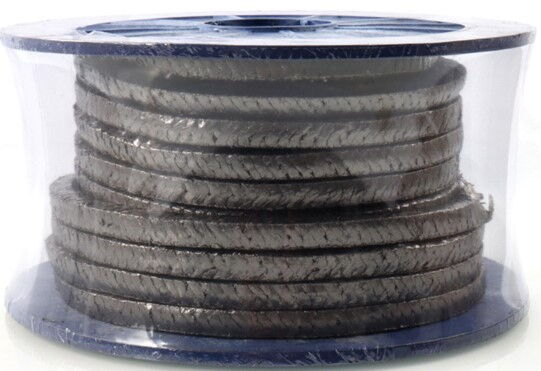
- Powerful sealing performance: High-pressure valve packing must possess strong sealing capability. A tightly braided structure is required to effectively prevent medium penetration and protect the packing from damage. Most media can permeate many types of fibers; therefore, densely braided packing exhibits strong mechanical properties and can effectively resist medium penetration and deterioration. Only in this way can leakage through the clearance between the valve stem and the packing be prevented under high-pressure conditions, ensuring reliable sealing performance.
- Close conformity to the valve stem: The packing must fit closely to the valve stem to prevent medium leakage, reduce self-wear, and extend the sealing cycle. A long sealing cycle relies on the packing maintaining tight contact with the stem, which is the key to preventing leakage. However, the greater the pressure exerted by the packing on the stem, the more severe the wear becomes. Therefore, the packing must have excellent wear resistance so that even in high-pressure and frequently operated valves, excessive wear does not occur. This ensures sealing performance while extending service life and reducing maintenance costs.
- Good self-lubricating properties: Good self-lubrication is also essential. Although high wear resistance ensures that the packing does not suffer severe wear during frequent valve operation, the packing can still generate significant resistance to the reciprocating motion of the valve stem. Adequate lubrication is therefore necessary to effectively reduce wear between the packing and the stem and ensure smooth valve operation. Packing with excellent self-lubricating properties can reduce friction, lower operating torque, and improve valve efficiency and reliability.
- Natural fiber packing: Natural fiber packings mainly include cotton, flax, and wool. These were the earliest fibers used in packing materials and are low in cost and widely available. However, their sealing performance is relatively poor. With advances in packing manufacturing technology, the application scope of natural fiber packings has gradually diminished. They are still used in some applications with low sealing requirements and simple operating conditions, but they are no longer a mainstream choice.
- Mineral fiber packing: Mineral fiber packing mainly refers to asbestos packing. This type of packing offers good sealing performance and is suitable for valves handling weak acids and alkalis, liquid ammonia, water, and oil products, providing excellent static and anti-corrosion sealing performance. However, asbestos fibers can cause diseases such as asbestosis and pleural mesothelioma, and their production process causes severe environmental pollution. As a result, many countries have chosen to completely ban this hazardous material. Despite its sealing advantages, asbestos packing has been gradually phased out due to its risks to human health and the environment.
- Synthetic fiber packing: Synthetic fiber packings combine the advantages of many materials, though their unit price is relatively high. Made from high-quality synthetic fibers woven into a dense structure, they offer excellent resistance to high temperatures and high pressures, low thermal conductivity, and non-combustibility. They are widely used in ultra-high-temperature and high-pressure harsh environments and are suitable for valves operating in combustion conditions. These packings represent a significant performance improvement and can meet the stringent requirements of high-pressure valve applications.
- Graphite packing: Graphite packings are woven primarily from graphite and feature excellent self-lubrication and thermal conductivity, a low friction coefficient, strong versatility, good flexibility, high strength, and protective effects on the shaft or stem. They are often referred to as universal packing. Depending on the application environment, metal wire reinforcement can be incorporated during braiding to enhance mechanical strength, enabling better performance in high-pressure valve applications. Graphite packing is suitable for valve stem sealing under high-temperature and high-pressure conditions and is widely used across many industrial sectors.
- Carbon fiber packing: Carbon fiber packing uses carbon fiber as the main material. Carbon fiber is a new material with outstanding mechanical properties, no creep, excellent fatigue resistance, a low thermal expansion coefficient, and strong corrosion resistance. It is particularly suitable for sealing valve stems in high-temperature, high-pressure, and frequently operated valves. The advantages of carbon fiber packing in strength, corrosion resistance, and fatigue resistance make it highly valuable in high-pressure valve sealing applications.
- Nickel-based graphite packing: Nickel-based graphite packing is woven from high-purity, low-sulfur expanded graphite yarn, with each graphite yarn embedded with Inconel alloy wire for reinforcement and an outer layer wrapped in an Inconel wire mesh. It combines excellent thermal conductivity, chemical corrosion resistance, and self-lubrication. The fully metallic encapsulation design significantly enhances mechanical strength and resolves the problem of traditional packing suffering from thermal burn-off at high temperatures. This type of packing is suitable for media such as hot water, high-temperature and high-pressure steam, gases, and organic solvents, and is mainly used for extreme-condition sealing requirements in petroleum equipment, power plants, and chemical industries.
The structural design of high-pressure valve packing has a direct impact on its sealing performance. The dimensions of the stuffing box, the packing cross-section size, and the gland structure must all be carefully designed. A reasonable packing compression ratio is usually controlled within a specific range to ensure sealing performance while avoiding excessive compression that may cause stem wear or excessive operating force.
When multiple layers of packing are installed, staggered joint arrangements are commonly used so that the cuts of each packing ring are not aligned on the same axis, forming a more continuous sealing path. In ultra-high-pressure applications, anti-extrusion rings or support rings are often installed at the ends of the packing set to further enhance overall pressure resistance and stability. Through these structural design measures, the sealing performance and service life of the packing can be maximized.
High-pressure valve packing is widely used in industries such as power generation, petroleum, natural gas, chemical processing, and metallurgy. In thermal power and nuclear power systems, high-pressure steam valves impose extremely high requirements on the temperature and pressure resistance of packing, and metal-reinforced flexible graphite packing is usually preferred. In petrochemical installations, where high-pressure, corrosive, or flammable media are present, packing materials must balance sealing reliability with chemical stability. In high-pressure gas transmission and compression systems, packing must also offer excellent leak resistance and vibration resistance. With the continuous improvement of environmental protection and safety standards, high-pressure valve packing is steadily evolving toward higher performance, longer service life, and lower leakage.
Selecting appropriate high-pressure valve packing requires comprehensive consideration of multiple factors.
- Operating conditions: First, clearly define the valve’s operating conditions, including the type of medium, temperature, pressure, and flow rate. Different conditions impose different performance requirements on packing. For example, high-temperature and high-pressure conditions require packing with excellent heat and pressure resistance, such as graphite or carbon fiber packing; corrosive media require packing materials with strong corrosion resistance.
- Valve type: Different valve types have different packing requirements. For instance, gate valves and globe valves have different stem motion characteristics, resulting in varying demands for packing conformity and wear resistance. Therefore, packing specifications and performance parameters should be selected according to the specific valve type.
- Cost-effectiveness: While meeting operating requirements, cost-effectiveness must also be considered. Packing materials vary significantly in price. Based on actual needs and budget, products with high value for money should be selected. At the same time, service life and maintenance costs should be taken into account. Choosing packing that can operate stably over the long term and reduce replacement frequency helps lower overall operating costs.
- Supplier credibility: Selecting a reputable supplier is equally important. High-quality suppliers provide reliable products with stable performance and dependable after-sales service. When purchasing packing, supplier qualifications, product certifications, and user evaluations can be reviewed to assess credibility and ensure a trustworthy choice.
As a key component of the valve sealing system, high-pressure valve packing has performance and quality that directly affect valve safety and production stability. By gaining a thorough understanding of performance requirements, material classifications, structural design, and application fields of high-pressure valve packing, we can better select suitable products to meet sealing needs under various operating conditions. With continuous technological progress and growing environmental awareness, high-pressure valve packing is moving toward higher performance, intelligent solutions, and environmentally sustainable development, providing strong support for safe, efficient, and sustainable industrial production.
