
Essential Tests for Pneumatic Control Valves
In the field of industrial automation and control, pneumatic control valves play a pivotal role. Much like intelligent valves within piping systems, they precisely regulate key process parameters such as flow rate, pressure, and temperature of the media conveyed through pipelines, thereby ensuring the stable operation of the entire production process. However, for pneumatic control valves to perform as intended in real-world applications, rigorous testing and inspection are indispensable. This article provides an in-depth discussion of the testing procedures for pneumatic control valves, the key inspection items involved, and the significance of these tests, offering a comprehensive understanding of quality control for this critical equipment.
Before a pneumatic control valve is put into service, conducting a series of pressure and performance tests is essential. This is similar to performing quality inspections on construction materials before building a structure, only when the materials meet the required standards can the stability and safety of the building be ensured. Through tests such as tightness testing, actuator pressure resistance testing, valve body strength testing, and sealing tests, it is possible to comprehensively verify whether the performance and quality of the control valve meet the required criteria.
This verification is not only crucial to ensuring that the control valve itself can operate properly during subsequent production but also lays a solid foundation for the stable operation of the entire enterprise. In high-risk environments such as petrochemical production, the reliability of automated actuating devices, especially pneumatic control valves, is directly related to personnel safety and production security. Any malfunction of a control valve may lead to material leakage, equipment damage, or even serious safety accidents. Therefore, strict pressure testing serves as a critical line of defense to ensure the stable operation of pneumatic control valves in actual production, safeguard the normal functioning of process units, and guarantee safe production.
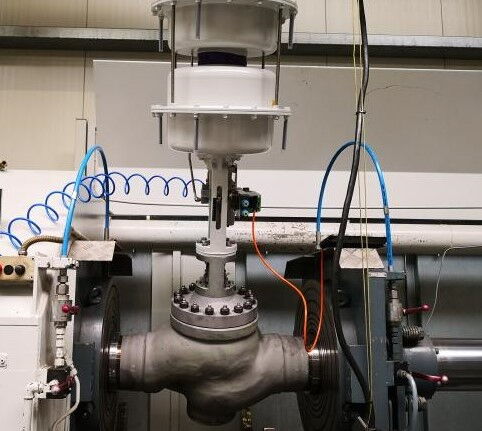
Testing of pneumatic control valves is a systematic task involving multiple key items, each with its own operational requirements and precautions. What are the main test items for pneumatic control valves, and what details should be carefully observed during operation? The following sections provide a detailed explanation.
- Pressure Resistance (Strength) Test: Before testing, ensure that the valve is in the fully open position. Clean water is used as the test medium, and the test pressure is set to 1.5 times the nominal pressure. All valve chambers that bear pressure during operation must be pressurized simultaneously for no less than 3 minutes. During this period, all parts should be carefully observed to ensure that no leakage occurs. This test effectively evaluates the actuator’s ability to withstand high-pressure conditions and prevents safety hazards such as rupture caused by excessive pressure during actual operation.
- Air Tightness Test: Air tightness is critical for the actuator’s air chamber. Under a rated air supply pressure of 0.1 MPa, clean gas (air or nitrogen) is introduced into the diaphragm chamber. After cutting off the air supply, the pressure in the chamber should not decrease within 5 minutes. This test ensures that no gas leakage occurs during actuator operation, thereby guaranteeing accurate valve control.
- Pressure Resistance (Strength) Test: Room-temperature water is used as the test medium. The water may contain rust inhibitors or water-soluble oil, but it must be clean to avoid corrosion of the valve. The medium is introduced into the valve body in accordance with the inlet flow direction, while the other end is sealed, so that all pressure-bearing chambers simultaneously withstand the test pressure for no less than 3 minutes. During the test, all pressurized areas of the valve must be carefully inspected to ensure that there is no visible leakage. This test verifies the sealing integrity of the valve body under high-pressure conditions and prevents medium leakage that could compromise production efficiency and safety.
- Sealing Test of the Packing Box and Other Connections: The packing box is a critical sealing component of the valve, and its sealing performance directly affects overall valve reliability. During testing, room-temperature water is again used as the medium, introduced into the valve body according to the specified flow direction. The packing box and other connections are checked for leakage. Leakage at these points can result in medium loss, environmental pollution, and even safety hazards.
- Leakage Rate Test: The leakage rate is a key indicator of the sealing performance of pneumatic control valves. Clean water is used as the test medium, and the test pressure is generally 0.35 MPa. If the allowable pressure differential of the valve is less than 0.35 MPa, the test should be conducted according to the value specified in the design documents. During testing, different types of control valves require different signal pressure conditions. For air-to-open control valves, the pneumatic signal pressure should be zero to ensure the valve is fully closed. For air-to-close control valves, the signal pressure should be the upper limit of the input signal plus 20 kPa. For shut-off type control valves, the signal pressure should comply with the value specified in the design documents. When the test pressure equals the valve’s maximum working pressure differential, the actuator signal pressure should also follow the design specifications. This test accurately identifies leakage under various operating conditions and ensures that sealing performance meets standard requirements.
When measuring the rated stroke deviation of a control valve, the input signal is applied to the pneumatic actuator chamber (or positioner) to allow the valve stem to travel through its full stroke. This process ensures that the control valve can regulate according to the designed stroke during actual operation, preventing inaccurate control caused by stroke deviation and ensuring the stability of the entire production system.
Based on extensive pressure testing of pneumatic control valves and statistical analysis of test records, it has been found that nearly 50% of tested control valves exhibit certain quality issues. These issues mainly fall into the following categories.
Excessive leakage is one of the most common problems encountered during pneumatic control valve testing. This may result from insufficient machining precision of the sealing surfaces, preventing them from fitting tightly together. Under high-pressure conditions, the medium may leak through the gaps between sealing surfaces. In addition, poor packing material quality or improper packing installation can cause leakage at the packing box. Uneven tightening torque of connecting bolts during valve assembly may also result in uneven stress on sealing surfaces, leading to leakage.
Excessive stroke deviation affects the control accuracy of the valve. Possible causes include actuator spring stiffness that does not meet design requirements, resulting in valve stem travel that differs from the design value under the same signal pressure. Wear or excessive assembly clearance in internal mechanical transmission components of the actuator may also cause discrepancies between actual and theoretical stroke. Furthermore, unstable performance or improper adjustment of the positioner may prevent accurate conversion of the input signal into the corresponding valve stem movement.
Insufficient valve strength is a serious quality issue. It may stem from substandard valve body material quality during manufacturing, including internal defects or impurities that make the body prone to rupture under high pressure. Improper control of process parameters during casting or forging can also lead to inadequate structural strength. For example, unreasonable pouring temperature or cooling rate during casting may cause cracks or porosity within the valve body, reducing its strength. Additionally, poor welding quality during assembly, such as incomplete penetration or slag inclusion at welded joints, can significantly compromise the overall strength of the valve.
Through a series of rigorous tests, comprehensive performance data for pneumatic control valves can be obtained. These data provide important guidance for subsequent application. First, test results help determine whether a control valve meets quality standards and can be put into service. Valves that fail testing can be repaired or replaced in a timely manner, preventing operational failures that could disrupt production.
Second, test data serve as a valuable reference for valve selection. Different industrial applications impose different performance requirements on control valves. By analyzing test results, the most suitable pneumatic control valve model can be selected according to specific operating conditions, ensuring efficient and stable performance in actual use. Additionally, test data support the development of maintenance and servicing plans. Issues identified during testing allow targeted maintenance, timely replacement of worn components, parameter adjustment, extension of service life, and reduction of maintenance costs.
Strict adherence to relevant industry standards and specifications during testing is essential to ensure the authority and comparability of test results. Numerous standards exist both domestically and internationally for valve testing, such as API 598 issued by the American Petroleum Institute, among others.
Testing of pneumatic control valves is a critical step in ensuring their stable operation in industrial production. Through a series of rigorous tests, such as air tightness tests, pressure resistance tests, and leakage rate tests, the performance and quality of control valves can be comprehensively evaluated, and existing issues can be identified and resolved in a timely manner. This provides strong assurance for safe production and reliable operation of process units. During testing, attention must be paid to details such as test media selection, pressure control, equipment calibration and maintenance, and environmental conditions to ensure accurate and reliable results. At the same time, strict compliance with relevant industry standards and specifications is the foundation for ensuring the authority and comparability of test results. Only in this way can the full potential of pneumatic control valves in industrial automation systems be realized, driving efficient, stable, and sustainable industrial development.
