Control Valve Internal Leakage: Causes, Solutions & Prevention
In industrial production, control valves play a vital role. Like intelligent valves within piping systems, they precisely regulate parameters such as flow rate and pressure to ensure stable and efficient process operation. However, internal leakage in control valves is a persistent and troublesome issue for many engineers. Internal leakage not only leads to fluid loss and reduced production efficiency, but may also create safety hazards and even cause equipment damage.
This article provides an in-depth analysis of the various causes of control valve internal leakage, along with practical solutions and preventive strategies, to help you better manage and maintain control valves and ensure smooth industrial operations.
Before exploring solutions, it is essential to fully understand the root causes of internal leakage. Only by identifying the true source of the problem can effective and targeted corrective measures be taken. As an indispensable control element in industrial systems, control valve leakage can arise from many factors related to design, manufacturing, installation, operation, and maintenance. The following sections analyze these causes in detail.
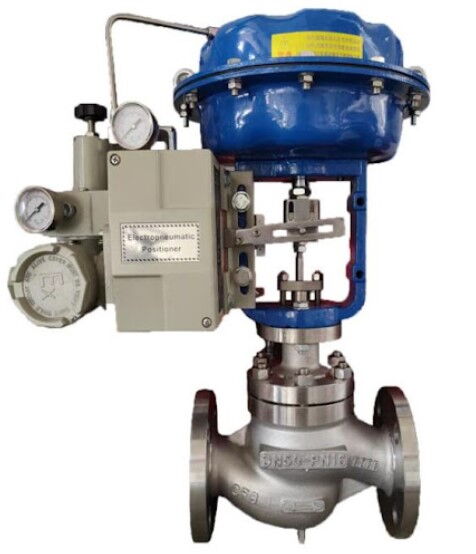
- Inaccurate zero setting: Correct zero setting of the actuator is the foundation of proper valve operation. If the zero position is inaccurate, the valve cannot reach the fully closed position, resulting in internal leakage. In practice, the valve should be manually closed tightly until it can no longer be turned with slight force, then backed off (in the opening direction) by half a turn. Finally, the limit stops should be adjusted to ensure accurate valve closure.
- Insufficient thrust: For push-down-to-close valves, insufficient actuator thrust is a common cause of leakage. During no-pressure commissioning, the valve may appear to close fully; however, under actual operating conditions, the actuator may be unable to overcome the upward force of the fluid, preventing tight closure. Solutions include using an actuator with greater thrust or switching to a balanced valve trim to reduce unbalanced forces and improve sealing performance.
Inadequate control over materials, machining, and assembly during manufacturing is another major cause of internal leakage. Poorly ground sealing surfaces, or failure to eliminate defects such as pitting and porosity, can directly lead to leakage. In such cases, the sealing surfaces must be re-machined to meet quality standards and restore sealing performance.
Traditional control methods rely on mechanical components such as limit switches and torque switches. These elements are highly sensitive to environmental conditions like temperature, pressure, and humidity, which can cause positioning errors, spring fatigue, and uneven thermal expansion. Such factors can ultimately lead to internal leakage. Re-adjusting the limit settings and ensuring the accuracy and reliability of control components are necessary corrective actions.
Due to machining and assembly tolerances, control valves often exhibit a condition where they cannot be reopened after being manually closed tightly. If the valve stroke is reduced by adjusting upper and lower limit switches, the valve may fail to close tightly or open fully. Increasing the stroke can trigger torque switch protection, while excessive torque settings may damage the gearbox, valve, or even burn out the motor.
A common commissioning practice is to manually drive the valve to the fully closed position, then turn it one full rotation in the opening direction to set the lower limit switch, followed by fully opening the valve to set the upper limit switch. While this ensures smooth operation, it may inadvertently cause internal leakage. Over time, erosion and wear from the flowing medium can further degrade sealing performance. Regular re-adjustment of limit settings is therefore essential.
Cavitation is closely related to pressure differential. When the actual pressure drop (ΔP) exceeds the critical cavitation pressure drop (ΔPc), cavitation occurs. The collapse of vapor bubbles releases enormous energy that severely damages throttling components such as the valve seat and plug. In cavitating conditions, a valve may suffer severe erosion within three months or less, with leakage rates exceeding 30% of rated flow—damage that is often irreversible.
Proper valve selection is therefore critical. For applications prone to cavitation, process improvements should be considered, such as using multi-stage pressure-reducing valves or cage-guided control valves to minimize cavitation.
After a period of operation, cavitation, fluid erosion, trim wear, and aging of internal components can cause excessive valve stroke and poor shutoff, increasing leakage rates. Over time, leakage tends to worsen. Re-adjusting the actuator and performing regular maintenance and calibration are necessary to maintain sealing integrity.
What is commonly referred to as control valve leakage actually includes both internal and external leakage. External leakage in pneumatic control valves is usually easy to detect and may result from loose packing glands, aged PTFE packing, damaged gaskets, or loose body-to-bonnet bolts.
If the packing gland is not tight enough, the issue is often insufficient packing rather than bolt loosening. Adding more packing—preferably in double-layer or multi-layer combinations—can be effective. PTFE packing is prone to aging under temperature variations and can be replaced with flexible graphite packing. For valves without sealing grease, adding suitable grease may also improve stem sealing.
In high-pressure and high-pressure-drop applications, pneumatic control valves are particularly prone to stem leakage. Even after replacing or tightening packing, leakage may reoccur quickly. In such cases, the valve flow direction should be verified.
For flow-to-close designs, the medium flows from the larger end of the plug to the smaller end, while for flow-to-open designs, flow is reversed. Converting a flow-to-close valve to flow-to-open can improve stem sealing by reversing pressure distribution so that the higher pressure acts on the downstream side of the stem.
A clear sign of internal leakage is the inability of the valve to fully close. This often occurs in newly installed valves when foreign materials enter during pipeline flushing, especially if upstream and downstream isolation valves are not closed or bypass lines are not used. In many cases, the valve must be dismantled for inspection and cleaning.
For media prone to crystallization or blockage, changing the valve design can help, for example, replacing straight-through single- or double-seat valves with cage-guided valves, or using angle valves with self-cleaning capabilities.
When the pressure differential across the valve is too high and actuator output force is insufficient, internal leakage can occur. The cause may lie in process conditions or improper valve selection. Increasing actuator output, by adjusting spring ranges, using lower-stiffness springs, installing positioners, or increasing air supply pressure, is a common solution. If these measures are insufficient, a higher-thrust actuator must be used.
Corrosion and wear of the plug or seat are major contributors to internal leakage. Damaged components must be repaired or replaced. If cavitation is the primary cause, switching to a flow-to-close design and installing a throttling orifice downstream can help maintain downstream pressure above the vapor pressure of the liquid. For large pressure drops, using two control valves in series to share the pressure reduction is an effective solution.
After extended operation, control valves may fail to achieve the required stroke due to actuator or accessory leakage, insufficient spring stiffness, bent push rods or stems, damaged plugs, debris between plug and seat, incorrect flow direction, or excessive packing friction.
Damaged springs, rods, stems, plugs, and seats should be replaced. Air supply pressure and leakage in actuators and accessories should be checked—soap water can be used for leak detection. Incorrect flow direction should be corrected. Excessive packing friction can be reduced by loosening the packing gland, lubricating, and rotating the stem. Proper calibration of valve positioners or I/P converters is also critical, as is verifying the correct positioning of manual mechanisms or travel stops.
After identifying the causes, effective solutions must be implemented to mitigate leakage, improve safety, and reduce economic losses.
- Actuator adjustment: Recalibrate the zero position and ensure sufficient actuator thrust. Replace undersized actuators or adopt balanced trim designs when necessary.
- Limit switch adjustment: Re-adjust limit switch positions in accordance with proper commissioning procedures to ensure smooth operation without leakage.
- Sealing surface repair: Re-machine damaged sealing surfaces according to specified procedures to restore sealing quality.
- Routine maintenance: Regularly inspect packing, gaskets, fasteners, and other components, and address issues promptly to prevent leakage escalation.
- Cavitation prevention: Use multi-stage pressure-reducing or cage-guided valves, and install downstream orifice plates to keep pressure above vapor pressure.
- Structural optimization: For clogging or crystallizing media, select valve designs with improved anti-blocking or self-cleaning characteristics.
- Actuator replacement: Upgrade to higher-thrust actuators or balanced trims when sealing requirements cannot be met.
- Plug and seat replacement: Repair or replace worn or corroded trims using appropriate materials and specifications.
- Packing replacement: Replace aged or damaged packing completely, preferably using multi-layer packing arrangements. Flexible graphite packing is often superior to PTFE in demanding conditions.
- Flow direction verification: Confirm and correct valve flow direction; switching from flow-to-close to flow-to-open may improve stem sealing.
- Calibration and tuning: Ensure proper calibration of positioners and I/P converters, verify correct travel stop settings, check air supply pressure, and inspect actuators and accessories for leaks.
- Proper valve selection: Select valve types and models based on actual process conditions. Use anti-cavitation designs where needed and self-cleaning valves for clogging services. Ensure materials and manufacturing quality meet standards to prevent leakage at the source.
- Enhanced quality control: Manufacturers should strictly control materials, machining, and assembly processes, eliminate defective products, and implement comprehensive inspection systems to ensure consistent quality.
- Regular maintenance and inspection: Establish and follow detailed maintenance schedules, routinely inspect critical components, and recalibrate valves to maintain proper stroke and limit settings.
- Correct operation and personnel training: Provide professional training for operators to ensure correct usage and adherence to operating procedures, reducing leakage caused by human error.
- Improved environmental adaptability: Adopt advanced control technologies such as smart valve positioners to improve resistance to environmental influences and enhance positioning accuracy and reliability.
Although control valve internal leakage is a complex and multifaceted issue, it can be effectively prevented and resolved through proper valve selection, strict quality control, regular maintenance, correct operation, comprehensive training, and improved environmental adaptability. These measures not only extend valve service life and enhance sealing performance, but also ensure safe and efficient industrial production. We hope this article provides valuable guidance. If you have further questions or require technical support, please feel free to contact us.