
The cage-guided globe control valve is a type of linear-travel control valve and belongs to the widely applied high-performance control valve category in modern industrial processes. Its core feature lies in the adoption of a cage structure (also called a sleeve structure) to guide the movement of the valve plug and regulate the flow of the medium.
Similar to single-seated valves, the internal components of this valve (plug and seat) can be customized and replaced according to specific process requirements. Inside the valve body is a cylindrical cage (sleeve) with holes. The piston-shaped plug moves vertically within the cage, adjusting flow by exposing or covering the openings on the cage. This design makes cage-guided globe control valves particularly suitable for high-pressure-drop conditions, effectively reducing cavitation and noise. These valves typically cover sizes ranging from 1 to 12 inches and can be equipped with standard diaphragm actuators, playing an important role in industries such as oil and gas, power generation, and chemicals.
The working mechanism of the cage-guided globe control valve is relatively straightforward. The medium generally enters the valve body from the lower part of the sleeve, flows through the openings on the cage, and exits from the outlet. This flow pattern is called "center-to-out" flow.
The plug moves vertically within the cage:
When the plug moves upward, the openings on the cage are gradually exposed, increasing flow.
When the plug moves downward, the openings are covered, reducing flow until fully shut off.
The cage not only serves a throttling function but also provides guidance for the plug. This means the stem does not need to bear large lateral forces as in traditional stem-guided valves, thereby reducing the resistance the actuator needs to overcome and improving valve operation efficiency.
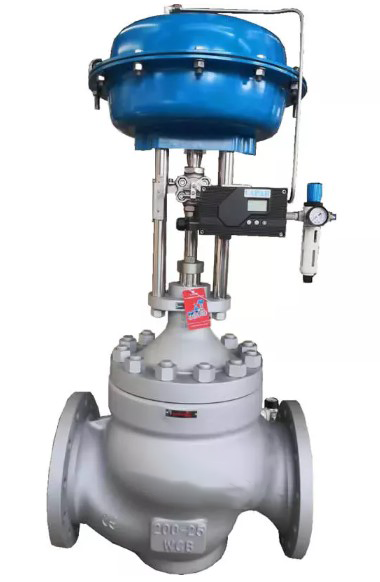
After understanding the basic structure and working principle of cage-guided globe control valves, we can examine the core value these valves offer in practical industrial applications. Compared to conventional control valves, the cage-guided design demonstrates clear improvements in multiple dimensions, mainly in the following six aspects:
A significant advantage of cage-guided valves is that flow characteristics can be changed by replacing the cage. The shape of the throttle holes determines the flow curve (linear, equal percentage, or quick-opening). When process requirements change, simply separate the bonnet from the valve body, remove the original cage, and replace it with a cage with a different hole pattern.
Compared to stem-guided or port-guided valves, which require complex disassembly to replace the plug, cage-guided valves are easier and more flexible to maintain, significantly reducing modification costs and downtime.
Cage-guided valves adopt a pressure-balanced design, which is the key difference from single-seat valves. Balance holes on the plug equalize pressure on both sides, significantly reducing the unbalanced force acting on the plug.
This design offers two direct benefits:
For high-pressure-drop conditions, the balanced design effectively reduces actuator load, ensuring smoother valve operation.
Noise control in industrial pipelines is an important safety and environmental concern. Cage-guided valves perform exceptionally well in noise reduction:
Cavitation is a severe issue under high-pressure-drop conditions and can rapidly damage the plug and seat. Cage-guided valves have unique advantages in resisting cavitation:
The bottom of the plug is usually flat. When cavitation occurs, the impact of collapsing bubbles is not directly applied to the plug surface but absorbed by the surrounding medium.
Combined with the throttling function of the cage, this design effectively distributes the pressure drop, preventing local pressures from falling below the medium's vapor pressure, thereby suppressing cavitation and extending valve life.
The valve seat is usually pressed and fixed by the bonnet, without threaded connections, simplifying installation. Particularly for inverted sleeve designs, the plug can be removed from below the valve body, suitable for conditions requiring frequent inspection and maintenance of internal components.
Standardized design ensures strong interchangeability of parts, allowing maintenance personnel to quickly replace worn components, reducing downtime.
By replacing different sleeves (cages), the same valve can achieve different flow coefficients (Cv/Kv) and flow characteristics. This modular design gives cage-guided valves high versatility, able to adapt to various process requirements and reduce spare parts inventory.
Cage-guided valves can be divided into balanced and unbalanced types. The choice depends on specific requirements for operating force and sealing performance.
Comparison | Balanced Plug | Unbalanced Plug |
Structural Features | Plug has balance holes connecting upper and lower chambers | Solid plug with no balance holes |
Operating Force | Small, largely independent of pressure drop | Large, proportional to plug area and pressure drop |
Actuator Requirements | Small actuators sufficient | Requires high-thrust actuators |
Sealing Performance | Multiple leakage paths via balance holes; relative leakage higher | Fewer leakage paths; better sealing, can achieve tighter shutoff |
Applicable Conditions | High-pressure-drop situations requiring low operating force | Situations requiring strict shutoff and low leakage |
For systems with high pressure drop and moderate leakage requirements, prioritize balanced plugs to significantly reduce actuator cost and energy consumption.
For processes requiring zero or extremely low leakage (e.g., hazardous media control), choose unbalanced plugs, even if larger actuators are required.
Based on the structural characteristics and performance advantages, cage-guided globe control valves have a clear scope of application.
Cage-guided valves are not suitable for media containing solid particles or heavy impurities, which may get trapped between the plug and cage, causing jamming or sealing failure. For such conditions, straight-through single-seat or angle valves should be considered.
Cage-guided globe control valves occupy an important position in modern industrial control. Their cage structure simultaneously guides the plug and throttles flow, improving flow control accuracy while significantly reducing actuator load.
The main value lies in adjustable flow characteristics, excellent noise and cavitation resistance, convenient maintenance, and strong adaptability to high-pressure-drop conditions. Balanced and unbalanced plug options provide users with flexibility to trade off operating force and sealing performance.
For oil & gas, power, and chemical companies facing high-pressure-drop, cavitation, and noise control challenges, correct selection and maintenance of cage-guided globe valves can improve process control accuracy, extend equipment life, and reduce operating costs. Selection should consider medium properties, operating parameters, control requirements, and maintenance conditions, consulting professional manufacturers for technical support when necessary.

Copyright © 2026 China Topper Valve Packing Seal Kits Co., Ltd. All Rights Reserved.