
An Introduction to Flexible Graphite Composite Gaskets
In industrial production, sealing technology is a critical element in ensuring the safe operation of equipment and preventing leakage. As a high-performance sealing material, flexible graphite composite gaskets have gradually become the preferred choice across many industries due to their exceptional performance and wide range of applications. This article provides an in-depth discussion of their characteristics, advantages, applications, structural forms, and comparisons with other gasket types, helping readers gain a comprehensive understanding of this star product in the sealing field.
Flexible graphite composite gaskets, also known as reinforced graphite composite gaskets or high-strength graphite gaskets, are sealing materials manufactured by punching or cutting graphite composite sheets. Their main components consist of perforated metal toothed plates or metal mesh sheets combined with flexible graphite materials through a calendering and bonding process. This unique structure endows them with performance superior to that of ordinary metal sheets or pure graphite materials.
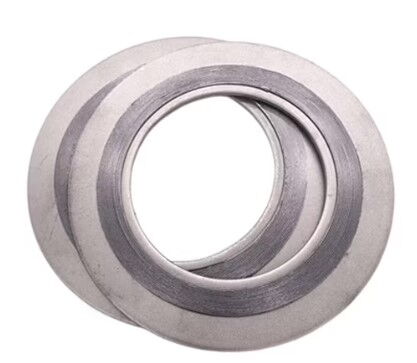
The performance advantages of flexible graphite composite gaskets are mainly reflected in the following aspects:
The outstanding compression and resilience of flexible graphite composite gaskets are primarily ensured by their metal reinforcement structure. During service, they do not suffer from stress relaxation and can maintain excellent sealing performance over long periods. This feature allows them to perform exceptionally well under severe temperature fluctuations, maintaining stable sealing even in high-pressure and high-temperature environments.
Flexible graphite composite gaskets can operate over an extremely broad temperature range, from –200°C to 1300°C, covering the vast majority of industrial applications. Whether in high-temperature conditions or deep cryogenic environments, they maintain reliable sealing performance without leakage caused by temperature changes.
These gaskets exhibit excellent resistance to corrosion and can withstand the attack of a wide variety of chemical media. In industries such as petrochemical processing and refining, they are commonly used to seal corrosive media including acids, alkalis, and salt solutions, effectively preventing leakage that could damage equipment and the environment.
Flexible graphite composite gaskets possess good electrical conductivity, which gives them a unique advantage in applications requiring anti-static protection. In flammable and explosive environments, their conductivity helps prevent the accumulation of static electricity, thereby reducing safety risks.
Compared with traditional spiral wound gaskets, flexible graphite composite gaskets are more economical. In applications involving non-corrosive fluids in industries such as petrochemical and metallurgy, replacing spiral wound gaskets with flexible graphite composite gaskets can significantly reduce costs while still maintaining excellent sealing performance.
Thanks to their outstanding performance, flexible graphite composite gaskets are widely used across many industries. Key application areas include:
In automotive manufacturing, flexible graphite composite gaskets are commonly used for sealing critical components such as engines and transmissions. They can withstand the high temperatures and pressures of engine operation while preventing leakage of coolant, lubricating oil, and other fluids, ensuring vehicle safety and reliability.
The petrochemical industry is one of the largest application areas for flexible graphite composite gaskets. During petroleum refining and chemical production, numerous pipelines, valves, pumps, and pressure vessels require reliable sealing. These gaskets can adapt to high-temperature, high-pressure, and highly corrosive operating conditions, effectively preventing leakage of petroleum products and chemical media and ensuring safe and stable production.
In power plants, flexible graphite composite gaskets are widely used to seal boilers, steam turbines, generators, and related equipment. They can withstand the impact of high-temperature and high-pressure steam while preventing leakage of water and steam, ensuring the reliable operation of power generation equipment.
Flexible graphite composite gaskets are also widely applied in refrigeration equipment. For example, in sealing condensers and evaporators, they can withstand pressure variations under low-temperature conditions, prevent refrigerant leakage, and improve the efficiency and reliability of refrigeration systems.
Flexible graphite composite gaskets are available in various structural forms to meet the requirements of different applications. Common types include:
Metal–graphite spiral wound gaskets are a typical form of flexible graphite composite gaskets. The sealing element is formed by alternately winding V-, L-, or W-shaped metal strips and graphite filler strips around a mandrel. Depending on the design, they may include inner rings, outer rings, or both, making them suitable for different flange sealing faces. Their main advantage lies in their ability to form multiple sealing lines and provide excellent compression and resilience. By selecting different structures and manufacturing parameters, they can meet diverse sealing requirements.
These gaskets consist of a metal core with multiple concentric serrations combined with flexible graphite. They are available in basic types, versions with locating rings, and versions with spacer bars. The serrated core may feature V-shaped grooves, trapezoidal grooves, or rounded grooves, with either aligned or staggered tooth patterns. The metal core provides primary structural support. When bolt preload is applied to the flange, the flexible graphite is pressed into the grooves of the core and flange, forming multiple sealing barriers. This structure significantly enhances sealing performance and compressive strength.
Based on flexible graphite metal serrated composite gaskets, this type incorporates a pressure self-sealing feature. It consists of two metal cores that are welded together at the outer diameter to form an integral structure. When pressurized media enters the equipment or pipeline, it penetrates the gap between the two metal layers, generating pressure that produces additional gasket stress. This design allows the gasket to automatically enhance its sealing performance under pressure, further improving reliability.
Metal-contact graphite gaskets are composite gaskets centered on high-performance flexible graphite and represent the latest structural form of flexible graphite composite gaskets. In this design, flexible graphite is molded using a specially contoured die and then embedded between two stainless steel rings. The sealing principle is based on metal-to-metal contact, with the inner and outer rings—or one of them—acting as compression limiters. Under the specified bolt preload, the upper and lower flanges come into contact with the metal rings, preventing further compression of the graphite. The metal rings absorb mechanical stresses from piping loads and thermal shock, ensuring reliable sealing under fluctuating temperature and pressure conditions. While offering excellent sealing performance, these gaskets are relatively expensive and are typically used in applications with extremely high sealing requirements, such as nuclear island systems in nuclear power plants.
To better understand the advantages of flexible graphite composite gaskets, it is helpful to compare them with other common gasket types.
Although pure graphite gaskets offer good corrosion resistance and certain temperature resistance, they have relatively poor compression and resilience. Under high-temperature and high-pressure conditions, they are prone to stress relaxation, leading to reduced sealing performance. Flexible graphite composite gaskets, reinforced with metal cores, provide superior compression and resilience, enabling long-term stable sealing.
Metal gaskets have high strength and compressive resistance but relatively weaker corrosion and temperature resistance. They also require higher bolt preload to achieve effective sealing and place greater demands on flange surface quality. Flexible graphite composite gaskets combine the strength of metal gaskets with the corrosion and temperature resistance of graphite, require lower preload, and are more forgiving of flange surface conditions, making them a more economical and practical option.
Spiral wound gaskets are widely used due to their multiple sealing lines and good compression resilience. However, under high-temperature and high-pressure conditions, they may experience stress relaxation, resulting in reduced sealing performance, and they are relatively expensive. Flexible graphite composite gaskets offer comparable performance at a lower cost, with a more stable structure that avoids issues such as unwinding or crushing, making them better suited for long-term service in harsh operating conditions.
Proper installation and maintenance are essential to ensure optimal sealing performance.
- Pre-Installation Inspection: Before installation, both the gasket and flange surfaces should be carefully inspected. Ensure the gasket surface is free from damage and contaminants, and that the flange sealing surface is flat and defect-free. Any scratches or dents on the flange should be repaired or replaced to ensure effective sealing.
- Installation Procedure: Place the gasket correctly on the flange sealing surface, ensuring full and even contact. When tightening bolts, follow a crisscross (diagonal) sequence and tighten gradually to avoid uneven loading. Use a suitable torque wrench and apply the specified torque values to ensure uniform gasket compression.
- Maintenance and Inspection: During operation, regularly inspect the sealing condition of the gasket. If leakage is detected, shut down the equipment promptly to identify and address the cause. During scheduled maintenance shutdowns, check the gasket for wear and replace it when necessary to ensure continued safe operation.
As a high-performance sealing material, flexible graphite composite gaskets have been widely adopted in industries such as automotive manufacturing, petrochemical processing, power generation, and refrigeration due to their excellent compression and resilience, wide operating temperature range, outstanding corrosion resistance, good electrical conductivity, and cost-effectiveness. With various structural designs available, they can meet the demands of diverse applications. Compared with traditional pure graphite gaskets, metal gaskets, and spiral wound gaskets, flexible graphite composite gaskets demonstrate clear advantages. Proper installation and maintenance further ensure reliable sealing performance and extended service life, making them an outstanding choice in modern sealing applications.
