
Three-way ball valves are specialized valves with three ports, designed for versatile flow control in piping systems. They are classified into two main types based on the internal channel shape of the ball: L-shaped and T-shaped. Unlike conventional two-way ball valves, the primary advantage of three-way ball valves lies in their ability to divert, combine, or redirect fluid flow, acting as a “traffic hub” within piping networks. Due to this flexibility, they are sometimes referred to as directional valves.
The unique three-port design allows for highly adaptable flow management: it can merge two flow paths into a single outlet, or split a single inlet into multiple outlets. This versatility makes three-way ball valves indispensable in both industrial processes and residential plumbing applications, offering precise flow control, reliable sealing, and operational efficiency.
Before selecting a three-way ball valve, it is essential to gather accurate information and define the requirements for the system. Proper preparation ensures that the chosen valve will meet operational demands and safety requirements. Preparation typically involves three key areas: understanding the application scenario, identifying fluid characteristics, and confirming operating parameters.
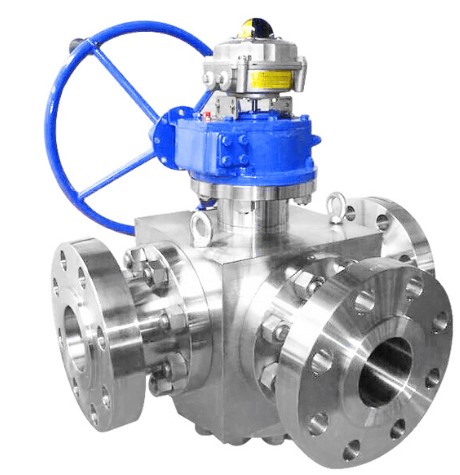
The first step in selecting a three-way ball valve is to clarify the specific use case, as different applications have varying demands:
Understanding the medium being transported is crucial for selecting the right valve. Key considerations include:
Accurate operating data is essential to ensure the valve can perform safely and reliably. Parameters include:
These parameters directly influence material selection. For example, choosing between stainless steel, carbon steel, or alloy steel involves balancing performance requirements against cost. An incorrect choice can result in premature valve failure or even safety hazards.
The internal flow path of a three-way ball valve is a critical selection criterion, as it directly affects system functionality.
L-type valves feature an L-shaped channel inside the ball. Their primary function is to direct flow from one inlet to one of two outlets or vice versa.
Application Scenarios: Switching a single source to two different pipelines; simple directional changes without mixing requirements.
Characteristics: Simple structure, intuitive operation, typically lower cost, and ideal for systems focused mainly on flow direction switching.
T-type valves feature a T-shaped channel, providing enhanced flow control options:
The materials of the valve body and ball determine durability, corrosion resistance, and compatibility with the fluid medium. Common materials include:
Affordable and capable of handling moderate pressure.
Poor corrosion resistance and heavy in weight.
Suitable for general industrial applications and low-pressure water systems where corrosion is minimal.
Excellent corrosion resistance and machinability.
Easy installation, moderately priced, but limited strength and temperature tolerance.
Suitable for residential and commercial water systems, low-pressure steam, and hot water distribution.
Superior corrosion resistance and broad applicability.
High strength, suitable for high-pressure systems, chemical processes, and sanitary environments.
Easy to clean, resistant to rust, but higher cost and heavier.
Ideal for corrosive media, high-pressure conditions, and food, beverage, and marine applications.
Lightweight, low-cost, resistant to a variety of chemicals, and electrically insulating.
Low mechanical strength, unsuitable for high temperatures, and prone to aging.
Suitable for low-pressure applications such as irrigation, water treatment, or acidic/alkaline media.
High strength, excellent high-temperature and high-pressure performance.
Poor corrosion resistance unless treated, higher cost.
Suitable for industrial applications in petrochemical and power generation sectors.
A careful evaluation of medium corrosiveness, working pressure, temperature range, and budget is essential to strike the right balance between performance and cost.
After selecting the material and flow type, choosing the appropriate valve size is crucial. Valve dimensions directly affect system flow rate, pressure loss, and operational efficiency.
Too Small: Restricts flow, causes pressure drop, increases energy consumption, and may lead to cavitation or water hammer.
Too Large: Increases cost, requires more installation space, may complicate installation, and reduces control accuracy at partial openings.
Measure Pipe Diameter: Use calipers or tape to determine the inner or outer diameter of the pipe.
Select Nominal Pipe Size (NPS): Choose the standard size that matches measurements; common sizes include ½”, ¾”, 1”, 1½”, 2”, 3”.
Flow Verification: Use flow calculations to ensure the selected valve can handle maximum system flow with acceptable pressure drop.
Consider Connection Type: Threaded, flanged, or welded connections can influence size selection.
Valve rated pressure must meet or exceed system maximum pressure.
Consider temperature effects on pressure rating; high temperatures reduce pressure tolerance.
Maintain adequate safety margin for reliable operation.
Three-way ball valves can be connected using several methods, each with advantages and considerations:
Threaded Connection: Easy installation, suitable for small valves (<DN50), low-pressure systems, and removable installations. PTFE tape is recommended for sealing; avoid overtightening to prevent cracks.
Flanged Connection: Reliable, easy to disassemble, suitable for large valves and high-pressure pipelines. Match flange face types (raised, flat, or tongue-and-groove) and tighten bolts diagonally.
Butt-Weld Connection: High strength, excellent sealing, ideal for high-pressure and high-temperature systems. Protect internal components from welding heat using insulation or partial disassembly.
Socket-Weld Connection: Stronger than threaded connections, suitable for small high-pressure pipelines (<DN50). Heat protection is also necessary during welding.
Valve operation can be manual or automated, depending on control requirements, installation environment, and usage frequency.
Standard Handle: Provides sufficient torque for general use.
Lever Handle: Compact, suitable for narrow spaces.
Extended Handle: Designed for buried or hard-to-reach valves.
Handle selection must consider space constraints and nearby equipment interference.
Electric Actuator: Remote control, precise adjustment, ideal for automated systems.
Pneumatic Actuator: Fast response, suitable for frequent operation and explosion-proof applications.
Hydraulic Actuator: High torque output, suitable for large high-pressure valves.
Factors include power source availability, control signal type, explosion-proof requirements, and fail-safe positions.
Selecting a three-way ball valve also requires attention to quality standards and supplier credibility:
ISO Standards: International general quality standards.
API Standards: Applicable to oil and gas industries.
ASME Standards: Widely recognized for pressure equipment.
GB Standards: Chinese national standards for domestic projects.
CE Certification: Required for EU market access.
Valve body casting quality: free of defects like sand holes, porosity, cracks.
Machining precision: ball roundness, sealing surface smoothness.
Pressure testing: shell strength and seal testing.
Material certification: chemical composition and mechanical properties.
Traceability: batch numbers and serial number management.
Assess production qualifications and certifications.
Review industry applications and customer feedback.
Evaluate technical support capabilities and response times.
Confirm spare parts availability.
Compare cost-performance ratios, avoiding solely price-based decisions.
Selecting a three-way ball valve is a systematic process that requires consideration of application scenarios, fluid characteristics, operating conditions, flow configuration, materials, size, connection type, operation method, quality standards, cost, and maintenance requirements.
Correct selection ensures safe and reliable system operation while reducing lifecycle costs. Engaging with professional suppliers and, when necessary, consulting engineers is highly recommended. Whether for residential, commercial, or industrial use, the market offers a wide range of three-way ball valves to meet specific requirements. By following a methodical selection process, you can identify the ideal valve for any project, ensuring long-term performance and operational efficiency.

Copyright © 2026 China Topper Valve Packing Seal Kits Co., Ltd. All Rights Reserved.