
In industrial piping systems, valve selection directly affects the operational efficiency and safety performance of the entire system. As a specialized type of valve, the Y-type globe valve has been widely applied in fields such as petrochemical, power, pharmaceutical, and HVAC due to its unique structural design and excellent operational characteristics. This article provides a detailed introduction to Y-type globe valves from the aspects of basic principles, selection points, installation standards, and operation and maintenance, helping engineers and technical personnel better understand and use this important equipment.
The core working principle of a Y-type globe valve is that the valve stem drives the disc (plug) to move vertically along the centerline of the valve seat to achieve control of fluid flow or flow regulation. When the valve opens, the stem rises, and the disc moves away from the seat, allowing fluid to pass through the Y-shaped oblique flow channel inside the valve body; when the valve closes, the stem presses the disc down, making it fit tightly with the sealing surface of the seat to cut off the flow of the medium.
Compared with traditional globe valves, the most significant feature of the Y-type globe valve is that the valve body flow path is designed at a 45° or 60° oblique angle relative to the main flow path. This inclined structure allows the fluid to pass through the valve with almost no change in flow direction, requiring only one smooth turn of approximately 90°, thereby significantly reducing flow resistance.
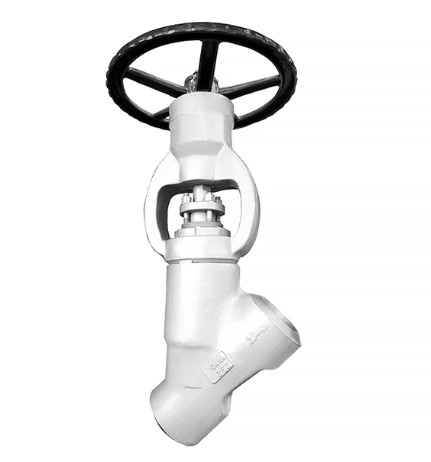
The unique geometry of the Y-type globe valve, where the valve body, stem, and seat form approximately a 45° angle, brings the following technical advantages:
After understanding the working principle and structural characteristics of Y-type globe valves, the key issue in practical engineering is how to correctly select a suitable model. Improper selection not only affects system performance but may also lead to premature valve failure or safety hazards.
The selection of valve body and sealing materials should be determined according to the chemical properties, temperature, and pressure of the transported medium:
Depending on automation control requirements, Y-type globe valves can be equipped with different actuation methods:
After selecting the valve, proper installation is key to ensuring normal operation. Even the most suitable valve model can fail if installed incorrectly, leading to sealing failure, difficult operation, or even equipment damage.
The flow direction of a Y-type globe valve is critical. The valve must be installed so that the direction mark matches the flow of the medium in the pipeline. Correct flow direction allows the fluid to enter from below the disc and exit through the inclined outlet.
The correct flow direction ensures:
Pressure acts on the disc and seat, helping achieve a tight seal.
Stem packing is protected from excessive stress, reducing the risk of leakage.
In steam systems, following the correct flow direction prevents backpressure damage to the sealing surface, ensuring safety.
Before installation, carefully check the flow arrow cast on the valve body or refer to the installation drawings to confirm the correct direction.
Valves can be connected by flange, butt weld, socket weld, or threaded connection. During connection, attention should be paid to:
Ensuring flange specifications match, including bolt hole spacing and sealing face type, conforming to relevant standards (e.g., GB/T12221).
Avoiding leaks caused by improper connection.
Not over-tightening to prevent damage to valve sealing surfaces and connection components.
Proper installation lays the foundation for normal operation, while correct daily operation and regular maintenance are key to extending service life and ensuring system stability.
Through scientific operation and systematic maintenance, Y-type globe valves can fully demonstrate their technical advantages in various industrial scenarios. The following analyzes their core value in practical applications:
Compared with traditional globe valves, the smooth oblique flow channel of the Y-type valve reduces pressure loss while achieving higher flow efficiency. In steam, water supply, and other industrial fluid systems, the Y-type design helps maintain stable flow, improving overall energy efficiency and maintaining downstream pressure stability.
This smooth operation makes Y-type valves particularly suitable for oil and gas pipelines, steam power plants, and cooling circuits, where energy saving and precise flow regulation are required. Selecting the correct design and flow direction allows engineers to maximize flow capacity while reducing operating costs.
In modern industrial plants, many valves are equipped with pneumatic actuators or integrated into automated systems. The smoother flow and lower resistance in Y-type valves reduce hydraulic resistance on the disc, allowing rapid operation under pneumatic actuators. Lower turbulence also reduces vibration and mechanical stress, improving durability during repeated automated cycles.
Steam, water, or gas in industrial fluid systems generates continuous turbulence inside valves. Traditional S-shaped flow paths increase local velocity variations, accelerating wear on the seat and disc. Y-type valves have smoother internal channels, allowing uniform flow and reducing erosion on sealing surfaces, decreasing component wear, lowering maintenance frequency, and extending service life.
In chemical processes, HVAC systems, and other industrial applications, maintenance costs often account for a significant portion of lifecycle expenses, so naturally reducing wear is highly attractive for long-term operation.
Despite numerous advantages, Y-type globe valves also have limitations in certain applications:
With its unique 45° angled design, the Y-type globe valve demonstrates significant advantages in reducing pressure drop, improving flow efficiency, and extending service life, making it an ideal choice for cutting off and regulating fluids in industrial piping systems. Correct selection, standardized installation, and regular maintenance are key to ensuring long-term stable operation.
In practical engineering applications, technical personnel should fully consider medium characteristics, operating conditions, and automation requirements when selecting materials, specifications, and actuation methods for Y-type valves. At the same time, strictly follow installation standards to ensure correct flow direction, reliable connection, and convenient maintenance. Through scientific selection and proper management, Y-type globe valves can provide safe, efficient, and reliable fluid control solutions for industrial piping systems.

Copyright © 2026 China Topper Valve Packing Seal Kits Co., Ltd. All Rights Reserved.