
Gate Valve vs. Ball Valve: Guide to Industrial Valve Selection
In industrial production, construction engineering, and everyday life, valves are critical devices used to control the flow of fluids. Whether in water supply pipelines, oil transmission systems, or chemical processing plants, valves are indispensable components. Among the many types of valves, gate valves and ball valves are the most commonly used.
Both can achieve on/off control of pipelines, but they differ significantly in structure, performance, and application scenarios. This article provides a detailed comparison of the two valves from multiple perspectives to help you make the right selection based on actual requirements.
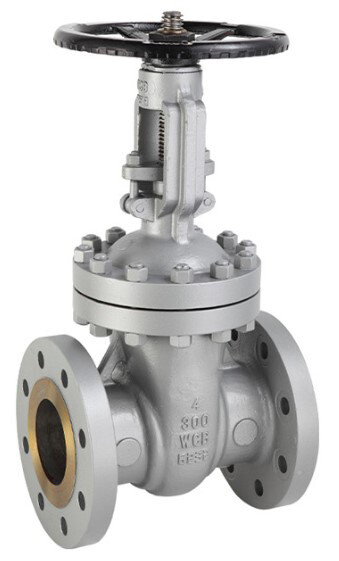
A gate valve is a linear motion valve whose core component is a flat or wedge-shaped gate. By rotating the handwheel or using an actuator, the valve stem drives the gate to move up and down, thereby controlling fluid flow.
When the gate is fully raised, the flow passage is completely open, allowing the medium to pass through with minimal resistance. When the gate is fully lowered, the passage is fully blocked, achieving shutoff. Gate valves typically require multiple rotations of the handwheel to open or close, making them relatively slow-operating devices.
The basic structure of a gate valve includes:
- Valve body: The outer shell that houses internal components
- Gate (disc): The core sealing element, available in flat or wedge types
- Valve stem: The transmission component connecting the actuator and gate
- Sealing surface: Ensures sealing performance in the closed position
Based on gate shape, gate valves can be divided into wedge gate valves and parallel gate valves. Wedge gate valves are the most common, with a wedge-shaped disc that fits tightly against the seat. Parallel gate valves include knife gate valves and are suitable for media containing solid particles.
Based on stem design, gate valves can also be classified into rising stem and non-rising stem types. Rising stem gate valves move the stem up and down during operation, making the valve position visible. Non-rising stem gate valves rotate the stem without vertical movement, making them suitable for space-limited installations.
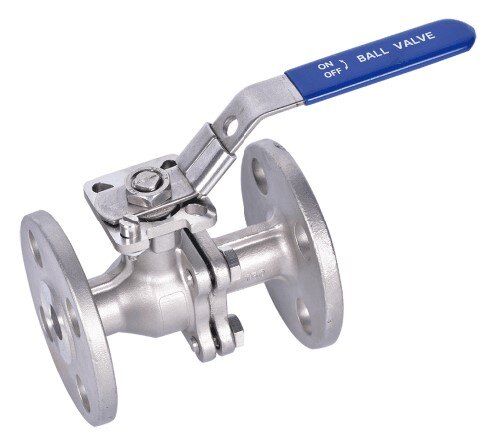
A ball valve is a rotary valve whose core component is a spherical ball with a through-hole. By rotating the handle or actuator 90 degrees, the ball turns, aligning or blocking the passage with the pipeline, thus opening or closing the valve.
When the bore aligns with the pipeline, the valve is fully open and fluid flows smoothly. When rotated 90 degrees, the bore becomes perpendicular to the pipeline, completely blocking the flow. This quarter-turn operation enables fast opening and closing.
The main structure of a ball valve includes:
- Valve body: The housing that contains the ball
- Ball: The core control element with a through-hole
- Seat: Works with the ball to achieve sealing
- Valve stem: Transmits rotational force
- Sealing materials: Ensure sealing performance when closed
Based on support structure, ball valves can be divided into floating ball valves and trunnion-mounted ball valves. In floating ball valves, the ball is pressed against the downstream seat by medium pressure to form a seal. Trunnion-mounted ball valves are supported by bearings at both ends and are suitable for high-pressure, large-diameter applications.
Based on flow bore size, ball valves are classified into full bore and reduced bore types. Full bore valves have an internal diameter equal to the pipeline, resulting in minimal flow resistance. Reduced bore valves have a smaller internal diameter, offering a more compact structure but causing some pressure drop.
In addition, ball valves also include multi-port designs (such as three-way and four-way ball valves) and V-port ball valves, which enable flow direction switching or flow regulation.
After understanding their basic structures, we can compare their practical differences. Although both valves are used for on/off control, they differ significantly in operation, sealing performance, and cost. These differences are crucial for correct selection.
Gate valves require multiple rotations of the handwheel to fully open or close the gate. The process is slow, often taking tens of seconds or longer. This makes them unsuitable for emergency shutoff applications.
Ball valves only require a 90-degree rotation (quarter turn) to open or close, making them extremely fast—usually taking only a few seconds. This makes them ideal for emergency shutoff situations such as gas pipeline leakage.
Gate valves achieve sealing through flat or wedge contact between the gate and seat. New valves generally provide good sealing, but over time, wear, corrosion, or debris buildup can reduce performance. Additionally, partially open operation may cause erosion of sealing surfaces, shortening service life.
Ball valves use circular contact between the ball and seat, providing a wider sealing surface. The ball is precisely machined for tight sealing. Modern designs often use elastic seat materials (such as PTFE), ensuring excellent sealing even at low pressure. Overall, ball valves offer better sealing performance and lower leakage risk.
Gate valves have extremely low flow resistance in the fully open position, making them suitable for maximum flow applications. They can also be used for limited flow regulation, but frequent throttling is not recommended due to erosion during partial opening.
Ball valves are mainly used for full open or full close operations. Although V-type ball valves can regulate flow, standard ball valves have limited throttling capability. Full bore ball valves provide very low resistance, while reduced bore types create some pressure drop.
Gate valves have a tall structure and require significant vertical space, but relatively little horizontal space. Rising stem designs also require additional space for stem movement.
Ball valves are compact and require less vertical space, but the handle needs rotational clearance. In tight spaces, gear-operated or pneumatic/electric actuated ball valves can be used.
Gate valves have a more complex structure with multiple moving parts and sealing surfaces. In media containing impurities, gate grooves may become blocked, leading to operational difficulties. Sealing surfaces also require regular maintenance, resulting in higher maintenance needs.
Ball valves have a simple structure with fewer moving parts. Wear between the ball and seat is minimal. Modern seat materials offer self-lubrication and high durability, resulting in longer service life and lower maintenance requirements.
Initial cost: Gate valves are generally cheaper due to simpler manufacturing and lower material usage, especially for large diameters. They are cost-effective for budget-sensitive projects.
Lifecycle cost: Although ball valves have higher initial costs, their longer service life, lower maintenance, and higher reliability often make them more economical in the long term.
Based on their differences, proper selection depends on real operating conditions.
Gate valves are suitable for:
- Large-diameter pipeline systems (DN200 and above)
- Applications with infrequent operation
- High-pressure systems (especially wedge gate valves)
- Cost-sensitive projects
- Installations with sufficient vertical space
Typical uses include municipal water systems and long-distance oil pipelines.
Ball valves are suitable for:
- Fast opening/closing applications
- Emergency shutoff systems and safety circuits
- Strict sealing requirements (gas, toxic media, vacuum systems)
- Space-limited installations
- Corrosive or high-pressure media
- Automated control systems
- Multi-directional flow control applications.
- Material Selection Considerations
Material selection directly affects valve performance and service life.
- Cast iron: Low cost, suitable for low-pressure water systems
- Carbon steel: High strength, widely used in industrial applications
- Stainless steel: Corrosion resistance, used in chemical, food, and pharmaceutical industries
- Copper alloys: Resistant to seawater corrosion, suitable for marine applications
- Engineering plastics: Suitable for low-pressure corrosive media
- PTFE (Polytetrafluoroethylene): Excellent chemical resistance and low friction, suitable for most media, but limited temperature resistance (≤200°C)
- EPDM (Ethylene Propylene Diene Monomer): Suitable for water and steam systems
- NBR (Nitrile Rubber): Oil-resistant, suitable for petroleum media
- Metal seals: Suitable for high temperature and high pressure, but lower sealing class
Gate valves and ball valves each have their own advantages, and neither is universally superior. The key lies in selecting the right valve based on specific application requirements.
Gate valves are suitable for large-diameter, low-pressure-drop, infrequent operation, and cost-sensitive applications such as municipal water supply and long-distance pipelines. They are simple and economical but slower and require more maintenance.
Ball valves are suitable for fast operation, high sealing requirements, frequent use, space-constrained environments, and automated systems such as chemical processing, gas systems, and safety circuits. They offer superior performance and reliability but require higher initial investment.
In practical selection, factors such as medium properties (corrosiveness, solids content, viscosity), operating conditions (pressure, temperature, flow rate), operational requirements (frequency, speed, automation), space constraints, and economic considerations must all be evaluated. Consulting professional valve manufacturers is recommended for optimal selection.
Proper valve selection not only ensures safe and reliable system operation but also reduces maintenance costs, extends equipment lifespan, and provides strong support for industrial production and water supply systems.
