
How to Choose the Right Electric Ball Valve
In the industrial field, electric ball valves are indispensable components of fluid control systems. They are widely used in various scenarios, ranging from simple pipeline shutoff to complex flow regulation. However, choosing a suitable electric ball valve is not easy and requires comprehensive consideration of multiple factors. This article will analyze the selection process of electric ball valves in detail to help you find the most suitable option among many choices.
Before selecting an electric ball valve, it is first necessary to clarify the operating environment of the valve. This includes whether the valve will be used indoors or outdoors, whether the ambient temperature is high or low, and whether corrosive media are present. These factors directly affect the material selection and mechanical performance requirements of the electric ball valve.
For example, if the valve is installed outdoors, it may face extreme temperature changes and harsh weather conditions. In this case, it is crucial to choose materials with strong corrosion resistance that can operate over a wide temperature range. If the valve is used to handle corrosive media such as acids or alkalis, material corrosion resistance becomes the primary consideration.
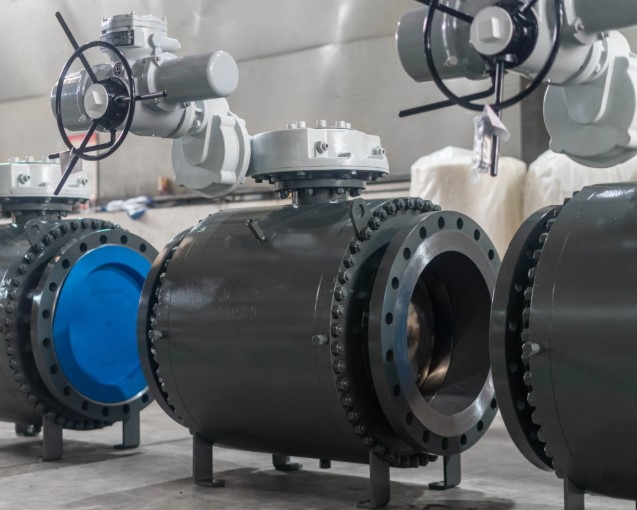
Depending on the operating environment, the material selection of electric ball valves also varies. Common materials include stainless steel, carbon steel, and cast iron. Among them, stainless steel is one of the most commonly used materials, with excellent corrosion resistance and suitability for various media and environmental conditions. Carbon steel is widely used in non-corrosive environments due to its high strength and low cost. Cast iron is suitable for applications with relatively low pressure and moderate temperatures.
In addition to the valve body material, the choice of sealing material is equally important. Common sealing materials include PTFE (polytetrafluoroethylene), which can ensure effective sealing of the valve under various operating conditions and prevent leakage.
The size specification of an electric ball valve should be determined according to the requirements of the fluid system. A size that is too large or too small will affect the flow control performance of the valve. Therefore, during selection, the appropriate size should be chosen based on the flow rate, flow velocity, and system requirements of the medium.
In addition, it is necessary to confirm the connection type between the pipeline and the valve. Common connection types include flanged, threaded, and clamp connections. Each connection type has its own unique advantages. For example, flanged connections offer unmatched versatility, fast installation, and easy maintenance; threaded connections are simple and easy to use, making them ideal for applications with limited space; clamp connections combine versatility and efficiency, facilitating quick assembly and disassembly without compromising reliability.
The electric actuator is the core component of an electric ball valve and is responsible for driving the opening, closing, and regulation of the valve. Selecting an appropriate electric actuator is critical and requires consideration of multiple factors, including output torque, control accuracy, response speed, and protection rating.
- Output Torque: The main technical parameter of an electric actuator is its output torque value. If the output torque is too large, it will not only increase cost but may also negatively affect the service life of the valve. Therefore, selecting an appropriate output torque range is key to ensuring normal valve operation.
- Control Mode: The control modes of electric actuators are generally divided into on-off type (open-loop control) and regulating type (closed-loop control). On-off electric actuators are generally used to achieve simple open or close control of valves and are suitable for applications that do not require precise flow control. Regulating electric actuators can achieve precise flow regulation and are suitable for systems with high flow control requirements.
- Protection Rating: The protection rating (IP rating) is an important indicator for evaluating the ability of an electric actuator to operate in harsh environments. When selecting an electric actuator, an appropriate protection rating should be chosen according to the actual operating environment to ensure stable operation under various conditions.
When purchasing electric ball valves, choosing a reliable brand is crucial. Well-known brands usually offer better quality assurance and after-sales service, ensuring stable valve performance and long-term reliable operation. Brand reputation, user reviews, and market share can also be considered when selecting a brand.
Electric ball valves can be divided into various types according to their structure and function. Understanding the characteristics and applicable scenarios of these types helps you better choose a suitable electric ball valve.
- Floating Ball Valve: In a floating ball valve, the ball is floating. Under the action of medium pressure, the ball can produce a certain displacement and press tightly against the sealing surface at the outlet end, ensuring outlet sealing. This structure is simple and has good sealing performance, but the entire load of the working medium on the ball is transmitted to the outlet sealing ring. Therefore, it is necessary to consider whether the sealing ring material can withstand the working load of the ball medium. Floating ball valves are generally used for medium- and low-pressure applications.
- Fixed Ball Valve: In a fixed ball valve, the ball is fixed and does not move after being pressurized. Fixed ball valves are equipped with floating valve seats. Under medium pressure, the valve seat moves, causing the sealing ring to press tightly against the ball to ensure sealing. Bearings are usually installed on the upper and lower shafts, resulting in low operating torque. Fixed ball valves are suitable for high-pressure and large-diameter applications.
- Elastic Ball Valve: In an elastic ball valve, the ball is elastic. Both the ball and the valve seat sealing ring are made of metal materials, and the sealing specific pressure is very high. Relying on the pressure of the medium itself is insufficient to achieve sealing, so external force must be applied. This type of valve is suitable for high-temperature and high-pressure media. Elasticity is achieved by cutting an elastic slot at the lower end of the inner wall of the ball. When closing the passage, the wedge-shaped head of the valve stem expands the ball and presses it against the valve seat to achieve sealing. Before rotating the ball, the wedge-shaped head is loosened, and the ball returns to its original shape, creating a very small gap between the ball and the valve seat, which can reduce friction on the sealing surface and operating torque.
When selecting an electric ball valve, multiple key parameters must be considered to ensure the valve meets actual application requirements.
- Medium Characteristics: The state of the medium (gas, liquid, or slurry), chemical properties (corrosiveness, toxicity), temperature range, and particle content are important considerations during selection. These factors directly determine the choice of valve body material and sealing material. For example, corrosive media require stainless steel or even special alloy materials, while high-temperature conditions require high-temperature-resistant sealing materials.
- Pipeline Parameters: It is necessary to accurately understand the nominal diameter, operating pressure range, and connection type of the pipeline. Pressure parameters should include not only normal operating pressure but also possible pressure peaks caused by water hammer. At the same time, the valve diameter should be determined based on flow control requirements to avoid flow loss or insufficient regulation accuracy due to improper sizing.
- Actuator Parameters: Selecting an electric actuator that meets actual control requirements is critical. Engineers should focus on the actuator’s output torque, control accuracy, response speed, and protection rating (IP rating) to ensure it meets on-site control requirements and adapts to environmental conditions. For hazardous locations requiring explosion protection, explosion-proof-rated products should be selected. In applications requiring emergency shutdown, power-off protection functions are indispensable. In addition, communication interface types (such as Modbus, Profibus, etc.) must be compatible with existing control systems.
When selecting an electric ball valve, it is also necessary to consider whether it complies with relevant industry standards. Different regions and industries adopt different standards, such as:
- ANSI standards: Widely used in North America, providing compatibility and interoperability.
- JIS standards: Commonly used in Japan and Southeast Asia, prioritizing efficiency and precision.
- DIN standards: Synonymous with German engineering, emphasizing reliability and performance.
- GB standards: Widely used in China, providing cost-effective solutions.
By selecting electric ball valves that comply with appropriate standards, seamless integration and optimal performance can be ensured in the respective regions and industries.
To better understand the selection process of electric ball valves, let us look at several practical application cases.
- Chemical Industry: In the chemical industry, the media handled are often corrosive. Therefore, electric ball valves made of stainless steel with strong corrosion resistance are the preferred choice. At the same time, since chemical processes have high requirements for flow control, regulating electric actuators are ideal. In addition, considering that flammable gases may be present in chemical environments, it is crucial to select products that meet explosion-proof ratings.
- Oil and Gas Industry: The oil and gas industry has extremely high requirements for valves, which must not only withstand high pressure but also operate under extreme temperatures. Fixed ball valves, due to their structural characteristics, are suitable for high-pressure and large-diameter applications. At the same time, electric actuators with high protection ratings should be selected to ensure stable operation in harsh environments.
- Food and Beverage Industry: The food and beverage industry has extremely high hygiene requirements. Therefore, it is necessary to choose electric ball valves with smooth surfaces that are easy to clean. In addition, since complex flow regulation is usually not required in this industry, on-off electric actuators are an appropriate choice.
Electric ball valves are important actuating components in industrial automation control systems. Their selection process requires comprehensive consideration of multiple factors, including operating environment, material selection, valve size, connection type, electric actuator parameters, and brand selection. By thoroughly understanding these factors and making reasonable selections based on actual application requirements, it can be ensured that electric ball valves operate stably and efficiently under various working conditions.
When selecting electric ball valves, it is essential to follow scientific and rational principles to ensure that the selected valves meet the long-term operational requirements of the system. It is hoped that this article has provided valuable reference information to help you find the most suitable electric ball valve among many options.
