
Insulated Ball Valves: Energy-Saving Solutions for Piping
In modern industrial production, piping systems play a crucial role, and valves are indispensable control components within these systems. Insulated ball valves, as a special type of valve, are widely used in industries such as petroleum, chemical, metallurgy, pharmaceuticals, and food processing due to their outstanding heat and cold preservation performance and efficient fluid control capabilities. Insulated ball valves have become key equipment for ensuring smooth production processes and reducing energy consumption.
An insulated ball valve is an improved valve based on a traditional ball valve, with its core component being a ball that opens and closes the valve through rotation. Unlike ordinary ball valves, insulated ball valves have a welded metal jacket on the exterior, forming a thermal channel between the jacket and the valve body for the injection of insulation media such as steam, heat transfer oil, cooling water, or cold air. When the insulation medium circulates within the jacket, it effectively maintains the temperature of the medium inside the valve, preventing condensation in low-temperature environments or excessive volatilization in high-temperature environments, ensuring the normal opening and closing of the valve and the smooth flow of fluid.
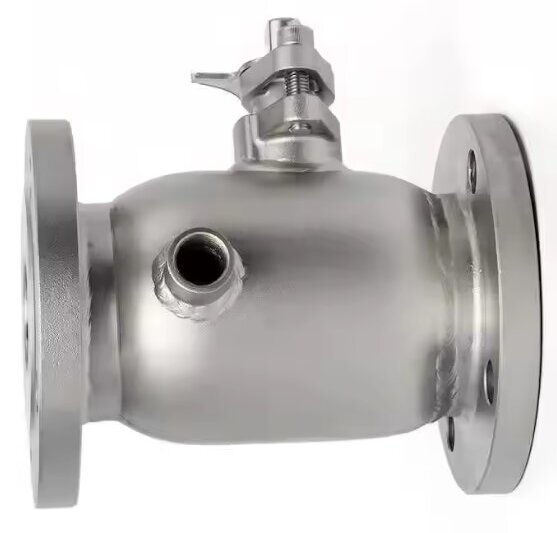
The structure of an insulated ball valve is relatively simple, mainly consisting of a ball, seat, stem, disc, core, bonnet, and other components. The ball is the core component of the valve, usually made of high-temperature resistant insulating materials with good heat preservation performance to effectively prevent heat loss. Components such as the seat, stem, disc, core, and bonnet are made of high-strength metal materials with excellent corrosion resistance, ensuring long-term stable operation. When the handwheel on the stem rotates, it drives the disc to rotate, thereby changing the valve opening degree and controlling the flow and pressure of the fluid.
Depending on the structure of the ball valve, insulated ball valves can be divided into integral insulated ball valves, two-piece insulated ball valves, and wafer-type insulated ball valves. The jacket of an integral insulated ball valve is closely integrated with the valve body, offering excellent insulation but requiring complete disassembly for maintenance. Two-piece insulated ball valves are easier to maintain and replace components, but the sealing of the jacket is relatively weaker. Wafer-type insulated ball valves are convenient to install and suitable for confined spaces. Different structures can be selected according to actual operating conditions.
Before delving into the wide applications of insulated ball valves, it is important to explore the many advantages they offer. These advantages not only make them stand out among various valve types but are also key reasons for their popularity in the industrial field. The following are the core advantages of insulated ball valves, which together form their strong competitiveness in heat and cold preservation.
The greatest advantage of insulated ball valves is their exceptional heat and cold preservation capability. By injecting insulation media into the jacket, they can effectively maintain the temperature of the medium inside the valve, preventing condensation in low-temperature environments or excessive volatilization in high-temperature environments. This is especially important for transporting high-viscosity or crystallization-prone media, such as heavy oil, asphalt, wax, resin, chemical raw materials, and high-temperature food slurries, helping to avoid pipe blockages, valve seizure, and ensuring smooth and stable production processes.
Insulated ball valves inherit the core advantage of ordinary ball valves: excellent sealing performance. They adopt a precise ball rotation structure inside, and when the ball rotates 90 degrees to the closed position, it fits tightly with the elastic seat to form a reliable seal that effectively blocks medium flow. They are capable of meeting both full-open/full-close requirements and conditions requiring some flow adjustment. In insulated conditions, good sealing ensures the insulation medium circulates only within the jacket, avoiding contamination of the process medium, while preventing heat loss or safety hazards caused by medium leakage.
Compared with gate valves and globe valves, ball valves inherently have the advantages of rapid opening and closing and easy operation (typically requiring only a 90-degree rotation of the handle or actuator). Insulated ball valves retain these characteristics, allowing quick response in insulated pipelines that require frequent operation or emergency shut-off, reducing operation time and improving system efficiency. This is particularly important for modern automated production processes.
The insulation design of insulated ball valves makes them particularly suitable for handling media with poor flow properties at normal temperatures or media sensitive to temperature. Whether it is heavy crude in the petroleum industry, molten polymers in chemical production, syrups or chocolate in the food industry, or certain chemical solutions prone to crystallization, insulated ball valves can provide reliable flow assurance, ensuring smooth and stable process operation.
The insulation performance of insulated ball valves can effectively prevent heat loss, saving energy. In practical applications, by reasonably designing the flow rate and temperature of the insulation medium within the jacket, heat loss can be minimized, energy consumption reduced, production efficiency increased, and significant economic benefits achieved.
Insulated ball valves are widely used in industries such as petroleum, chemical, metallurgy, pharmaceuticals, and food. The following are specific application examples:
During petroleum extraction and transportation, insulated ball valves control the flow of crude oil. As crude oil easily solidifies in low temperatures, insulated ball valves effectively maintain its temperature, preventing pipe blockages and ensuring smooth transport. Their sealing performance and corrosion resistance also meet the strict requirements of the petroleum industry.
Chemical production involves many high-viscosity or crystallization-prone raw materials, such as resins and waxes. Insulated ball valves prevent these media from cooling, crystallizing, solidifying, or increasing viscosity inside the valve, avoiding pipe blockages or valve seizure, and ensuring smooth chemical production.
The pharmaceutical industry has high requirements for production environments and product quality. Insulated ball valves control various liquid media in pharmaceutical production. Their insulation and sealing performance ensure temperature stability, prevent product deterioration or contamination, and guarantee quality and safety.
In food production, insulated ball valves control the flow of food slurries, syrups, chocolate, and other liquid media. Their insulation performance prevents foods from solidifying or deteriorating in low-temperature environments, ensuring quality and taste. Additionally, their sanitary design meets the strict requirements of the food industry.
Selecting an appropriate insulated ball valve requires considering factors such as the nature of the medium, working temperature, working pressure, pipe size, and installation method. The following are some selection recommendations:
Select suitable insulation media and valve materials according to the medium. For high-temperature pipelines, steam or heat transfer oil can be used as the insulation medium with high-temperature resistant valves. For low-temperature pipelines, cooling water or cold air can be used with low-temperature resistant valves.
Choose valves according to the working temperature and pressure. The operating temperature range of insulated ball valves is typically -196°C to 500°C, and the working pressure range is generally 0.1MPa to 42MPa. Ensure the selected valve meets the actual operating conditions.
Choose valve structures based on pipe size and installation space, such as one-piece, two-piece, or wafer-type. Consider the connection method, such as flanged, threaded, or welded, to ensure compatibility with the piping system.
Choose reputable brands with reliable quality and after-sales service. Well-known brands usually provide better quality and support. User reviews and industry reputation can guide the selection of a trustworthy supplier.
To ensure normal operation and prolong service life, regular maintenance is essential:
- Regular Inspection: Periodically check the exterior and sealing performance for leaks, corrosion, or wear, and repair or replace parts promptly.
- Cleaning and Lubrication: Clean the internal and external surfaces to remove dust, dirt, and debris. Lubricate moving parts such as the stem to ensure smooth operation and reduce wear.
- Insulation Medium Maintenance: Regularly check the flow and temperature of the insulation medium, repairing or replacing if there are leaks or insufficient flow.
- Proper Operation: Follow operational procedures strictly, avoiding excessive or improper handling. Open and close the valve slowly to prevent impact or damage.
Insulated ball valves are highly efficient industrial valves, offering outstanding insulation performance, excellent sealing, quick operation and ease of use, wide applicability, and energy savings. They are widely used in petroleum, chemical, metallurgy, pharmaceutical, and food industries. Selecting the right valve requires considering medium properties, working temperature and pressure, pipe size, and installation method. Regular maintenance ensures normal operation and service life. In summary, insulated ball valves are essential equipment in modern industrial production. They effectively prevent heat loss, save energy, ensure smooth production processes, improve efficiency, and provide significant economic and social benefits.
