
Selection and Use of Metal-Seated Ball Valves
In the industrial field, valves, as key components controlling fluid flow, are crucial for performance and reliability. Metal-seated ball valves, as a high-performance valve type, are widely used in various harsh operating conditions. However, many users often encounter various faults during the selection and use process. These problems not only affect production efficiency but may also lead to serious economic losses. This article will deeply explore the key points of selecting metal-seated ball valves, common fault causes, and solutions, helping users better understand and use this type of valve.
A metal-seated ball valve is a ball valve that uses metal-to-metal sealing, with the core components being the steel ball and the valve seat. Unlike soft-seated ball valves, the sealing of metal-seated ball valves relies on the high specific pressure between the steel ball and the valve seat. This design allows metal-seated ball valves to operate stably under high temperature, high pressure, strong corrosion, and high wear conditions. However, this high specific pressure sealing method also brings higher technical requirements and more difficulty in selection.
The key performance of a metal-seated ball valve depends on the surface hardening treatment of the steel ball and valve seat. At present, the most commonly used surface hardening technology is hard alloy spraying, mainly including nickel-based and chromium-based alloys. These alloy layers not only improve the hardness and wear resistance of the sealing surface but also effectively resist corrosion. However, different operating conditions have different requirements for the hard alloy layer. Therefore, when selecting a valve, the appropriate alloy material must be chosen according to the specific conditions.
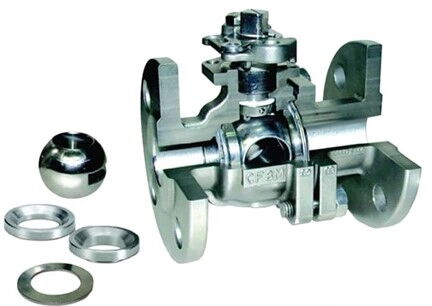
During the selection process of metal-seated ball valves, choosing the correct valve model is the basis for ensuring long-term stable operation under specific conditions. Improper selection not only leads to frequent valve failures but may also cause serious safety accidents, resulting in huge economic losses for enterprises.
When selecting a metal-seated ball valve, the first consideration is the operating conditions, including working temperature, working pressure, and the corrosiveness and erosiveness of the medium. If selected improperly, the valve may quickly fail after being put into use. For example, if the operating temperature is high, a soft-seated valve seat cannot withstand it, or if the medium has strong abrasive properties, a soft-seated valve seat is not hard enough, and a metal-seated ball valve is the best choice.
- Temperature: Operating temperature is one of the important factors in selection. When the medium temperature is below 200℃, packing, sealing gaskets, and stem sleeves can be made of synthetic plastics. However, when the medium temperature exceeds 200℃, graphite packing should be used, sealing gaskets are generally made of metal wire wrapped around graphite rings, and stem sleeves must also be replaced with metal materials. Incorrect internal component selection may cause valve failure or even serious safety accidents.
- Pressure: Working pressure is also a factor that must be considered. The sealing specific pressure of metal-seated ball valves is much higher than ordinary ball valves, so their sealing performance is more reliable under high-pressure conditions. However, excessively high pressure may cause metal materials to bite or scratch each other, affecting the valve's service life. Therefore, when selecting a valve, the appropriate pressure rating must be chosen according to actual conditions.
- Medium Properties: The corrosiveness and erosiveness of the medium greatly affect the selection of metal-seated ball valves. If the medium contains fine, hard solid particles, such as in the coal chemical or polysilicon industries, a high-hardness alloy layer should be selected to improve wear and erosion resistance. For strongly corrosive media, such as those in petrochemical or paper industries, an alloy layer with strong corrosion resistance should be selected to protect the valve seat substrate and extend service life.
Material selection for metal-seated ball valves is crucial. The coating material of the steel ball and valve seat is key to sealing performance and service life. When selecting a hard alloy layer, both hardness and corrosion resistance should be comprehensively considered according to specific operating conditions. For example, in the coal chemical industry, a high-hardness nickel-based alloy is preferred, while in the petrochemical industry, a corrosion-resistant chromium-based alloy is more suitable.
In addition to the steel ball and valve seat, the selection of internal components is also closely related to operating temperature and medium temperature. Packing, sealing gaskets, and stem sleeves must match the operating conditions. Incorrect selection not only wastes cost but may also lead to valve failure.
The actuator of a metal-seated ball valve is also an important part of the selection. Actuators are divided into manual and automatic types according to the power source.
Manual actuators include lever handles, tubular handles, and worm gear actuators. Selection is relatively simple, mainly based on calculating torque from the working torque value and choosing the appropriate length or specification. The torsion and tensile strength of materials also need to be considered.
The selection of automatic actuators is relatively complex. Taking pneumatic actuators as an example, they are divided into single-acting and double-acting types. The output torque of single-acting pneumatic actuators is a range value, which increases the difficulty of selection. When selecting, a safety factor must be multiplied based on the valve's working torque to prevent insufficient actuator torque. In addition, auxiliary accessories of automatic actuators, such as solenoid valves, pressure regulators, and valve position switches, must also be reasonably configured according to actual conditions. For example, if a pneumatic actuator with a large air intake is equipped with a solenoid valve with small air flow, the valve will close slowly, increasing the time that the sealing surface is eroded, which is unfavorable for the valve's service life.
After understanding the key points of selecting metal-seated ball valves, we know how to choose the appropriate valve based on operating conditions, material characteristics, and actuator requirements. However, even with precise selection, improper maintenance and management during use may still lead to various faults.
The sealing surface is the core component of a metal-seated ball valve, and its performance directly affects the valve's sealing effect. The sealing principle of a metal-seated ball valve is achieved through high specific pressure between the steel ball and valve seat. Since both the steel ball and seat are metal, high hardness and wear resistance are required. If the sealing surface is damaged, such as scratched or scored, the valve may leak internally and fail.
- Erosion by solid particles: In coal chemical and polysilicon industries, the medium contains many solid particles that strongly erode the sealing surface, even entering it and causing damage.
- Sliding friction between metals: During opening and closing, sliding friction occurs between the steel ball and valve seat. Friction between metals of similar hardness can easily scratch the sealing surface.
- Insufficient or excessive sealing force: If the sealing force is insufficient, the seat sealing surface cannot deform adequately, and the valve cannot seal. If the force is too high, the seat may deform, affecting sealing performance.
- Dual scraper structure: Two steps are machined on both sides of the sealing surface to form a dual scraper structure. This design can scrape solid particles adhered to the ball during operation, preventing them from entering the sealing surface. However, this is only suitable for particle-laden media; for water or steam, the scraper may reduce seat strength and increase processing costs.
- Spring adjustment: A spring (Belleville or coil) is added behind the seat to adjust the sealing force through elasticity. The spring’s elasticity versus compression has a linear or quadratic function relationship, allowing sealing force adjustment within a range. If leakage occurs, adjusting the seat pressure ring thickness can further tune the sealing force.
Excessive torque is a common fault of metal-seated ball valves, caused mainly by:
- Medium adhesion: In muddy, dusty, or highly adhesive media, solids adhere to the external sealing surface of the ball and seat, resulting in extremely high torque or “sticking.”
- Excessive sealing force: Metal-seated valves have much higher sealing force than soft-seated valves, requiring greater torque during operation, which may damage the stem.
- Optimize sealing design: Reduce friction on the sealing surface to lower opening and closing torque. Using low-friction materials or coatings can effectively reduce torque.
- Proper selection: Select appropriate medium coefficients according to operating conditions to estimate working torque. For particle, dust, or slurry media, the medium coefficient should generally be 1.5–2.
- Regular maintenance: Regularly check and clean debris on the sealing surface and inspect stem and actuator lubrication to ensure smooth operation.
Regular maintenance is important to extend service life. Maintenance includes:
Inspect sealing surfaces for wear, scratches, or scoring.
Clean debris on sealing surfaces to reduce operating torque.
Check actuator operation to ensure normal function, especially auxiliary components like solenoid valves and pressure regulators.
Lubricate stems and actuators regularly to ensure smooth operation.
As a high-performance valve, metal-seated ball valves are widely used in harsh operating conditions. However, there are many technical difficulties in selection and use, and minor negligence can lead to failures. When selecting, operating conditions, material properties, and actuator requirements must all be considered to choose the appropriate model. During use, installation specifications must be strictly followed, and regular maintenance performed to ensure normal operation. Through reasonable selection and scientific maintenance, fault rates can be effectively reduced, production efficiency improved, and maintenance costs lowered.
In summary, selecting and using metal-seated ball valves is a systematic project requiring collaboration between users and designers to ensure stable operation under complex conditions. This article aims to help users better understand and use metal-seated ball valves, avoid common faults, and improve production efficiency and economic benefits.
