
How to Choose the Right Gate Valve: A Comprehensive Guide
In pipeline systems, gate valves are indispensable control components that play a critical role in ensuring the stability and safety of pipeline operation. The primary function of a gate valve is to shut off fluid flow; therefore, selecting the correct gate valve is essential to the reliable operation of the entire piping system. This article provides a detailed overview of key considerations in gate valve selection, helping you make informed decisions when faced with a wide range of gate valve options.
Gate valves come in many varieties. Based on different classification criteria, they can be divided into several types. Each type has its own structural and performance characteristics and is suitable for specific operating conditions. Understanding these types and their features will help you identify the most appropriate gate valve among numerous options.
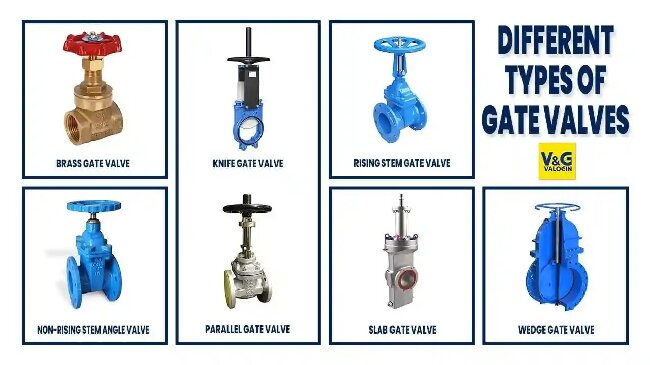
- Parallel Gate Valves: In parallel gate valves, the sealing surfaces are perpendicular to the pipeline axis, meaning the two sealing faces are parallel to each other. The gate typically has parallel sealing surfaces on both sides and often adopts a double-disc structure. A common example is the knife gate valve, whose gate features a sharp lower edge designed to effectively cut through the medium. Parallel gate valves have a simple structure and are easy to manufacture, making them suitable for low-pressure, large-diameter applications. They perform particularly well in low-pressure pipelines with smaller branch lines, providing stable and reliable flow control.
- Wedge Gate Valves: In wedge gate valves, the sealing surfaces are set at a certain angle to the vertical centerline, forming a wedge shape. The gate usually has wedge-shaped sealing surfaces on both sides and is commonly designed as a single disc. This design gives wedge gate valves a significant advantage in sealing performance. Wedge gate valves are suitable for medium- to high-pressure applications and can withstand higher pressures and temperatures. They perform exceptionally well in high-pressure pipeline systems, ensuring reliable fluid shutoff.
- Rising Stem Gate Valves: In rising stem gate valves, the stem is fixed to the gate, and the stem moves up and down by rotating the stem nut. During valve operation, both the stem and the gate rise and fall together, providing a visible indication of the valve position. This design allows operators to intuitively determine whether the valve is open or closed and facilitates stem lubrication. Rising stem gate valves are suitable for above-ground installation, especially in applications requiring frequent operation and visual position monitoring. They are widely used in industrial piping systems and offer great convenience for operators.
- Non-Rising Stem Gate Valves: In non-rising stem gate valves, the stem is threaded into the gate and rotates as the gate moves up and down inside the valve. Since the stem remains inside the valve body, this type of valve requires less vertical installation space. In addition, non-rising stem gate valves are typically equipped with a position indicator at the top of the stem to show the valve status. Non-rising stem gate valves are suitable for both above-ground and underground installations. They are particularly well-suited for space-constrained environments, such as underground pipeline systems, where installation space needs to be minimized.
- Flanged Gate Valves: Flanged gate valves provide stable and reliable connections in piping systems and can withstand relatively high pressures. The valve is connected to the pipeline using bolts, ensuring strong connection integrity and good sealing performance. Flanged gate valves are suitable for high-pressure pipelines and large-diameter piping. They perform well in applications requiring high pressure and large flow rates, such as large industrial pipeline systems.
- Threaded Gate Valves: Threaded gate valves are suitable for lower-pressure applications and can meet basic control requirements. The valve is connected to the pipeline through threaded connections, making installation convenient, though its pressure-bearing capacity is relatively limited. Threaded gate valves are commonly used in low-pressure and small-diameter pipelines. They are widely applied in residential water systems and small industrial pipelines, where basic flow control is required.
- Welded Gate Valves: Welded connections provide a robust joint, ensuring high reliability and excellent sealing performance. Welded gate valves are directly welded to the pipeline, resulting in high connection strength and superior leak tightness. These valves are suitable for harsh operating conditions, such as high pressure and high temperature. They are widely used in high-pressure pipeline systems in industries such as petrochemicals, ensuring long-term stable operation.
- Metal-Seated Gate Valves (Hard-Seated Gate Valves): The sealing surfaces of metal-seated gate valves are made of metal materials such as brass, stainless steel, or alloy steel. These valves feature high sealing surface hardness and excellent wear resistance, allowing them to withstand high temperatures, high pressures, and highly corrosive media. Metal-seated gate valves are suitable for applications involving high temperature, high pressure, and strongly corrosive media. They perform exceptionally well in high-pressure pipeline systems in industries such as chemical processing and petroleum, ensuring reliable fluid shutoff.
- Soft-Seated Gate Valves: Soft-seated gate valves use non-metallic materials such as rubber or PTFE for the sealing surfaces. The soft sealing surface can effectively encapsulate impurities, achieving zero leakage. In addition, the full-bore, groove-free design allows sand and gravel to pass through, reducing the risk of blockage. Soft-seated gate valves are suitable for normal-temperature, low-pressure, and non-corrosive media. They are widely used in municipal water supply systems and small industrial pipelines, providing reliable sealing performance.
After understanding the basic types and characteristics of gate valves, the next step is the critical selection process. Valve selection requires comprehensive consideration of multiple factors to ensure the chosen gate valve meets actual operating conditions. The following steps and considerations will help you make a well-informed decision.
The properties of the medium are the primary factor in selecting a gate valve. Corrosiveness, viscosity, and the presence of solid particles must all be carefully evaluated.
Corrosive media: For corrosive media, gate valves made from corrosion-resistant materials should be selected. Stainless steel and alloy steel gate valves offer excellent corrosion resistance and can effectively withstand media attack.
High-viscosity or particle-laden media: For media with high viscosity or containing solid particles, gate valves with low flow resistance and low clogging risk should be chosen. Parallel gate valves and soft-seated gate valves perform well in such conditions and can significantly reduce blockage risks.
Operating pressure and temperature directly influence the valve’s structural design and material selection.
High-pressure, high-temperature applications: Materials with high strength and high-temperature resistance, such as alloy steel and stainless steel, should be selected to ensure valve reliability and safety.
Low-pressure, normal-temperature applications: Carbon steel or cast iron gate valves can be used, as they are cost-effective and sufficient for basic service requirements.
The size of the gate valve must match the pipeline diameter.
Large-diameter pipelines (DN80 and above): Parallel gate valves or flanged gate valves are typically selected, as they offer higher flow capacity and pressure-bearing capability.
Small-diameter pipelines (below DN80): Wedge gate valves or threaded gate valves are suitable due to their compact structure and adequate control performance.
Installation location and maintenance convenience are also important factors.
Above-ground installation: Rising stem gate valves allow easy observation of stem position and are suitable for applications requiring frequent operation.
Underground installation: Non-rising stem gate valves have a compact structure and are ideal for space-limited environments, helping reduce installation and maintenance costs.
Choose the drive method based on operational requirements and the level of automation.
Manual gate valves: Suitable for small-diameter, low-pressure applications. They are simple to operate and cost-effective.
Electric, pneumatic, or hydraulic gate valves: Suitable for large-diameter and high-pressure applications, especially where remote control and automation are required. These valves significantly improve operational efficiency.
Choose the sealing form according to the medium and operating conditions.
Metal-seated gate valves: Suitable for high-temperature, high-pressure, and strongly corrosive media. They offer high hardness and excellent wear resistance.
Soft-seated gate valves: Suitable for normal-temperature, low-pressure, and non-corrosive media. Their soft sealing surfaces provide excellent sealing and can achieve zero leakage.
In practical applications, gate valve selection requires comprehensive consideration of multiple factors, including medium characteristics, operating pressure and temperature, pipeline size, installation environment, actuation method, and sealing type. The following cases illustrate how to select appropriate gate valves under different operating conditions.
A chemical plant needs to install gate valves in a high-pressure pipeline system to control the flow of corrosive media. The selection process is as follows:
Medium characteristics: The medium is highly corrosive, so corrosion-resistant materials are required. Stainless steel or alloy steel gate valves are suitable choices.
Operating pressure and temperature: The system operates at 10 MPa and 200 °C. Under these high-pressure and high-temperature conditions, high-strength, heat-resistant materials such as alloy steel are necessary.
Pipeline size: The pipeline diameter is DN300, a large diameter. Parallel gate valves or flanged gate valves are appropriate.
Installation environment: The valve is installed above ground and requires frequent operation. A rising stem gate valve provides clear visual indication.
Actuation method: Due to the large system size and the need for remote control and automation, an electric gate valve is selected.
Sealing type: Considering the corrosive medium and operating conditions, a metal-seated gate valve is appropriate.
Based on these factors, an alloy steel flanged rising stem electric metal-seated gate valve was selected. This valve meets the requirements of the chemical plant’s high-pressure pipeline system and ensures stable operation.
A municipal water supply system requires gate valves in low-pressure pipelines to control water flow. The selection process is as follows:
Medium characteristics: The medium is tap water at normal temperature and low pressure, with no corrosiveness. Carbon steel or cast iron gate valves are sufficient.
Operating pressure and temperature: The operating pressure is 0.5 MPa at ambient temperature. Carbon steel or cast iron valves meet these conditions.
Pipeline size: The pipeline diameter is DN50, a small diameter. Wedge gate valves or threaded gate valves are suitable.
Installation environment: The valve is installed underground with limited space. A non-rising stem gate valve is ideal.
Actuation method: Manual operation is sufficient for this small system.
Sealing type: A soft-seated gate valve is selected to achieve zero leakage and ensure system reliability.
Based on these considerations, a cast iron threaded non-rising stem manual soft-seated gate valve was selected. This valve fully meets the requirements of the municipal water supply system and ensures stable operation.
Gate valve selection is a complex process that requires comprehensive consideration of multiple factors, including medium characteristics, operating pressure and temperature, pipeline size, installation environment, actuation method, and sealing type. Through the detailed discussion provided in this article, we hope to help you make informed decisions when selecting gate valves. Proper gate valve selection not only ensures stable pipeline operation but also improves efficiency and reduces maintenance costs. In practical applications, it is recommended to consult professional technical personnel or manufacturers to ensure the selected gate valve fully meets the specific operating conditions.
