
Rising Stem Gate Valves vs. Non-Rising Stem Gate Valves
In industrial piping systems, gate valves are among the most commonly used shut-off devices and play a vital role in ensuring safe and reliable operation. They are designed to control the on–off flow of fluids and are essential to maintaining the normal functioning of pipeline networks. As two primary types of gate valves, rising stem gate valves and non-rising stem gate valves differ significantly in structural design, advantages, disadvantages, and application scenarios. This article provides an in-depth comparison of these two gate valve types to help you make a more informed choice in practical applications.
A gate valve is a type of valve that controls fluid flow by raising or lowering a gate (disc). The movement of the gate is perpendicular to the direction of fluid flow, which means gate valves are intended only for fully open or fully closed service and are not suitable for flow regulation.
Based on the sealing surface configuration, gate valves can be classified into wedge gate valves and parallel gate valves.
Wedge gate valves can be further divided into single-wedge, double-wedge, and flexible wedge types.
Parallel gate valves are available in single-disc and double-disc designs.
From the perspective of stem thread position, gate valves are mainly categorized into rising stem gate valves and non-rising stem gate valves.
Among the various valve types, rising stem gate valves are widely favored in industrial piping systems due to their distinctive structure and clear advantages. They provide reliable fluid control while offering intuitive operation and ease of maintenance, which has earned them the trust of many users. Let us take a closer look at their characteristics.
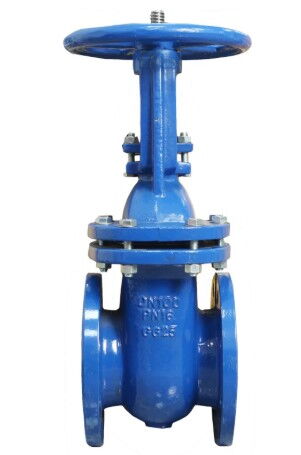
In a rising stem gate valve, the stem nut is located on the bonnet or yoke. When the valve is opened or closed, rotating the stem nut causes the valve stem to move upward or downward. This design makes stem lubrication very convenient and allows the degree of opening to be clearly visible.
The motion of the stem is fully exposed, enabling operators to directly observe whether the valve is open or closed. The rising stem is externally threaded, and the nut is fixed near the handwheel, remaining stationary without rotating or moving axially. As the stem rotates, the gate is lifted or lowered. There is only relative rotational motion between the stem and the gate, with no relative axial displacement. Externally, the valve features a characteristic yoke or gate-frame structure.
- Ease of Lubrication and Maintenance: Because the stem nut is located on the bonnet or yoke, stem lubrication is simple and effective. Proper lubrication significantly reduces friction between the stem and the nut, minimizes wear, and extends the service life of the valve. Lubricants also provide a degree of corrosion protection, preventing the stem from rusting due to prolonged exposure to air.
- Intuitive Operation: The upward and downward movement of the stem is clearly visible, allowing operators to easily determine the valve's open or closed status. This is especially important in critical systems where accurate flow control is required, as it helps prevent safety incidents or operational failures caused by misjudging valve position.
- Wide Range of Applications: Rising stem gate valves have a relatively simple structure and good manufacturability, making them suitable for a wide range of media and operating conditions. They can be used effectively with clean water, wastewater, steam, and many other fluids.
- Space Requirements: Since the stem moves upward and downward during operation, sufficient vertical installation space is required to accommodate this movement. In confined areas, such as underground valve chambers, rising stem gate valves may not be suitable.
- Potential Stem Damage: Although stem lubrication is convenient, the stem may still be susceptible to corrosion in harsh environments, such as those with high humidity or corrosive atmospheres. In addition, if the sealing between the stem and the gland packing is inadequate, leakage may occur at the contact surface, requiring frequent replacement of packing and increasing maintenance workload.
Rising stem gate valves are ideal for applications where the valve position must be visually confirmed, such as critical industrial pipelines and municipal water supply systems. In these environments, operators need to quickly and accurately determine the valve status to ensure system reliability. They are also well suited for installations where sufficient space is available.
After discussing rising stem gate valves, let us turn our attention to non-rising stem gate valves. In this design, the stem nut is located inside the valve body, and the overall valve height remains unchanged during operation. This space-saving feature makes them particularly suitable for installations with limited space. However, lubrication and position indication are more complex, and higher media cleanliness is required. Despite being “hidden,” non-rising stem gate valves are by no means inferior in performance.
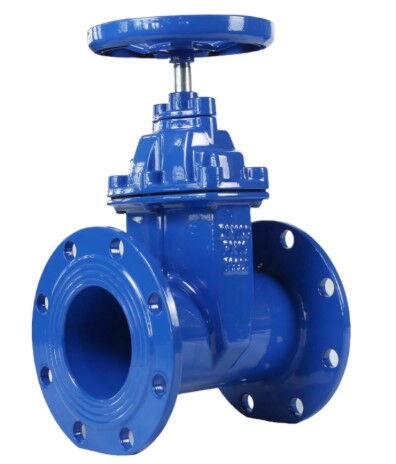
In a non-rising stem gate valve, the stem nut is located inside the valve body and is in direct contact with the process medium. The gate is opened or closed by rotating the valve stem. One major advantage of this design is that the overall height of the valve remains constant, making it suitable for large-diameter pipelines or installations with height restrictions.
The lifting stem only rotates without moving up or down. Externally, only a single stem is visible. The stem nut is fixed to the gate, and the gate is raised or lowered through the rotation of the stem. There is no visible yoke structure. During operation, the handwheel and stem remain relatively stationary with respect to each other, while the stem rotates around a fixed point to drive the gate upward or downward.
- Space Saving: Since the valve height does not change during operation, non-rising stem gate valves require minimal installation space. This makes them ideal for confined environments such as underground valve pits or narrow equipment rooms, where space is extremely limited.
- Compact Structure: With no external yoke or exposed lifting mechanism, non-rising stem gate valves have a compact and clean appearance. Their smaller overall size facilitates installation and handling.
- Difficult Lubrication: Because the stem nut is located inside the valve body and directly contacts the medium, lubricating the stem threads is challenging. The medium may corrode or erode the threads, potentially leading to damage and impaired valve operation.
- Difficult Position Indication: Since the stem does not move vertically, the valve's open or closed position cannot be determined by visual inspection. An external position indicator is usually required, which increases cost and installation complexity.
- Higher Media Cleanliness Requirements: As the stem threads are exposed to the medium, high cleanliness is essential. Media containing impurities or solid particles may cause the threads to jam, resulting in valve malfunction.
Non-rising stem gate valves are best suited for installations with limited space, such as underground pipeline chambers and compact equipment rooms. They are also commonly used in large-diameter pipeline systems where space efficiency is a primary concern.
- Appearance and Structure: Rising stem gate valves feature an exposed lifting stem and a fixed nut near the handwheel, forming a visible yoke structure. In contrast, non-rising stem gate valves have a stem that only rotates without axial movement, with the nut fixed to the gate and no visible yoke. The two designs are easy to distinguish visually.
- Operation and Maintenance: Rising stem gate valves offer intuitive operation, as the stem movement clearly indicates valve position. They are easy to lubricate but require more installation space. Non-rising stem gate valves save space but require additional indicators for position monitoring and present challenges in lubrication.
- Application Scenarios: Rising stem gate valves are suitable for applications where visual confirmation of valve status is important, such as industrial process pipelines and municipal water supply systems. Non-rising stem gate valves are better suited for space-constrained environments like underground installations and narrow equipment rooms.
- Municipal Water Supply Systems: In municipal water supply networks, reliability is critical due to complex pipeline layouts. Rising stem gate valves are widely used on main pipelines because of their intuitive operation and ease of lubrication. Operators can quickly assess valve status by observing stem movement, ensuring timely maintenance and reliable long-term performance.
- Underground Pipeline Chambers: Underground pipeline chambers often have very limited space. Non-rising stem gate valves, with their constant height and compact design, are an ideal solution. When equipped with position indicators, they also meet operational requirements for valve status monitoring while fitting easily into confined spaces.
Both rising stem gate valves and non-rising stem gate valves have their own advantages and limitations, making them suitable for different application scenarios. Rising stem gate valves offer intuitive operation and easy lubrication but require more installation space. Non-rising stem gate valves save space and feature a compact structure but present challenges in lubrication and demand higher media cleanliness.
In practical applications, the choice between these two valve types should be based on specific operating conditions, space constraints, and system requirements. Proper installation and regular maintenance are equally critical to ensuring long-term, stable valve performance.
Whether rising stem or non-rising stem, gate valves remain indispensable components in industrial piping systems. By thoroughly understanding their structural characteristics, advantages, disadvantages, and suitable applications, users can make better-informed decisions and ensure the safe, efficient operation of pipeline systems.
