
What Is a Piston Check Valve? Principle, Advantages & Uses
In modern industrial piping systems, ensuring the safe and efficient flow of fluids is a fundamental requirement. Among the various types of valves used for this purpose, check valves play a critical role in preventing reverse flow that could otherwise damage equipment, disrupt processes, or compromise safety. One specialized type within this category is the piston check valve, a refined version of the lift check valve that offers enhanced performance, particularly under demanding operating conditions.
A piston check valve is designed to allow fluid to flow in only one direction while automatically preventing backflow. What distinguishes it from a conventional lift check valve is the incorporation of a damping or buffering mechanism, typically consisting of a piston and cylinder assembly. This feature significantly reduces the impact forces associated with valve opening and closing, thereby improving operational stability and extending the service life of the valve.
Structurally, the piston check valve shares many similarities with traditional lift check valves, including comparable flow paths and sealing arrangements between the valve seat and the movable element. However, its enhanced internal design enables smoother operation and better resistance to transient phenomena such as water hammer. As a result, piston check valves are widely used across industries such as oil and gas, power generation, chemical processing, water treatment, and marine engineering, where reliability and performance are of utmost importance.
Although the piston check valve features a relatively simple design, each component is carefully engineered to perform a specific function. The key components include the valve body, piston, valve seat, optional spring, and damping device.
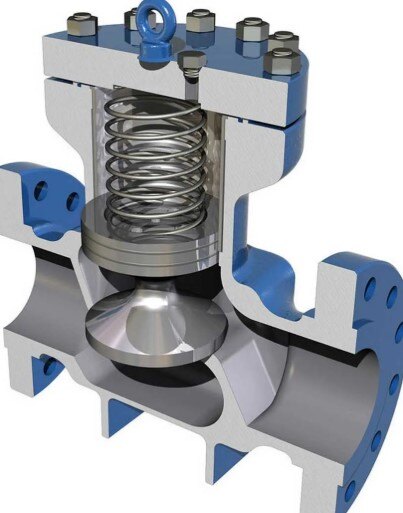
The valve body acts as the primary structural framework of the piston check valve. It encloses all internal components and provides the necessary connections to the piping system. The material selection for the valve body is critical and depends on factors such as fluid properties, operating pressure, and temperature.
Common materials include stainless steel, cast iron, and brass. Stainless steel is widely used in corrosive environments and high-temperature or high-pressure applications due to its excellent mechanical strength and corrosion resistance. Cast iron, on the other hand, is more economical and suitable for general-purpose applications such as water and low-pressure steam systems. Brass is typically used in smaller valves operating under low-pressure conditions, especially in plumbing or light industrial systems.
The valve body is designed to withstand internal pressure and external loads while maintaining structural integrity over long periods of operation. It also ensures proper alignment of internal components, which is essential for smooth piston movement.
The piston is the core moving component of the valve. It is usually a cylindrical element that moves vertically within the valve body in response to fluid pressure differences. The piston must be precisely machined to fit the internal bore of the valve body, ensuring minimal clearance for effective sealing while allowing smooth movement.
Materials used for pistons are typically wear-resistant and corrosion-resistant metals. Surface finishing processes such as grinding and polishing are applied to reduce friction and enhance sealing performance. In operation, the piston acts as both a flow control element and a sealing component, making its design and manufacturing quality crucial for overall valve performance.
The valve seat is a critical sealing surface located inside the valve body. It is positioned between the inlet and outlet ports and is designed to form a tight seal with the piston when the valve is in the closed position.
The seat is usually precision-machined and often subjected to additional finishing processes such as lapping to achieve high surface smoothness and flatness. The quality of the valve seat directly influences the leakage rate and reliability of the valve. In high-performance applications, hard-facing materials may be applied to the seat to improve wear resistance and extend service life.
In some piston check valve designs, a spring is included to assist the piston in returning to the closed position. The spring exerts a force that pushes the piston toward the valve seat when fluid flow diminishes or reverses.
The presence of a spring introduces the concept of cracking pressure, which is the minimum upstream pressure required to lift the piston off the seat and allow flow. By selecting springs with appropriate stiffness, engineers can tailor the valve’s response characteristics to suit specific system requirements. This is particularly useful in systems where rapid closure is necessary to prevent backflow.
The damping device is the defining feature of a piston check valve. It typically consists of a piston-cylinder arrangement that provides resistance to rapid movement. During valve operation, this mechanism slows down the motion of the piston, especially during closing, thereby reducing impact forces.
This buffering effect is essential for minimizing water hammer—a phenomenon caused by sudden changes in fluid velocity that can generate high-pressure shock waves. By mitigating these effects, the damping device enhances system safety and prolongs the lifespan of both the valve and associated equipment.
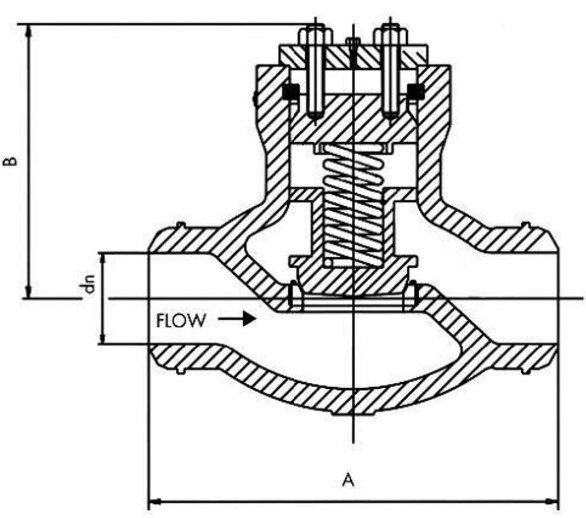
The operation of a piston check valve is governed by the principle of pressure differential across the valve. It functions automatically without the need for external power or manual control.
When fluid flows in the intended direction, from the inlet to the outlet, the upstream pressure exceeds the downstream pressure. This pressure differential generates an upward force on the piston, lifting it away from the valve seat.
As the piston rises, it creates an open passage that allows fluid to flow through the valve. The piston remains in this lifted position as long as the forward flow and sufficient pressure differential are maintained. The internal guiding structure ensures that the piston moves smoothly and remains properly aligned during operation.
When the flow rate decreases, stops, or reverses, the pressure conditions change. The downstream pressure may become higher than the upstream pressure, creating a reverse pressure differential.
Under these conditions, the piston moves downward toward the valve seat. If a spring is present, it assists in pushing the piston back into position more quickly. The piston eventually contacts the valve seat, forming a tight seal that prevents reverse flow.
The damping device plays a crucial role during this phase by controlling the speed of closure. Instead of slamming shut abruptly, the piston decelerates gradually, reducing mechanical stress and preventing pressure surges.
- Superior Sealing Performance: The precise interaction between the piston and valve seat ensures excellent sealing capabilities. Even under high-pressure conditions, leakage is minimized, making piston check valves ideal for applications where backflow prevention is critical.
- Low Pressure Loss: When fully open, the valve provides a relatively unobstructed flow path. This results in low pressure drop across the valve, contributing to improved energy efficiency and reduced operating costs.
- Robust and Simple Construction: The relatively simple design reduces the number of components and potential failure points. This enhances reliability and makes maintenance easier and more cost-effective.
- Resistance to Water Hammer: The integrated damping mechanism significantly reduces the effects of water hammer, protecting pipelines and equipment from damage caused by sudden pressure spikes.
- Fast Response to Flow Changes: Piston check valves can quickly respond to changes in flow direction and pressure, ensuring continuous and stable system operation even under fluctuating conditions.
- Oil and Gas Industry: In oil and gas pipelines, piston check valves are used to prevent backflow that could damage pumps and compressors. Their high-pressure capability and reliable sealing make them suitable for handling hazardous and high-value fluids.
- Power Generation: In thermal and nuclear power plants, these valves are used in steam and water systems to prevent reverse flow that could harm turbines, boilers, and other critical equipment.
- Chemical Processing: Piston check valves are widely used in chemical plants to handle corrosive fluids. By selecting appropriate materials, they can withstand aggressive media and high-pressure reactions.
- Water Treatment Systems: In municipal and industrial water systems, piston check valves help maintain flow direction and prevent contamination caused by backflow, ensuring water quality and system reliability.
- Marine and Offshore Engineering: These valves are used in ship systems such as ballast water, fuel supply, and cooling circuits. Their durability and resistance to shock make them suitable for harsh marine environments.
Compared with wafer lift check valves, piston check valves offer better sealing performance and durability under high-pressure conditions, although they may require more installation space.
When compared with vertical lift check valves, piston check valves provide greater flexibility in installation orientation while maintaining similar operating principles.
In contrast to swing check valves, which rely on a hinged disc, piston check valves provide more reliable sealing and better resistance to water hammer, especially in high-pressure systems.
Selecting the appropriate piston check valve involves evaluating several factors:
- Fluid properties: Including corrosiveness, viscosity, and temperature
- Pressure rating: Must exceed maximum system pressure
- Temperature range: Determines material and sealing requirements
- Flow capacity: Ensures adequate performance without excessive pressure drop
- Installation conditions: Includes space constraints and piping configuration
Piston check valves are essential components in modern fluid control systems, offering a reliable solution for preventing backflow in a wide range of industrial applications. Their combination of simple structure, excellent sealing performance, and advanced damping capability makes them particularly well-suited for high-pressure and dynamic operating environments.
By understanding their structural features, working principles, and application requirements, engineers and operators can make informed decisions when selecting and maintaining these valves. With proper installation and routine maintenance, piston check valves can deliver long-term, stable performance, ensuring the safety, efficiency, and continuity of industrial processes.
