
What Is the Difference Between O-Rings and Gaskets
In industrial equipment and mechanical systems, the selection of sealing components directly affects the operational safety and service life of equipment. O-rings and gaskets are the two most common sealing elements, and many engineers tend to confuse their applicable scenarios during selection. This article systematically compares the differences between O-rings and gaskets from multiple dimensions such as structural principles, application scenarios, and performance characteristics, helping you make the correct choice based on actual working conditions.
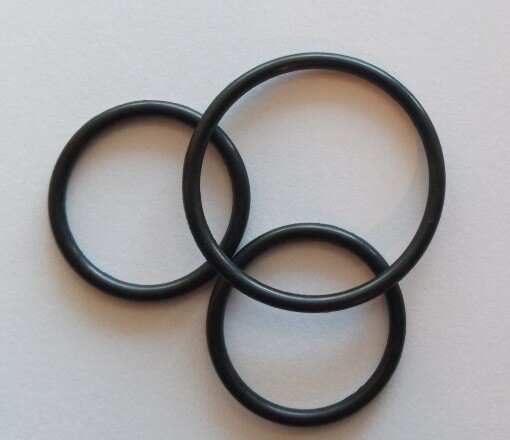
An O-ring is a circular sealing element with a round cross-section, usually made of rubber or elastomeric materials. It is installed in a pre-set groove and forms a sealing interface between two mating parts through compression deformation. The structure of an O-ring is very simple—it is just a circular ring—but it is precisely this simple design that gives it excellent sealing performance and wide applicability.
Common O-ring materials include nitrile rubber (NBR), ethylene propylene diene monomer (EPDM), silicone rubber (VMQ), fluoroelastomer (FKM/Viton), and chloroprene rubber (CR). Different materials correspond to different temperature resistance ranges, oil resistance, and chemical stability, and users can match them according to specific working conditions.
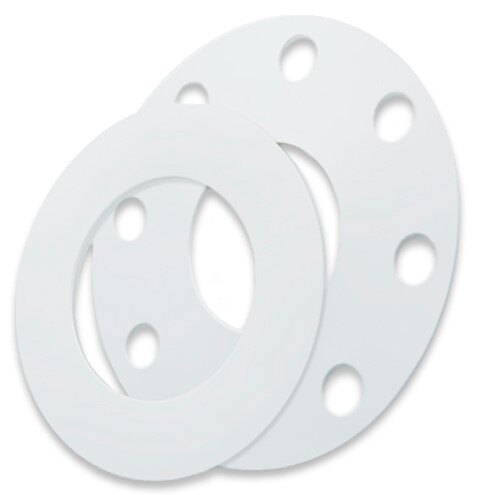
A gasket is a flat or slightly contoured sealing element installed between two contact surfaces, achieving sealing through bolt compression force. Unlike the standard circular shape of O-rings, gaskets can be processed into various sizes and contours according to the geometry of the sealing surface, offering greater flexibility.
Gaskets are available in a wide variety of materials, including rubber (NBR, EPDM, silicone), cork, polytetrafluoroethylene (PTFE), graphite, metals (stainless steel, copper, aluminum), and fiber-reinforced composite materials. This diversity allows gaskets to adapt to a wide range of conditions from low temperature to high temperature and from low pressure to high pressure.
Through the above introduction, we already have a basic understanding of O-rings and gaskets. However, in actual selection, many people are still unsure which one to use. In fact, the differences between the two are mainly reflected in three aspects: shape structure, sealing principle, and application scenarios. The following analysis will help you quickly determine which sealing element is more suitable for your needs.
O-rings have a standard circular structure with a uniform round cross-section and must be installed in specially designed grooves to function properly. The dimensional accuracy of the groove directly affects the sealing performance—excessive compression may cause permanent deformation or even damage to the O-ring, while insufficient compression will fail to form an effective seal.
Gaskets, on the other hand, have a flat structure and are usually custom-cut according to the shape of the flange or contact surface. During installation, they are placed directly between two contact surfaces, and sealing is achieved through the compression force generated by tightening bolts. Gaskets do not require grooves, but proper alignment of contact surfaces and sufficient compression force must be ensured.
The sealing of an O-ring relies on elastic deformation. When installed in a groove and compressed, the O-ring generates a restoring force. If the contact pressure generated by this restoring force is greater than the pressure of the sealed medium, it can prevent the leakage of liquid or gas. The advantage of O-rings lies in their ability to achieve both axial and radial sealing and their good adaptability to pressure fluctuations.
Gasket sealing mainly depends on external compression force. After two flange surfaces are tightened by bolts, the gasket is compressed and fills the microscopic uneven gaps between the contact surfaces, blocking leakage paths. The sealing performance of a gasket is closely related to the magnitude of compression force, the compression and recovery performance of the gasket material, and the surface quality of the contact surfaces.
This is one of the most critical differences between the two.
O-rings are suitable for both static sealing and dynamic sealing. In dynamic applications, such as the reciprocating motion of hydraulic cylinder pistons or the rotation of shafts, O-rings can rely on their elasticity to follow moving parts and maintain sealing contact, which is difficult for gaskets to achieve.
Gaskets are mainly used for static sealing applications, such as pipeline flange connections, engine cylinder heads, and heat exchanger end covers. In these positions where there is no relative motion, gaskets can provide reliable and long-lasting sealing performance.
After clarifying the core differences between O-rings and gaskets in terms of structure, principle, and applicable conditions, let us now look at where they are used in industrial practice. Different equipment and systems have different requirements for sealing components. Understanding these typical application scenarios will help you quickly match the right solution in practical work.
O-rings are widely used in the following fields:
- Hydraulic and pneumatic systems: sealing of hydraulic cylinder pistons, valve cores, pump bodies, etc., capable of withstanding high-pressure oil or gas.
- Automotive components: fuel systems, braking systems, air conditioning pipelines, requiring resistance to oil, temperature, and aging.
- Aerospace: fuel systems and hydraulic control systems, requiring extremely high sealing reliability, often using high-performance materials such as fluoroelastomers.
- Medical devices: infusion pumps, ventilators, etc., requiring compliance with biocompatibility standards (such as USP Class VI).
- Faucets and pipe fittings: sealing in household and industrial water systems, requiring compliance with drinking water safety standards (such as NSF certification).
- Chemical equipment: reactors, valves, etc., requiring resistance to corrosive media.
Gaskets are also used in many industrial fields:
- Pipeline flange connections: process piping systems in petrochemical, power, and HVAC industries, representing the most typical application scenario.
- Engine cylinder heads: sealing combustion chambers under high temperature and high pressure, often using metal or composite gaskets.
- Heat exchangers: sealing between tube sheets and shells, requiring resistance to temperature changes and media corrosion.
- Electrical enclosures: sealing for equipment housings with high protection ratings (IP ratings) to prevent dust and moisture ingress.
- Pressure vessels: sealing of openings such as manholes and handholes, with strict safety requirements.
- Chemical and power industries: sealing of high-temperature steam and corrosive gases.
After understanding the respective application scenarios of O-rings and gaskets, how should you make the final selection in practice? This requires a systematic evaluation of multiple key parameters. The core logic of selection is: first define operating conditions, then match sealing characteristics, and finally consider cost and maintenance comprehensively. The following six factors are indispensable.
If the sealing area is flat or a large irregular surface, a gasket is usually the better choice, as it can be cut into any shape to perfectly fit the sealing surface.
If the sealing area is cylindrical or circular in cross-section, such as shafts, holes, or pistons, an O-ring can provide a more stable sealing effect. Installed in a circular groove, the O-ring is evenly stressed and ensures reliable sealing.
For static sealing (no relative motion), both sealing elements can be considered. Gaskets are more advantageous for large flat surfaces, while O-rings perform better in compact spaces.
For dynamic sealing (reciprocating motion, rotation, or vibration), O-rings should be prioritized. Their elasticity allows them to adapt to positional changes during motion and maintain sealing continuity. Gaskets are prone to failure under dynamic conditions due to friction and wear.
High-pressure environments: O-rings made of appropriate materials generally perform better. Their compressed state in grooves allows them to withstand high medium pressure—the higher the pressure (within limits), the tighter the contact with the groove wall, improving sealing performance.
Environments with large temperature variations: gaskets offer a wider selection due to material diversity. Metal and graphite gaskets can withstand extremely high temperatures and are suitable for high-temperature steam or gas systems. O-rings are limited by elastomer temperature ranges, typically from -40°C to 200°C, with special fluoroelastomers reaching around 300°C.
Gas or steam sealing: gaskets are usually more suitable because gas molecules are small and prone to leakage, requiring larger contact areas to block leakage paths.
Whether selecting O-rings or gaskets, compatibility between material and medium is the primary consideration. If sealing materials are corroded or swollen by the medium, failure will occur rapidly.
For example:
NBR has good resistance to mineral oils but poor resistance to ozone and certain polar solvents.
EPDM resists water, steam, and polar solvents but not mineral oils.
FKM offers excellent resistance to oil and chemicals but at a higher cost.
PTFE gaskets resist almost all chemicals but have low elasticity.
Material compatibility charts should always be consulted, or technical support from suppliers should be sought.
Initial cost: O-rings are usually standardized products with low unit prices due to mass production. Gaskets, especially custom non-standard ones, tend to be more expensive.
Service life and replacement: O-rings can be reused if not damaged and require less maintenance. However, in dynamic applications, wear and aging require periodic inspection and replacement. Gaskets are generally single-use, especially in high-temperature and high-pressure environments where compression set or aging occurs.
Overall cost: O-rings are more economical in dynamic high-pressure applications; gaskets, although potentially higher in initial cost, offer long service life and controlled long-term cost in static large-area sealing.
In regulated industries such as food, medical, drinking water, and chemical processing, sealing materials must comply with relevant standards and certifications:
- FDA: safety requirements for food-contact materials
- USP Class VI: biocompatibility standards for medical and pharmaceutical equipment
- NSF/ANSI 61: health effects standard for drinking water system components
- TA-Luft: German air pollution control standard for leakage emissions
- ASTM F104: classification standard for non-metallic gasket materials
- ISO 9001: quality management system certification ensuring product consistency
Selecting compliant materials not only meets regulatory requirements but also ensures long-term stable operation and reduces risks of downtime and safety incidents.
Define operating parameters: record temperature, pressure, medium type, and motion conditions.
Measure contact surface dimensions accurately.
Consult professionals: contact application engineers for complex conditions.
Conduct sample testing before bulk procurement.
Establish a spare parts inventory to avoid unexpected downtime.
O-rings and gaskets each have their own unique advantages and application ranges. O-rings feature simple structure, low cost, and excellent dynamic sealing performance, making them suitable for high-pressure, compact, and moving applications. Gaskets offer flexible shapes, diverse materials, and reliable static sealing, making them ideal for large-area flat sealing and environments with significant temperature variations.
In practical selection, factors such as contact surface shape, motion conditions, pressure and temperature, chemical compatibility, and cost and maintenance must be considered comprehensively. The correct choice of sealing components not only prevents leakage and ensures safety but also extends equipment life and reduces maintenance costs, forming an essential foundation for the long-term stable operation of industrial systems.
